

Hey there, fellow science enthusiasts and industrial peeps! I'm a supplier of Carbon Molecular Sieve -330, and I often get asked if this nifty product can be used for oxygen separation. So, I thought I'd dive into this topic in this blog post and share everything you need to know.
What is Carbon Molecular Sieve -330?
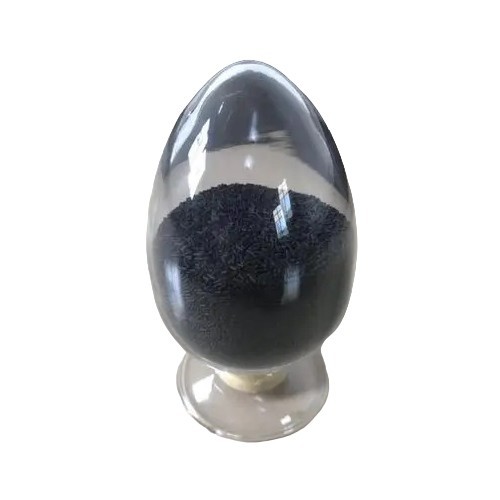
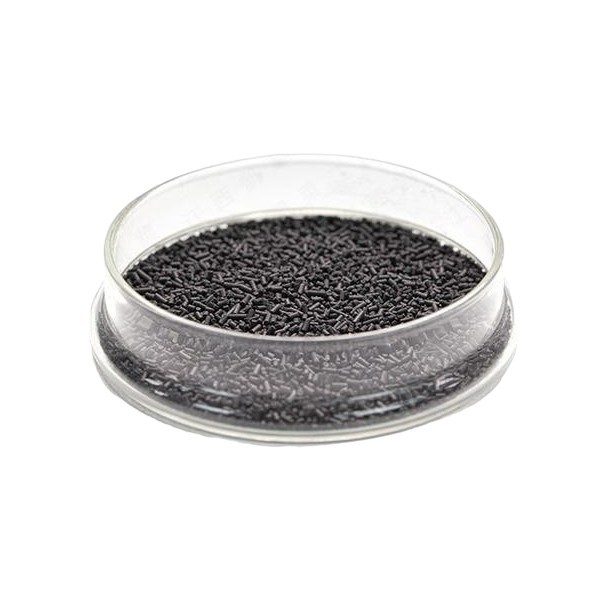
Before we jump into the oxygen separation part, let's quickly go over what Carbon Molecular Sieve -330 is. It's a type of adsorbent material with some really cool properties. It has a porous structure, and these tiny pores are like little pockets that can trap certain molecules based on their size and shape.
Carbon Molecular Sieves are made from carbonaceous materials through a special manufacturing process. During this process, the pores are created and tuned to have specific sizes. In the case of Carbon Molecular Sieve -330, it's designed to have pore sizes that are just right for separating different gases.
How Gas Separation Works with Molecular Sieves
The principle behind gas separation using molecular sieves is based on adsorption. Adsorption is when gas molecules stick to the surface of a solid material. In the case of Carbon Molecular Sieve -330, different gas molecules will have different affinities for the pores in the material.
For example, some gases will be able to enter the pores more easily than others based on their molecular size. Smaller molecules can fit into the pores and get adsorbed, while larger molecules might not be able to enter and will pass through the sieve. This difference in adsorption behavior is what allows us to separate different gases from a mixture.
Can Carbon Molecular Sieve -330 be Used for Oxygen Separation?
The short answer is yes, Carbon Molecular Sieve -330 can be used for oxygen separation, but it's a bit more complex than that.
1. The Nitrogen-Oxygen Separation Process
One of the most common applications where Carbon Molecular Sieve -330 is used for oxygen separation is in pressure swing adsorption (PSA) systems for nitrogen production. In air, nitrogen makes up about 78% and oxygen about 21%. When air is passed through a bed of Carbon Molecular Sieve -330 in a PSA system:
- Nitrogen molecules are more strongly adsorbed by the carbon molecular sieve compared to oxygen molecules. The sieve has pores that are sized in such a way that nitrogen can enter and be held within the pores more readily.
- As the air flows through the sieve, the nitrogen gets trapped, and the oxygen-rich gas passes through. This results in the production of an oxygen-rich stream on the outlet side of the sieve bed.
2. Factors Affecting the Separation Efficiency
However, the efficiency of oxygen separation using Carbon Molecular Sieve -330 depends on several factors:
Pore Size Distribution: The pore size of the sieve needs to be carefully controlled. If the pores are too large, both nitrogen and oxygen may be able to enter easily, and the separation won't be effective. If the pores are too small, neither gas may be able to enter. Carbon Molecular Sieve -330 is engineered to have an optimal pore size distribution for nitrogen-oxygen separation.
Operating Conditions: Things like pressure, temperature, and flow rate also play a big role. For example, in a PSA system, the pressure is cyclically changed to adsorb the nitrogen and then desorb it from the sieve. The temperature can affect the adsorption kinetics, and the flow rate needs to be adjusted so that there's enough contact time between the gas and the sieve for effective separation.
Comparison with Other Carbon Molecular Sieves
We also offer other carbon molecular sieves in our catalog, like Carbon Molecular Sieve-JXSEP®HG-110ES and Carbon Molecular Sieve-JXSEP®LG-560, as well as JXSEP®LG-610 Carbon Molecular Sieve. Each of these has its own unique properties and is suitable for different applications.
- Carbon Molecular Sieve-JXSEP®HG-110ES might be better suited for applications where a high purity nitrogen stream is required. It has a different pore structure and adsorption characteristics compared to Carbon Molecular Sieve -330, which can result in better nitrogen-oxygen separation in certain situations.
- Carbon Molecular Sieve-JXSEP®LG-560 is designed for applications where a higher flow rate of gas needs to be processed. It can handle larger volumes of gas while still maintaining a reasonable separation efficiency.
- JXSEP®LG-610 Carbon Molecular Sieve is often used in systems where the feed gas has impurities or a different composition. Its properties are tuned to be more resistant to the effects of these impurities and still provide effective gas separation.
Real - World Applications of Oxygen Separation with Carbon Molecular Sieve -330
There are several industries that benefit from oxygen separation using Carbon Molecular Sieve -330:
Medical Industry: In the medical field, there's a need for oxygen for patient treatment. By using carbon molecular sieves in PSA systems, oxygen can be separated from air on - site at hospitals or clinics. This provides a reliable and cost - effective source of oxygen compared to transporting oxygen cylinders.
Food and Beverage Industry: Oxygen can cause spoilage in food and beverages. By separating oxygen from gas mixtures, it can be used to create a low - oxygen environment for storing and packaging products. This helps to extend the shelf life of the products.
Wastewater Treatment: In wastewater treatment plants, oxygen is used for biological processes. Using Carbon Molecular Sieve -330 to separate oxygen from air can provide a constant supply of oxygen at a lower cost compared to other methods.
Why Choose Our Carbon Molecular Sieve -330?
When it comes to choosing a carbon molecular sieve for oxygen separation, here are some reasons why you should consider our Carbon Molecular Sieve -330:
- High Quality: We use the latest manufacturing processes to ensure that our Carbon Molecular Sieve -330 has a consistent quality and performance. The pore size distribution is carefully controlled, which means better separation efficiency.
- Customizable: We understand that different applications have different requirements. That's why we can customize the Carbon Molecular Sieve -330 to some extent to meet your specific needs. Whether you need a higher flow rate or a higher purity oxygen stream, we can work with you to find the best solution.
- Technical Support: Our team of experts is always ready to provide technical support. If you have any questions about using Carbon Molecular Sieve -330 for oxygen separation, installation, or troubleshooting, we're just a call or an email away.
Conclusion and Call to Action
So, in conclusion, Carbon Molecular Sieve -330 can definitely be used for oxygen separation, especially in PSA systems for nitrogen production where an oxygen - rich stream is a by - product. Its unique properties and the factors that affect its performance make it a versatile choice for many industries.
If you're interested in using Carbon Molecular Sieve -330 for your oxygen separation needs or want to learn more about our other carbon molecular sieves, don't hesitate to reach out for a purchase discussion. We're looking forward to working with you to find the perfect solution for your gas separation requirements.
References
- "Gas Adsorption and Separation with Carbon Molecular Sieves." Journal of Chemical Engineering.
- "Principles of Pressure Swing Adsorption for Gas Separation." Industrial and Engineering Chemistry Research.