

Hey there! As a supplier of Carbon Molecular Sieve -330, I often get asked if our product can be used in the butane - isobutane separation process. So, let's dive right into it and find out if Carbon Molecular Sieve -330 is the right fit for this application.
First off, let's understand what butane and isobutane are. They're both hydrocarbons, part of the alkane family. Butane has a straight - chain structure, while isobutane has a branched - chain structure. Separating these two can be a bit of a challenge because they have similar physical and chemical properties. However, it's an important process in the petrochemical industry as each has different uses. Butane is commonly used as a fuel, while isobutane is used in the production of alkylate, a high - octane gasoline blending component.
Now, let's talk about Carbon Molecular Sieve -330. Carbon Molecular Sieve -330 is a highly porous material with a unique pore structure. The pores are just the right size to selectively adsorb certain molecules based on their size, shape, and polarity. This property makes it a potential candidate for gas separation processes. You can learn more about it Carbon Molecular Sieve -330.
When it comes to the butane - isobutane separation, the key lies in the difference in the molecular sizes and shapes of the two compounds. Butane has a more linear shape, while isobutane is more compact due to its branched structure. Carbon Molecular Sieve -330's pore size can be engineered to preferentially adsorb either butane or isobutane.
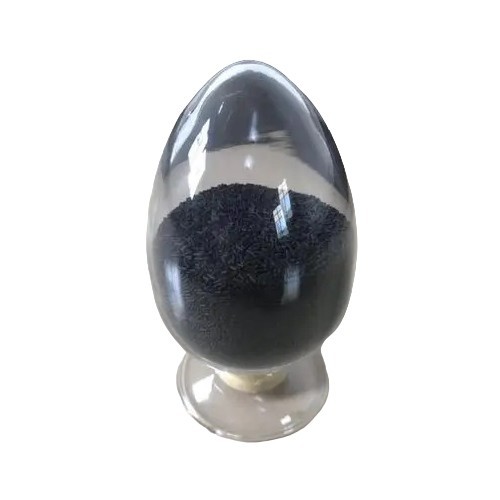

The adsorption process works like this: When a mixture of butane and isobutane is passed through a bed of Carbon Molecular Sieve -330, the molecules that fit better into the pores of the sieve will be adsorbed more strongly and held within the sieve, while the other molecules will pass through the bed more quickly. For example, if the pores are sized to better accommodate butane, butane will be adsorbed onto the surface of the sieve, and isobutane will be the non - adsorbed component that can be collected as the separated product.
However, there are some factors to consider when using Carbon Molecular Sieve -330 for butane - isobutane separation. One of the main factors is the operating conditions. Temperature and pressure play a crucial role in the adsorption process. At higher temperatures, the adsorption capacity of the sieve may decrease because the molecules have more kinetic energy and are less likely to be trapped in the pores. On the other hand, increasing the pressure can enhance the adsorption process as it forces more molecules into the pores.
Another factor is the purity requirements of the separated products. If a very high purity of either butane or isobutane is needed, multiple adsorption - desorption cycles may be required. This can increase the cost and complexity of the separation process.
In addition to Carbon Molecular Sieve -330, we also offer other types of carbon molecular sieves that might be suitable for butane - isobutane separation. For instance, Carbon Molecular Sieve - JXSEP®HG - 110ES and Carbon Molecular Sieve - JXSEP®LG - 560. These sieves have different pore structures and adsorption characteristics, which may offer different performance in the separation process.
To determine if Carbon Molecular Sieve -330 is the best option for your butane - isobutane separation process, we recommend conducting some tests. You can set up a small - scale separation unit and evaluate the performance of the sieve under your specific operating conditions. This will help you understand the adsorption capacity, selectivity, and regeneration ability of the sieve.
If you're in the petrochemical industry and are looking for a reliable solution for butane - isobutane separation, we'd love to have a chat with you. Our team of experts can provide more in - depth information about Carbon Molecular Sieve -330 and our other products. We can also help you design a separation process that meets your specific needs. Whether you need a high - purity product or are looking for a cost - effective solution, we're here to assist you. So, don't hesitate to reach out if you're interested in learning more or want to start a procurement discussion.
In conclusion, Carbon Molecular Sieve -330 has the potential to be used in the butane - isobutane separation process. Its unique pore structure allows for selective adsorption of the two compounds. However, careful consideration of operating conditions and purity requirements is necessary. And remember, we have other carbon molecular sieve options that might also be a good fit for your application.
References
- Ruthven, D. M. (1984). Principles of Adsorption and Adsorption Processes. John Wiley & Sons.
- Yang, R. T. (1987). Gas Separation by Adsorption Processes. Butterworth Publishers.