

Can Carbon Molecular Sieve -330 be used in the textile industry for nitrogen protection in dyeing processes?
As a supplier of Carbon Molecular Sieve -330, I often get asked about the potential applications of our product in various industries. One area that has recently piqued the interest of many is the textile industry, specifically in the context of nitrogen protection during dyeing processes. In this blog post, I will explore whether Carbon Molecular Sieve -330 can indeed be used for this purpose, delving into the science behind it and discussing the benefits and considerations.
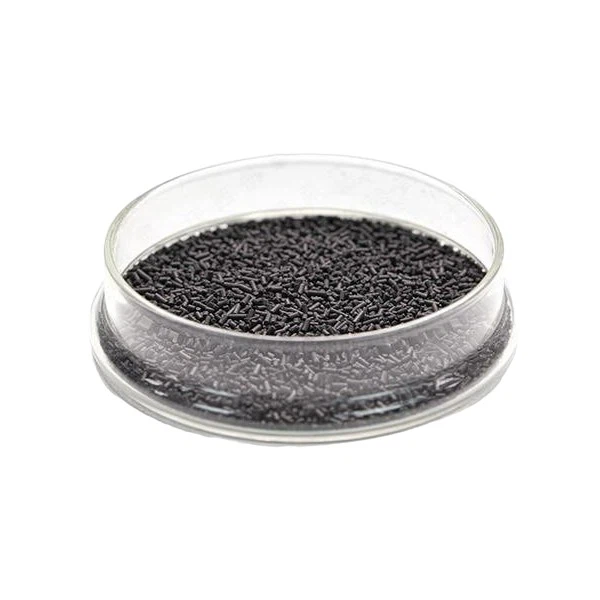

Understanding Carbon Molecular Sieve -330
Carbon Molecular Sieve -330 is a highly porous material with a unique structure that allows it to selectively adsorb certain gases based on their molecular size and shape. It is commonly used in pressure swing adsorption (PSA) systems to separate nitrogen from air. The sieve has a high nitrogen adsorption capacity and excellent kinetic selectivity, making it an ideal choice for generating high - purity nitrogen.
The principle behind its operation is based on the fact that different gas molecules have different diffusion rates through the pores of the carbon molecular sieve. Smaller molecules, such as oxygen, diffuse more quickly into the pores and are adsorbed, while larger nitrogen molecules pass through the sieve more slowly. By applying pressure and then reducing it in a cyclic manner, nitrogen can be separated from the air mixture, resulting in a stream of high - purity nitrogen.
Nitrogen Protection in Textile Dyeing Processes
In the textile industry, dyeing is a crucial process that determines the color and quality of the final product. However, traditional dyeing processes often face challenges such as oxidation of dyes, uneven color distribution, and degradation of fibers due to the presence of oxygen in the environment. Nitrogen protection can address these issues by creating an oxygen - free or low - oxygen environment during the dyeing process.
When nitrogen is used as a protective gas, it displaces oxygen from the dyeing vessel. This helps to prevent the oxidation of dyes, which can lead to color fading and changes in hue. Additionally, a nitrogen - rich environment can reduce the formation of by - products that may affect the quality of the dyed fabric. It also improves the solubility and dispersion of dyes, resulting in more even color distribution and better dye penetration into the fibers.
Can Carbon Molecular Sieve -330 be Used for Nitrogen Generation in Textile Dyeing?
The answer is yes, Carbon Molecular Sieve -330 can be effectively used for nitrogen generation in textile dyeing processes. Here are the reasons:
High Nitrogen Purity
Carbon Molecular Sieve -330 can produce nitrogen with a purity of up to 99.9%. This high - purity nitrogen is sufficient to create a protective environment in the dyeing vessel, minimizing the presence of oxygen and reducing the risk of oxidation. The high purity also ensures that there are no impurities in the nitrogen stream that could potentially affect the dyeing process or the quality of the fabric.
Cost - Effectiveness
Compared to other methods of nitrogen generation, such as cryogenic distillation, using a PSA system with Carbon Molecular Sieve -330 is more cost - effective. PSA systems are relatively simple in design and require less energy to operate. They also have a lower initial investment cost and can be easily integrated into existing dyeing equipment. This makes it an attractive option for textile manufacturers looking to improve the quality of their dyeing processes without incurring excessive costs.
Reliability and Flexibility
Carbon Molecular Sieve -330 - based PSA systems are highly reliable and can operate continuously for long periods. They can be easily adjusted to meet the specific nitrogen flow rate and purity requirements of different dyeing processes. Whether it is a small - scale batch dyeing operation or a large - scale continuous dyeing process, the PSA system can be customized to provide the appropriate amount of nitrogen.
Other Carbon Molecular Sieves for Nitrogen Generation
In addition to Carbon Molecular Sieve -330, we also offer other high - quality carbon molecular sieves such as Carbon Molecular Sieve - JXSEP®HG - 110, JXSEP®LG - 610 Carbon Molecular Sieve, and JXSEP HG - 90 Carbon Molecular Sieve. Each of these sieves has its own unique properties and is suitable for different applications and nitrogen purity requirements.
Carbon Molecular Sieve - JXSEP®HG - 110, for example, has a high adsorption capacity and can be used in applications where a large volume of nitrogen needs to be generated. JXSEP®LG - 610 Carbon Molecular Sieve offers excellent stability and long - term performance, making it a reliable choice for continuous operation. JXSEP HG - 90 Carbon Molecular Sieve is known for its high kinetic selectivity, which allows for the production of extremely high - purity nitrogen.
Considerations for Using Carbon Molecular Sieve -330 in Textile Dyeing
While Carbon Molecular Sieve -330 offers many advantages for nitrogen generation in textile dyeing, there are also some considerations that textile manufacturers need to keep in mind.
Equipment Installation and Maintenance
The PSA system using Carbon Molecular Sieve -330 requires proper installation and regular maintenance. The system should be installed in a clean and dry environment, and the carbon molecular sieve needs to be replaced periodically to ensure optimal performance. Additionally, the system may require some adjustments depending on the specific operating conditions of the dyeing process, such as temperature and pressure.
Compatibility with Dyeing Equipment
The nitrogen generation system needs to be compatible with the existing dyeing equipment. This includes ensuring that the nitrogen flow rate and pressure are suitable for the size and design of the dyeing vessel. It is also important to consider the connection between the nitrogen generation system and the dyeing equipment to prevent any leakage of nitrogen or air.
Conclusion
In conclusion, Carbon Molecular Sieve -330 can be a valuable asset in the textile industry for nitrogen protection in dyeing processes. Its ability to generate high - purity nitrogen in a cost - effective and reliable manner makes it an attractive option for textile manufacturers looking to improve the quality of their products. By creating a low - oxygen environment, nitrogen protection can help to prevent dye oxidation, improve color uniformity, and enhance the overall quality of the dyed fabric.
If you are a textile manufacturer interested in exploring the use of Carbon Molecular Sieve -330 for your dyeing processes, or if you have any questions about our other carbon molecular sieve products such as Carbon Molecular Sieve - JXSEP®HG - 110, JXSEP®LG - 610 Carbon Molecular Sieve, and JXSEP HG - 90 Carbon Molecular Sieve, please feel free to contact us for further discussion and procurement. We are committed to providing high - quality products and excellent technical support to meet your specific needs.
References
- Ruthven, D. M., Farooq, S., & Knaebel, K. S. (1994). Pressure Swing Adsorption. John Wiley & Sons.
- Senthilkumar, M., & Arumugam, N. (2012). Influence of nitrogen gas atmosphere on the color fastness properties of dyed cotton fabrics. Journal of Engineered Fibers and Fabrics, 7(1), 1 - 7.
- Yang, R. T. (1987). Gas Separation by Adsorption Processes. Butterworths.