

How does Carbon Molecular Sieve - JXH work in gas separation?
As a supplier of Carbon Molecular Sieve - JXH, I am excited to share with you the intricate details of how this remarkable material functions in gas separation processes. Gas separation is a crucial industrial operation with applications in various sectors such as petrochemicals, food and beverage, and environmental protection. Carbon Molecular Sieve - JXH plays a vital role in achieving efficient and selective gas separation, and understanding its working mechanism can help you make informed decisions for your gas separation needs.
The Basics of Carbon Molecular Sieve - JXH
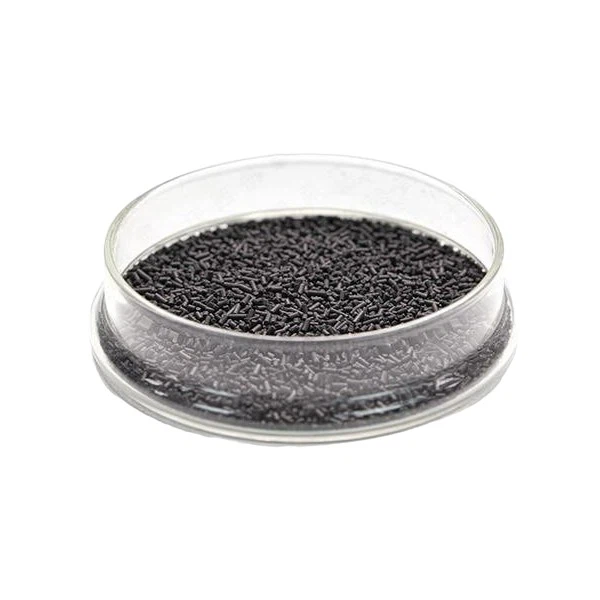
Carbon Molecular Sieve - JXH is a highly porous material with a unique pore structure that enables it to selectively adsorb different gases based on their molecular size and shape. It is typically made from carbonaceous materials through a process of carbonization and activation, which creates a network of micropores and mesopores within the material. These pores have specific sizes and shapes that allow certain gas molecules to enter and be adsorbed while excluding others.
The key to the effectiveness of Carbon Molecular Sieve - JXH lies in its ability to differentiate between gas molecules based on their kinetic diameter. The kinetic diameter is a measure of the size of a gas molecule as it moves through a medium. Gas molecules with a smaller kinetic diameter can diffuse more easily into the pores of the carbon molecular sieve, while larger molecules are excluded. This selective adsorption behavior forms the basis of gas separation using Carbon Molecular Sieve - JXH.
Working Mechanism in Gas Separation
The gas separation process using Carbon Molecular Sieve - JXH typically involves two main steps: adsorption and desorption. Let's take a closer look at how these steps work.
Adsorption
During the adsorption step, a mixture of gases is passed through a bed of Carbon Molecular Sieve - JXH at a certain pressure and temperature. The gas molecules in the mixture will interact with the surface of the carbon molecular sieve, and those with a kinetic diameter small enough to fit into the pores will be adsorbed.
For example, in the separation of nitrogen and oxygen from air, nitrogen molecules have a kinetic diameter of approximately 0.364 nm, while oxygen molecules have a kinetic diameter of about 0.346 nm. Although the difference in size is relatively small, the carbon molecular sieve can still selectively adsorb nitrogen over oxygen due to its unique pore structure. As the air passes through the bed of Carbon Molecular Sieve - JXH, nitrogen molecules are preferentially adsorbed onto the surface of the sieve, while oxygen molecules pass through the bed and are collected as the product gas.
The adsorption capacity of Carbon Molecular Sieve - JXH depends on several factors, including the type of gas, the pressure and temperature of the system, and the properties of the carbon molecular sieve itself. Higher pressures generally increase the adsorption capacity, as more gas molecules are forced into the pores of the sieve. However, the adsorption capacity also reaches a saturation point, beyond which no more gas can be adsorbed.
Desorption
Once the carbon molecular sieve has reached its saturation point, it needs to be regenerated to remove the adsorbed gas molecules and restore its adsorption capacity. This is achieved through the desorption step.
Desorption can be carried out by reducing the pressure or increasing the temperature of the system. When the pressure is reduced, the adsorbed gas molecules are released from the pores of the carbon molecular sieve and can be removed from the system. This process is known as pressure swing adsorption (PSA). Alternatively, increasing the temperature can also cause the adsorbed gas molecules to gain enough energy to break free from the surface of the carbon molecular sieve, a process called temperature swing adsorption (TSA).
In most industrial applications, PSA is the preferred method for regenerating Carbon Molecular Sieve - JXH due to its simplicity and energy efficiency. By cycling between adsorption and desorption steps, the carbon molecular sieve can be continuously used for gas separation.
Factors Affecting Performance
Several factors can affect the performance of Carbon Molecular Sieve - JXH in gas separation. Understanding these factors is essential for optimizing the gas separation process and achieving the desired separation efficiency.
Pore Structure
The pore structure of Carbon Molecular Sieve - JXH is one of the most important factors influencing its gas separation performance. The size, shape, and distribution of the pores determine which gas molecules can be adsorbed and the rate at which adsorption occurs. A well-designed pore structure with a narrow pore size distribution can provide high selectivity and adsorption capacity.
Gas Composition
The composition of the gas mixture being separated also plays a significant role in the performance of Carbon Molecular Sieve - JXH. Different gases have different kinetic diameters and adsorption characteristics, which can affect the selectivity and efficiency of the separation process. For example, the presence of impurities or contaminants in the gas mixture can reduce the adsorption capacity of the carbon molecular sieve and affect its long-term performance.
Operating Conditions
The pressure, temperature, and flow rate of the gas mixture are important operating conditions that can impact the performance of Carbon Molecular Sieve - JXH. Higher pressures generally increase the adsorption capacity, but they also require more energy to maintain. Similarly, higher temperatures can enhance the desorption process but may also reduce the adsorption capacity. Finding the optimal operating conditions is crucial for achieving the best gas separation results.
Applications of Carbon Molecular Sieve - JXH
Carbon Molecular Sieve - JXH has a wide range of applications in various industries due to its excellent gas separation properties. Some of the common applications include:
Nitrogen Generation
One of the most widespread applications of Carbon Molecular Sieve - JXH is in the generation of nitrogen from air. Nitrogen is an important gas used in many industries, such as food packaging, electronics manufacturing, and chemical processing. By using Carbon Molecular Sieve - JXH in a PSA system, high-purity nitrogen can be produced cost-effectively.
Hydrogen Purification
In the petrochemical and energy industries, hydrogen is often produced as a by-product or used as a feedstock. However, the hydrogen produced may contain impurities such as carbon monoxide, carbon dioxide, and methane. Carbon Molecular Sieve - JXH can be used to purify hydrogen by selectively adsorbing the impurities and producing high-purity hydrogen.
Oxygen Enrichment
In some applications, such as medical oxygen generation and wastewater treatment, oxygen enrichment is required. Carbon Molecular Sieve - JXH can be used to separate oxygen from air and produce oxygen-enriched air.
Our Product Range
As a supplier of Carbon Molecular Sieve - JXH, we offer a wide range of products to meet the diverse needs of our customers. Some of our popular products include Carbon Molecular Sieve -330, JXSEP®LG-610 Carbon Molecular Sieve, and Carbon Molecular Sieve-JXSEP®HG-110ES. These products have different pore structures and adsorption properties, allowing us to provide customized solutions for different gas separation applications.
Conclusion
Carbon Molecular Sieve - JXH is a powerful material for gas separation, offering high selectivity, efficiency, and reliability. Its unique pore structure and selective adsorption behavior enable it to separate different gases based on their molecular size and shape. By understanding the working mechanism of Carbon Molecular Sieve - JXH and the factors that affect its performance, you can optimize your gas separation process and achieve the desired results.
If you are interested in learning more about our Carbon Molecular Sieve - JXH products or have any questions about gas separation applications, please feel free to contact us. We are committed to providing you with the best solutions and support for your gas separation needs.

References
- Ruthven, D. M., Farooq, S., & Knaebel, K. S. (1994). Pressure Swing Adsorption. Wiley-Interscience.
- Yang, R. T. (1987). Gas Separation by Adsorption Processes. Butterworth-Heinemann.
- Sircar, S. (1999). Adsorption and Ion Exchange. Kirk-Othmer Encyclopedia of Chemical Technology.