

Hey there! As a Carbon Molecular Sieve (CMS) supplier, I've seen firsthand how humidity in the gas stream can mess with the performance of our CMS products. In this blog, I'll break down how humidity affects CMS and what you can do about it.
What's Carbon Molecular Sieve Anyway?
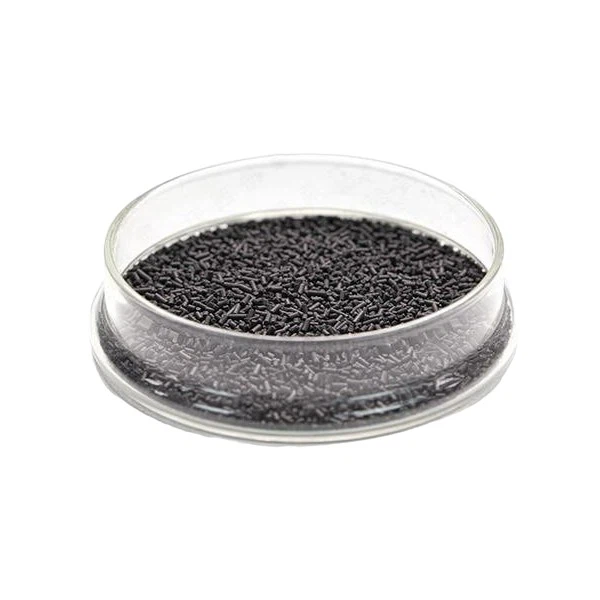
Before we dive into the humidity stuff, let's quickly talk about what CMS is. Carbon Molecular Sieve is a porous material made from carbon. It's super useful for separating gases, like nitrogen from air in a process called Pressure Swing Adsorption (PSA). Different types of CMS have different pore sizes and surface properties, which allow them to selectively adsorb certain gases. For example, our Carbon Molecular Sieve-JXSEP®HG-110ES and Carbon Molecular Sieve -330 are designed to work efficiently in PSA systems to produce high-purity nitrogen.
How Humidity Affects CMS Performance
Adsorption Capacity
Humidity can really cut down the adsorption capacity of CMS. You see, water molecules are pretty small and can easily get into the pores of the CMS. When water molecules occupy these pores, there's less space for the target gas molecules, like nitrogen, to be adsorbed. This means that the CMS can't separate the gases as effectively as it should. For instance, if you're using JXSEP®LG-610 Carbon Molecular Sieve to produce nitrogen from air, high humidity in the air stream can reduce the amount of nitrogen that can be adsorbed by the CMS, leading to lower nitrogen purity and production rate.
Kinetics of Adsorption
The presence of humidity also slows down the adsorption kinetics. Adsorption is a process where gas molecules stick to the surface of the CMS. Water molecules can interfere with this process by creating a kind of barrier. They can block the access of the target gas molecules to the active sites on the CMS surface. As a result, it takes longer for the target gas to be adsorbed, which affects the overall efficiency of the gas separation process. This delay can cause problems in industrial applications where a continuous and rapid supply of high-purity gas is required.
Regeneration
Regeneration is an important step in the PSA process. After the CMS has adsorbed the target gas, it needs to be regenerated to remove the adsorbed gas and be ready for the next cycle. Humidity can make regeneration more difficult. Water molecules are strongly adsorbed on the CMS surface and are harder to desorb compared to the target gas molecules. This means that more energy and time are needed to regenerate the CMS when there's a lot of humidity in the gas stream. If the regeneration is not done properly, the CMS will gradually lose its adsorption capacity over time, and its performance will degrade.
What Can You Do to Mitigate the Effects of Humidity?
Pre - treatment of the Gas Stream
One of the most effective ways to deal with humidity is to pre - treat the gas stream before it enters the PSA system. You can use a dryer to remove the moisture from the gas. There are different types of dryers available, such as refrigerated dryers, desiccant dryers, and membrane dryers. Each type has its own advantages and disadvantages, and the choice depends on the specific requirements of your application. For example, desiccant dryers can achieve very low dew points, making them suitable for applications where high - purity gas is needed.
Monitoring and Control
It's also important to monitor the humidity in the gas stream continuously. You can use humidity sensors to measure the moisture content. Based on the measurement results, you can adjust the operation of the dryer or other pre - treatment equipment to ensure that the humidity level is within the acceptable range for the CMS. Regular maintenance of the PSA system and the pre - treatment equipment is also crucial to keep them working properly.
Choosing the Right CMS
Not all CMS products are equally affected by humidity. Some CMS are more resistant to the effects of humidity than others. When choosing a CMS for your application, you should consider the humidity conditions of your gas stream. Our company offers a range of CMS products with different properties, and we can help you select the most suitable one based on your specific needs.

Why Choose Our Carbon Molecular Sieve?
We've been in the CMS business for a long time, and we know what it takes to produce high - quality CMS products. Our CMS are carefully manufactured using advanced technology to ensure consistent performance. We have a strict quality control system in place to make sure that each batch of CMS meets the highest standards. In addition, we provide excellent customer service. Our technical team is always ready to help you with any questions or problems you may have regarding the use of our CMS products.
If you're looking for a reliable CMS supplier and want to improve the performance of your gas separation system, don't hesitate to contact us. We can have a detailed discussion about your requirements and provide you with the best solutions. Whether you need Carbon Molecular Sieve-JXSEP®HG-110ES, Carbon Molecular Sieve -330, or JXSEP®LG-610 Carbon Molecular Sieve, we've got you covered.
References
- Ruthven, D. M., Farooq, S., & Knaebel, K. S. (1994). Pressure Swing Adsorption. John Wiley & Sons.
- Yang, R. T. (1987). Gas Separation by Adsorption Processes. Butterworths.