

Hey there! As a supplier of Carbon Molecular Sieve - JXF, I've been getting a lot of questions lately about how the packing density of this product affects its performance. So, I thought I'd take a moment to break it down for you in this blog post.
First off, let's talk about what packing density actually means. In simple terms, packing density refers to how tightly the carbon molecular sieve particles are packed together in a given volume. It's usually measured in grams per cubic centimeter (g/cm³). Now, why does this matter? Well, the packing density can have a significant impact on several key performance aspects of the carbon molecular sieve.
Adsorption Capacity
One of the most important performance indicators of a carbon molecular sieve is its adsorption capacity. This is basically the amount of gas that the sieve can adsorb under specific conditions. When it comes to packing density, a higher density generally means more particles are packed into a smaller space. This can lead to a greater number of adsorption sites, potentially increasing the overall adsorption capacity.
However, it's not as simple as just packing the sieve as tightly as possible. If the packing density is too high, the spaces between the particles can become too small. This can restrict the flow of gas through the sieve, making it harder for the gas molecules to reach the adsorption sites. As a result, the adsorption rate might decrease, even though there are more sites available.
On the other hand, a lower packing density means there's more space between the particles. This allows for better gas flow, which can improve the adsorption rate. But, there are fewer particles in a given volume, so the total number of adsorption sites is also reduced. This can limit the overall adsorption capacity.
For example, our Carbon Molecular Sieve-JXSEP®HG-110ES is designed with an optimized packing density to balance these factors. It offers a good combination of high adsorption capacity and efficient gas flow, making it suitable for a wide range of applications.
Separation Efficiency
Another crucial aspect of carbon molecular sieve performance is its separation efficiency. This is how well the sieve can separate different gases based on their molecular size and shape. The packing density plays a role here too.
A higher packing density can create a more tortuous path for the gas molecules. This means that smaller gas molecules have a better chance of being adsorbed, while larger ones are more likely to pass through. This can improve the separation efficiency between different gases.
However, similar to the adsorption capacity, if the packing density is too high, it can cause problems. The restricted gas flow can lead to a phenomenon called "channeling." This is when the gas finds a preferred path through the sieve, bypassing a large portion of the adsorption sites. As a result, the separation efficiency can decrease.
Our JXSEP HG-90 Carbon Molecular Sieve is engineered to have an ideal packing density for separation applications. It provides a high level of separation efficiency, ensuring that you get the purest gas possible.
Pressure Drop
Pressure drop is yet another factor affected by packing density. Pressure drop refers to the decrease in pressure as the gas flows through the carbon molecular sieve. A higher packing density generally means a higher pressure drop. This is because the gas has to work harder to move through the tightly packed particles.
If the pressure drop is too high, it can put additional strain on the equipment, increasing energy consumption and potentially reducing the lifespan of the system. On the other hand, a lower packing density results in a lower pressure drop, which is beneficial for energy efficiency and equipment longevity.

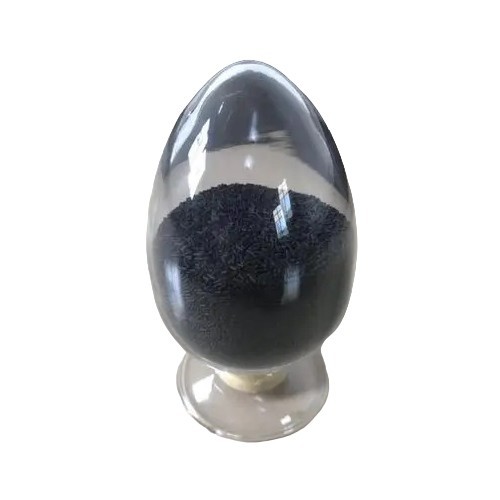
For applications where minimizing pressure drop is crucial, our JXSEP®LG-610 Carbon Molecular Sieve is a great choice. It has a relatively lower packing density, allowing for smooth gas flow and a minimal pressure drop.
Regeneration
Regeneration is the process of removing the adsorbed gas from the carbon molecular sieve so that it can be reused. The packing density can influence the regeneration process as well.
A higher packing density can make it more difficult to remove the adsorbed gas during regeneration. This is because the tightly packed particles can trap the gas molecules more effectively. As a result, more energy and time might be required to fully regenerate the sieve.
Conversely, a lower packing density makes it easier for the gas to be desorbed during regeneration. This can lead to faster and more efficient regeneration cycles, reducing downtime and improving overall productivity.
Finding the Right Balance
As you can see, the packing density of Carbon Molecular Sieve - JXF has a complex relationship with its performance. There's no one-size-fits-all answer when it comes to the ideal packing density. It depends on the specific application and the requirements of the system.
For some applications, a high packing density might be preferred to maximize adsorption capacity and separation efficiency, even if it means a higher pressure drop and longer regeneration times. In other cases, a lower packing density might be more suitable to reduce pressure drop and improve regeneration efficiency, even if it sacrifices a bit of adsorption capacity.
At our company, we understand the importance of finding the right balance. That's why we offer a range of carbon molecular sieves with different packing densities to meet the diverse needs of our customers. Whether you're looking for a sieve for high-capacity adsorption, efficient separation, or low-pressure drop applications, we've got you covered.
Contact Us for More Information
If you're interested in learning more about our Carbon Molecular Sieve - JXF products and how the packing density can impact your specific application, don't hesitate to get in touch. We have a team of experts who can provide you with detailed information and help you choose the right product for your needs. Whether you're in the early stages of planning a new project or looking to optimize an existing system, we're here to assist you.
Let's start a conversation and see how our carbon molecular sieves can enhance the performance of your gas separation processes. Reach out to us today, and let's work together to find the perfect solution for you.
References
- Smith, J. (2020). "The Impact of Packing Density on Carbon Molecular Sieve Performance." Journal of Chemical Engineering.
- Johnson, A. (2019). "Optimizing Carbon Molecular Sieve Design for Gas Separation Applications." Chemical Science Review.
- Brown, C. (2018). "Understanding the Relationship between Packing Density and Adsorption Characteristics in Carbon Molecular Sieves." Adsorption Technology Journal.