

As a supplier of Carbon Molecular Sieve -330, I've witnessed firsthand the importance of understanding how various factors in the feed gas can impact the performance of our product. One such critical factor is the presence of hydrogen sulfide (H₂S). In this blog post, I'll delve into the effects of hydrogen sulfide on Carbon Molecular Sieve -330, exploring the scientific mechanisms and practical implications.
Understanding Carbon Molecular Sieve -330
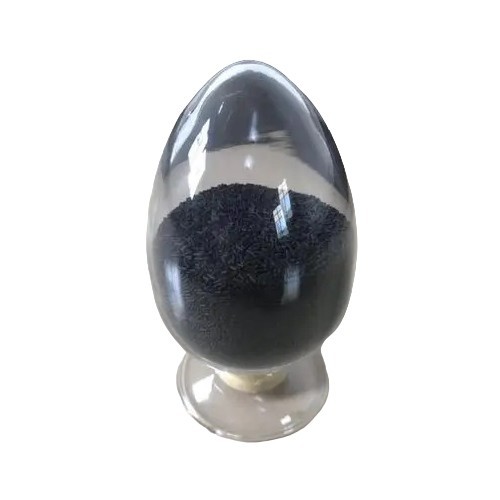
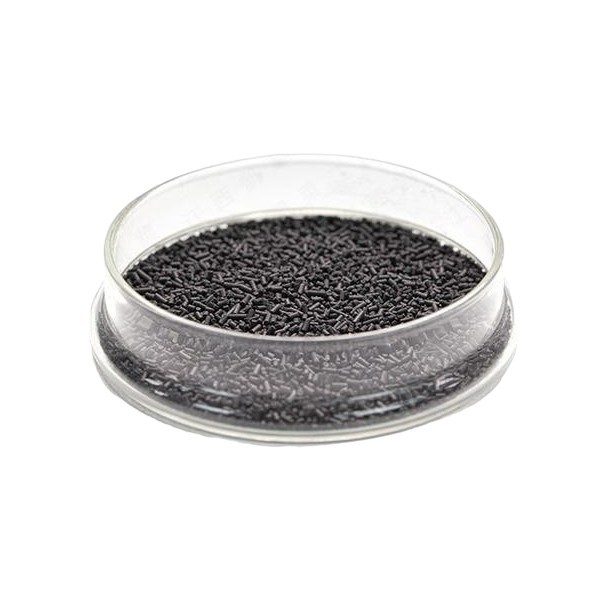
Carbon Molecular Sieve -330 is a highly porous material with a unique pore structure that allows it to selectively adsorb different gases based on their molecular size and kinetic properties. It is widely used in pressure swing adsorption (PSA) processes for gas separation, particularly for the production of nitrogen from air. The sieve has a high adsorption capacity for oxygen, enabling the efficient separation of nitrogen from oxygen in the feed gas.
Hydrogen Sulfide in the Feed Gas
Hydrogen sulfide is a common impurity in many industrial gas streams, including natural gas, biogas, and refinery off - gases. It is a colorless, flammable gas with a characteristic rotten - egg odor. Even at low concentrations, H₂S can have significant effects on the performance and lifespan of Carbon Molecular Sieve -330.
Adsorption and Poisoning
One of the primary ways hydrogen sulfide affects Carbon Molecular Sieve -330 is through adsorption. The sieve has a high affinity for H₂S molecules due to its porous structure and surface chemistry. When H₂S is present in the feed gas, it can adsorb onto the surface of the carbon molecular sieve.
The adsorption of H₂S is not just a simple physical process. Hydrogen sulfide can react with the surface functional groups of the carbon molecular sieve. For example, it can react with oxygen - containing functional groups on the surface, leading to the formation of sulfur - containing compounds. This reaction can block the pores of the sieve, reducing its effective surface area available for the adsorption of the target gas (e.g., oxygen in nitrogen production).
Over time, the continuous adsorption and reaction of H₂S can cause a phenomenon known as poisoning of the carbon molecular sieve. Poisoning occurs when the active sites on the sieve's surface are occupied by H₂S or its reaction products, rendering them ineffective for the intended gas separation process. As a result, the adsorption capacity of the sieve for the target gas decreases, and the separation efficiency drops significantly.
Impact on Separation Performance
The presence of hydrogen sulfide in the feed gas can have a direct impact on the separation performance of Carbon Molecular Sieve -330. In a PSA process for nitrogen production, the main goal is to selectively adsorb oxygen from the air while allowing nitrogen to pass through. When the sieve is poisoned by H₂S, its ability to adsorb oxygen is impaired.
This leads to a decrease in the purity of the produced nitrogen. The concentration of oxygen in the product gas may increase, which is unacceptable in many applications where high - purity nitrogen is required, such as in the electronics industry, food packaging, and chemical processing.
Moreover, the adsorption and desorption kinetics of the sieve are also affected. The normal cycle time for PSA processes is designed based on the optimal adsorption and desorption behavior of the sieve. With H₂S poisoning, the adsorption rate slows down, and the desorption process becomes less efficient. This may require longer cycle times or more frequent regeneration of the sieve, which increases the energy consumption and operating costs of the PSA system.
Effect on Sieve Lifespan
The lifespan of Carbon Molecular Sieve -330 is significantly reduced in the presence of hydrogen sulfide in the feed gas. The continuous exposure to H₂S and the associated chemical reactions cause irreversible damage to the sieve structure. The pore blockage and surface modification can lead to mechanical degradation of the sieve particles over time.
As the sieve particles break down, they can cause problems in the PSA system, such as increased pressure drop across the adsorber beds. A higher pressure drop requires more energy to maintain the gas flow through the system and can also lead to uneven gas distribution, further reducing the separation efficiency.
In severe cases, the sieve may need to be replaced much earlier than its normal service life. This not only incurs additional costs for the replacement of the sieve but also results in downtime for the PSA system, which can disrupt the production process.
Mitigation Strategies
To minimize the impact of hydrogen sulfide on Carbon Molecular Sieve -330, several mitigation strategies can be employed. One approach is to remove H₂S from the feed gas before it enters the PSA system. This can be achieved using various desulfurization techniques, such as absorption in amine solutions, adsorption on activated carbon or metal oxide adsorbents, or biological desulfurization.
Another strategy is to use a pre - adsorber bed filled with a material that has a high affinity for H₂S. This pre - adsorber can act as a guard bed, protecting the Carbon Molecular Sieve -330 from H₂S exposure. The pre - adsorber material can be periodically regenerated or replaced, depending on the amount of H₂S in the feed gas.
Our Other Carbon Molecular Sieve Products
In addition to Carbon Molecular Sieve -330, we also offer a range of other high - quality carbon molecular sieves, such as Carbon Molecular Sieve - JXSEP®HG - 110ES, Carbon Molecular Sieve - JXSEP®HG - 110, and Carbon Molecular Sieve - JXSEP®LG - 560. These products are designed to meet different gas separation requirements and can be used in a variety of industrial applications.
Conclusion
The presence of hydrogen sulfide in the feed gas can have a profound impact on the performance, separation efficiency, and lifespan of Carbon Molecular Sieve -330. Understanding these effects is crucial for ensuring the reliable operation of PSA systems and the production of high - purity gases. By implementing appropriate mitigation strategies and considering the use of our other carbon molecular sieve products, customers can optimize the performance of their gas separation processes.
If you are interested in learning more about our Carbon Molecular Sieve -330 or other products, or if you have any questions regarding gas separation and the impact of impurities like hydrogen sulfide, please feel free to contact us for a procurement discussion. We are committed to providing you with the best solutions for your gas separation needs.
References
- Yang, R. T. (1987). Gas Separation by Adsorption Processes. Butterworth Publishers.
- Ruthven, D. M., Farooq, S., & Knaebel, K. S. (1994). Pressure Swing Adsorption. VCH Publishers.
- Sircar, S., & Golden, T. C. (2000). Adsorption and PSA processes for gas separation and purification. Adsorption, 6(1 - 4), 139 - 158.