

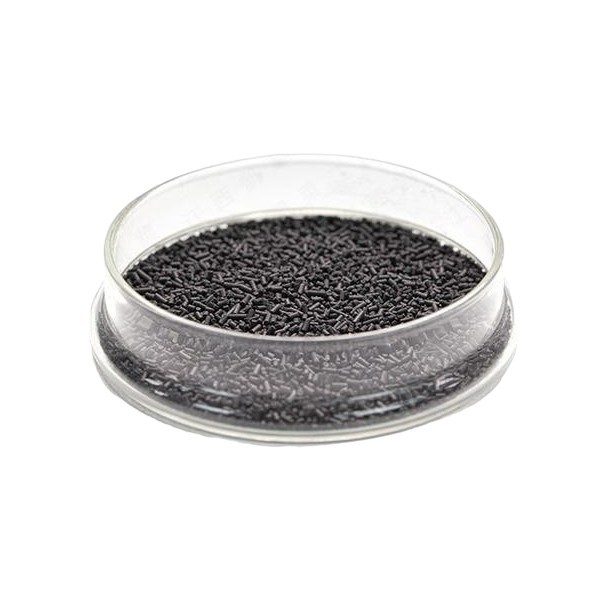
Carbon molecular sieves (CMS) are widely used in gas separation processes, especially in pressure swing adsorption (PSA) systems for nitrogen production from air. The selectivity of CMS, which refers to its ability to preferentially adsorb certain gas molecules over others, is a crucial factor that determines the efficiency and performance of these separation processes. As a Carbon Molecular Sieve supplier, I have witnessed firsthand how different operating conditions can significantly impact the selectivity of CMS. In this blog post, I will explore how the selectivity of Carbon Molecular Sieve changes with different operating conditions.
Effect of Temperature on Selectivity
Temperature plays a vital role in the adsorption process of gas molecules on CMS. Generally, adsorption is an exothermic process, meaning that heat is released when gas molecules are adsorbed onto the surface of the CMS. As the temperature increases, the kinetic energy of the gas molecules also increases, which makes it more difficult for them to be adsorbed onto the CMS surface. Consequently, the adsorption capacity and selectivity of CMS tend to decrease with increasing temperature.
For example, in the separation of nitrogen and oxygen from air using CMS, the adsorption of oxygen is more temperature - sensitive than that of nitrogen. At lower temperatures, the CMS has a higher affinity for oxygen, allowing for a more efficient separation of nitrogen from air. As the temperature rises, the difference in adsorption between nitrogen and oxygen becomes smaller, reducing the selectivity of the CMS for nitrogen production.
However, it's important to note that extremely low temperatures can also have negative effects. At very low temperatures, the diffusion rate of gas molecules into the pores of the CMS can be significantly reduced, which may limit the overall adsorption rate and the practicality of the separation process. Therefore, an optimal temperature range needs to be determined for each specific application to achieve the best selectivity and adsorption performance.
Influence of Pressure on Selectivity
Pressure is another key operating condition that affects the selectivity of CMS. In PSA systems, the adsorption of gas molecules on CMS is typically carried out at high pressures, and desorption occurs at low pressures. The relationship between pressure and adsorption is described by the adsorption isotherm.
At higher pressures, more gas molecules are forced into the pores of the CMS, increasing the adsorption capacity. The selectivity of CMS can be enhanced at appropriate high pressures because different gas molecules have different adsorption behaviors under pressure. For instance, in the nitrogen - oxygen separation, at high pressures, the CMS can adsorb more oxygen relative to nitrogen, leading to a higher purity of nitrogen in the product gas.
When the pressure is too high, the CMS may become saturated more quickly, and the selectivity may start to decline. Moreover, operating at extremely high pressures requires more energy and may pose safety risks. On the other hand, if the pressure is too low, the adsorption capacity will be insufficient, and the separation efficiency will be poor. Therefore, a proper pressure range should be carefully selected to optimize the selectivity of CMS.
Impact of Gas Flow Rate on Selectivity
The gas flow rate through the CMS bed also has a significant impact on its selectivity. A high gas flow rate means that gas molecules spend less time in contact with the CMS surface. This can lead to incomplete adsorption of the target gas molecules, reducing the separation efficiency and selectivity.
For example, if the flow rate of air through a CMS bed for nitrogen production is too high, oxygen molecules may not have enough time to be adsorbed onto the CMS, resulting in a lower purity of nitrogen in the product gas. Conversely, a very low gas flow rate can increase the residence time of gas molecules in the CMS bed, which may enhance the adsorption and selectivity. However, extremely low flow rates can lead to long processing times and low productivity.
Therefore, an optimal gas flow rate needs to be determined based on the characteristics of the CMS, the composition of the feed gas, and the desired product purity. This often requires careful experimentation and optimization to balance the selectivity and the throughput of the separation process.
Role of Gas Composition on Selectivity
The composition of the feed gas can greatly affect the selectivity of CMS. Different gas mixtures may contain various components that can interact with the CMS in different ways. For example, in addition to nitrogen and oxygen, air may also contain trace amounts of carbon dioxide, water vapor, and other impurities.
Carbon dioxide and water vapor can compete with nitrogen and oxygen for adsorption sites on the CMS. If the concentration of these impurities is high, they can reduce the selectivity of the CMS for nitrogen - oxygen separation. Water vapor, in particular, can cause significant problems as it can block the pores of the CMS and reduce its adsorption capacity. Therefore, pre - treatment of the feed gas to remove impurities such as carbon dioxide and water vapor is often necessary to maintain the selectivity of the CMS.
Examples of Our Carbon Molecular Sieves and Their Performance under Different Conditions
As a Carbon Molecular Sieve supplier, we offer a range of high - quality products, such as Carbon Molecular Sieve - JXSEP®LG - 560, JXSEP HG - 90 Carbon Molecular Sieve, and Carbon Molecular Sieve - 330. These products have different pore structures and surface properties, which allow them to perform differently under various operating conditions.
The JXSEP®LG - 560 is known for its excellent selectivity and high adsorption capacity at moderate temperatures and pressures. It has been widely used in small - to - medium - scale nitrogen production plants. The JXSEP HG - 90 Carbon Molecular Sieve, on the other hand, shows better performance at relatively higher pressures, making it suitable for large - scale industrial applications where high - purity nitrogen is required. The Carbon Molecular Sieve - 330 has a unique pore distribution that enables it to maintain good selectivity even at slightly higher temperatures, providing more flexibility in the operating conditions.
Conclusion and Call to Action
In conclusion, the selectivity of Carbon Molecular Sieve is highly dependent on various operating conditions, including temperature, pressure, gas flow rate, and gas composition. By carefully controlling these operating conditions, the performance of CMS in gas separation processes can be optimized to achieve high - purity product gases.
As a professional Carbon Molecular Sieve supplier, we have in - depth knowledge and experience in developing and producing CMS products that can meet the diverse needs of different industries. Whether you are in the food packaging industry, the electronics manufacturing sector, or any other field that requires gas separation, we can provide you with the most suitable CMS products and technical support.
If you are interested in our Carbon Molecular Sieve products or have any questions about the selectivity and performance of CMS under different operating conditions, please feel free to contact us for procurement and further technical discussions. We are committed to helping you achieve the best results in your gas separation processes.

References
- Yang, R. T. (1987). Gas Separation by Adsorption Processes. Butterworths.
- Ruthven, D. M., Farooq, S., & Knaebel, K. S. (1994). Pressure Swing Adsorption. VCH Publishers.
- Sircar, S., & Golden, T. C. (2005). Fundamentals of adsorption and gas separation processes. Adsorption, 11(1 - 4), 101 - 117.