

As a supplier of Carbon Molecular Sieve - 330, I understand the importance of ensuring the quality of our product. Carbon Molecular Sieve - 330 is widely used in pressure swing adsorption (PSA) systems for nitrogen generation, and its quality directly affects the efficiency and performance of these systems. In this blog post, I will share some methods on how to detect the quality of Carbon Molecular Sieve - 330.
Physical Properties Detection
Particle Size and Shape
The particle size and shape of Carbon Molecular Sieve - 330 are crucial factors. Uniform particle size ensures even gas flow distribution within the PSA system. We usually use a sieve analysis to determine the particle size distribution. By passing the sample through a series of sieves with different mesh sizes, we can obtain the percentage of particles within each size range.
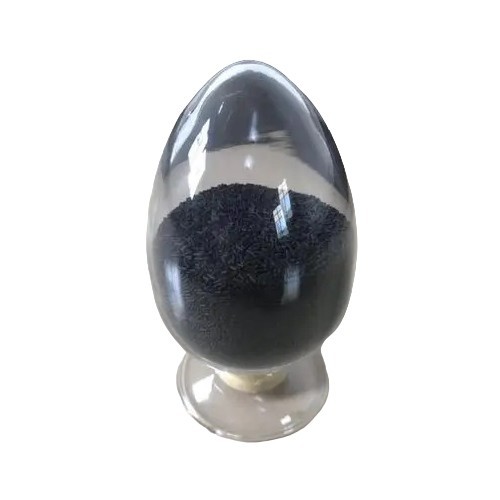

A well - formed Carbon Molecular Sieve - 330 should have a spherical or near - spherical shape. Irregularly shaped particles may cause channeling in the adsorption bed, reducing the overall efficiency of the nitrogen generation process. We can visually inspect the particles under a microscope to check their shape.
Bulk Density
Bulk density is another important physical property. It is defined as the mass of the carbon molecular sieve per unit volume of the container it fills. A consistent bulk density indicates a uniform packing of the sieve, which is essential for stable adsorption performance. To measure the bulk density, we simply weigh a known volume of the sieve. Deviations in bulk density may suggest issues such as improper manufacturing or contamination.
Adsorption Performance Detection
Nitrogen - Oxygen Separation Capacity
The primary function of Carbon Molecular Sieve - 330 is to separate nitrogen from oxygen. We can measure its nitrogen - oxygen separation capacity by using a laboratory - scale PSA system. In this system, a gas mixture containing nitrogen and oxygen is passed through the sieve under specific pressure and temperature conditions. The concentration of nitrogen and oxygen in the inlet and outlet gases is measured using gas analyzers.
The separation factor, which is the ratio of the adsorption equilibrium constants of nitrogen and oxygen, is a key parameter to evaluate the separation capacity. A higher separation factor indicates better nitrogen - oxygen separation performance. We can calculate the separation factor based on the measured gas concentrations.
Adsorption Kinetics
Adsorption kinetics describes how fast the carbon molecular sieve can adsorb nitrogen and oxygen. It is important because in a PSA system, the adsorption and desorption processes occur rapidly. We can study the adsorption kinetics by measuring the time - dependent change in gas concentration during the adsorption process.
One common method is to use a breakthrough curve experiment. In this experiment, a gas mixture is continuously passed through a fixed - bed of the sieve, and the concentration of the target gas (usually oxygen) at the outlet is monitored over time. The time when the outlet concentration starts to increase significantly is called the breakthrough time. A shorter breakthrough time for oxygen indicates faster adsorption kinetics.
Chemical Composition and Purity Detection
Elemental Analysis
Carbon Molecular Sieve - 330 is mainly composed of carbon, but it may also contain small amounts of other elements such as hydrogen, oxygen, and ash. We can use techniques like elemental analysis to determine the exact composition of the sieve. For example, the combustion method can be used to measure the carbon, hydrogen, and oxygen content. By burning the sample in an oxygen - rich environment and analyzing the combustion products, we can calculate the mass percentages of these elements.
Impurity Detection
Impurities in Carbon Molecular Sieve - 330 can have a negative impact on its performance. We need to detect and quantify impurities such as metals, sulfur, and chlorine. Inductively coupled plasma mass spectrometry (ICP - MS) is a powerful technique for detecting trace amounts of metals. It can accurately measure the concentration of various metals in the sieve.
For sulfur and chlorine detection, we can use methods such as combustion - ion chromatography. This method involves burning the sample and then analyzing the combustion products for sulfur and chlorine ions.
Mechanical Strength Detection
Crush Strength
The crush strength of Carbon Molecular Sieve - 330 is important because it needs to withstand the pressure and mechanical stress in the PSA system. We can measure the crush strength by applying a gradually increasing force to a single particle until it breaks. The maximum force at which the particle breaks is recorded as the crush strength.
A high crush strength indicates that the sieve can maintain its integrity during long - term operation, reducing the risk of particle fragmentation and bed fouling.
Attrition Resistance
Attrition resistance refers to the ability of the sieve to resist wear and tear during handling and operation. We can simulate the attrition process by tumbling a sample of the sieve in a rotating drum for a certain period of time. After the tumbling, we measure the amount of fines generated. A lower amount of fines indicates better attrition resistance.
Product Comparison and Benchmarking
In addition to the above detection methods, we can also compare our Carbon Molecular Sieve - 330 with other similar products in the market. For example, Carbon Molecular Sieve - JXSEP®HG - 110ES, JXSEP HG - 90 Carbon Molecular Sieve, and JXSEP®LG - 610 Carbon Molecular Sieve are well - known carbon molecular sieves. By conducting side - by - side tests on these products under the same conditions, we can identify the advantages and disadvantages of our Carbon Molecular Sieve - 330.
Conclusion
Detecting the quality of Carbon Molecular Sieve - 330 is a comprehensive process that involves multiple aspects. By carefully examining its physical properties, adsorption performance, chemical composition, and mechanical strength, we can ensure that our product meets the high - quality standards required by the market. If you are interested in our Carbon Molecular Sieve - 330 or want to discuss more about its quality and application, please feel free to contact us for procurement and negotiation.
References
- Yang, R. T. (1987). Gas Separation by Adsorption Processes. Butterworth Publishers.
- Ruthven, D. M., Farooq, S., & Knaebel, K. S. (1994). Pressure Swing Adsorption. VCH Publishers.
- Suzuki, M. (1990). Adsorption Engineering. Elsevier.