

Hey there! As a supplier of Carbon Molecular Sieve - 330, I've got a ton of experience in this field. Today, I'm gonna share with you some tips on how to optimize the operation parameters when using Carbon Molecular Sieve - 330.
First off, let's understand what Carbon Molecular Sieve - 330 is all about. It's a super - useful material mainly used for separating nitrogen from air in pressure swing adsorption (PSA) systems. The key to getting the most out of it lies in setting the right operation parameters.
Pressure
The pressure in a PSA system is crucial. In general, the adsorption pressure should be in the range of 0.6 - 1.0 MPa. When the pressure is too low, the adsorption capacity of the Carbon Molecular Sieve - 330 will be limited. That means less nitrogen can be separated from the air. On the other hand, if the pressure is too high, it not only increases the energy consumption but may also cause damage to the sieve over time.
For example, if you set the adsorption pressure at 0.5 MPa, you might notice that the nitrogen purity drops significantly. You can check the Carbon Molecular Sieve - JXSEP®HG - 110ES product page. It gives some general guidelines on pressure ranges for carbon molecular sieves, and the principles are quite similar for our Carbon Molecular Sieve - 330.
Temperature
Temperature also plays a big role. Carbon Molecular Sieve - 330 works best at a relatively low temperature. Ideally, the temperature should be kept between 20 - 30 degrees Celsius. When the temperature is too high, the kinetic energy of gas molecules increases, which reduces the adsorption efficiency of the sieve.
Let's say it's a hot summer day and the temperature in your PSA system reaches 40 degrees Celsius. You'll probably find that the nitrogen production rate goes down, and you might need to adjust other parameters to maintain the same level of nitrogen purity. You can refer to the JXSEP HG - 90 Carbon Molecular Sieve documentation. It has some interesting insights on how temperature affects the performance of carbon molecular sieves.
Adsorption and Desorption Time
The adsorption and desorption time in a PSA cycle need to be well - balanced. Usually, the adsorption time can be set between 60 - 120 seconds, and the desorption time should be around 30 - 60 seconds. If the adsorption time is too short, the sieve won't have enough time to adsorb nitrogen effectively. If it's too long, the sieve might get saturated, and the nitrogen purity will start to decline.
Similarly, for the desorption time, if it's not long enough, the adsorbed oxygen and other impurities won't be completely removed from the sieve, which will affect its performance in the next adsorption cycle. You can experiment a bit to find the optimal time for your specific application.
Gas Flow Rate
The gas flow rate is another important factor. It should be adjusted according to the size of your PSA system and the capacity of the Carbon Molecular Sieve - 330. A too - high gas flow rate will make the gas pass through the sieve too quickly, resulting in poor separation efficiency. A too - low flow rate, on the other hand, will reduce the nitrogen production rate.
For a small - scale PSA system, a gas flow rate of around 1 - 5 cubic meters per hour might be appropriate. For larger systems, you may need to increase the flow rate accordingly. You can find some related information on the Carbon Molecular Sieve - JXSEP®LG - 560 page, which can give you an idea of how flow rate relates to different carbon molecular sieve products.
Bed Height and Diameter
The bed height and diameter of the sieve also matter. A proper bed height ensures sufficient contact time between the gas and the sieve, while the diameter affects the gas distribution. Generally, a taller bed height can improve the separation efficiency, but it also increases the pressure drop.
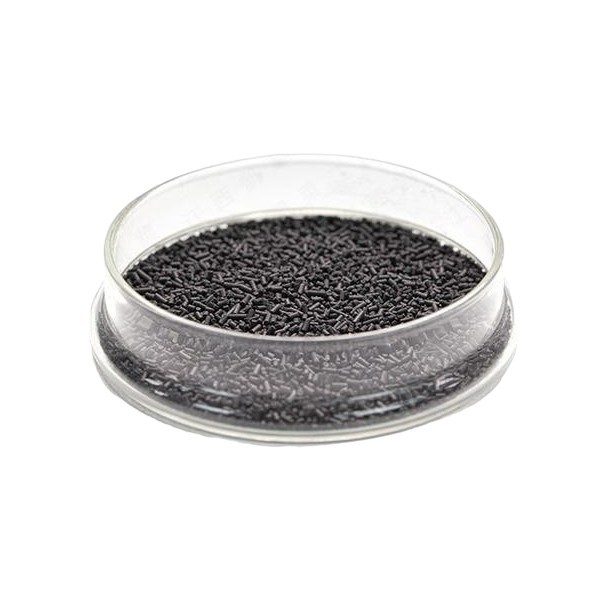

You need to find a balance between these two factors. For example, if you have a very wide but short bed, the gas might not be evenly distributed, and some parts of the sieve won't be fully utilized.
Pre - treatment of Feed Gas
Before the feed gas enters the PSA system, it's important to pre - treat it. This includes removing moisture, oil, and other impurities. Moisture can reduce the adsorption capacity of the Carbon Molecular Sieve - 330, and oil can block the pores of the sieve, making it less effective.
You can use filters and dryers to pre - treat the feed gas. Make sure to check and replace these pre - treatment components regularly to ensure their effectiveness.
Monitoring and Adjustment
Once you've set the initial operation parameters, it's not a one - time deal. You need to continuously monitor the performance of your PSA system. Check the nitrogen purity, production rate, and pressure regularly. If you notice any changes, you can adjust the parameters accordingly.
For example, if the nitrogen purity starts to drop, you might need to increase the adsorption time or adjust the pressure slightly. By keeping a close eye on these indicators, you can ensure that your Carbon Molecular Sieve - 330 is always operating at its best.
In conclusion, optimizing the operation parameters when using Carbon Molecular Sieve - 330 requires a good understanding of how these factors interact with each other. By carefully adjusting the pressure, temperature, adsorption and desorption time, gas flow rate, and other parameters, you can achieve high - quality nitrogen production with maximum efficiency.
If you're interested in purchasing Carbon Molecular Sieve - 330 or have any questions about optimizing its operation parameters, feel free to reach out. We're here to help you get the most out of our product.
References
- General knowledge and experience in the field of carbon molecular sieves.
- Product documentation of Carbon Molecular Sieve - JXSEP®HG - 110ES, JXSEP HG - 90 Carbon Molecular Sieve, and Carbon Molecular Sieve - JXSEP®LG - 560.