

In the field of gas separation and purification, molecular sieves play a crucial role. Among them, Carbon Molecular Sieve -330 stands out with its unique advantages over other molecular sieves. As a supplier of Carbon Molecular Sieve -330, I am excited to share with you the reasons why this product is a superior choice in many applications.
1. High Selectivity for Nitrogen Separation
One of the most significant advantages of Carbon Molecular Sieve -330 is its excellent selectivity for nitrogen separation from air. In the process of pressure swing adsorption (PSA) for nitrogen production, the molecular sieve needs to adsorb oxygen preferentially while allowing nitrogen to pass through. Carbon Molecular Sieve -330 has a well - defined pore structure that can effectively separate oxygen and nitrogen molecules based on their different diffusion rates.
The pore size distribution of Carbon Molecular Sieve -330 is optimized to ensure that oxygen molecules, which are smaller in size, can enter the pores more easily and be adsorbed, while nitrogen molecules are less likely to be adsorbed. Compared with some other molecular sieves, such as zeolite molecular sieves, Carbon Molecular Sieve -330 can achieve a higher purity of nitrogen gas. For example, in a typical PSA nitrogen generator using Carbon Molecular Sieve -330, nitrogen purity can reach up to 99.99%, which is difficult to achieve with some other common molecular sieves. This high - purity nitrogen is widely used in industries such as electronics manufacturing, food packaging, and chemical processing, where the presence of oxygen can cause oxidation and degradation of products.
2. Fast Adsorption and Desorption Kinetics
Another advantage of Carbon Molecular Sieve -330 is its fast adsorption and desorption kinetics. In a PSA system, the efficiency of the process depends on how quickly the molecular sieve can adsorb the target gas (in this case, oxygen) during the adsorption phase and release it during the desorption phase.
Carbon Molecular Sieve -330 has a relatively large surface area and a well - structured pore network, which allows for rapid diffusion of gas molecules in and out of the pores. This means that the adsorption and desorption processes can be completed in a shorter time, resulting in a higher throughput of the PSA system. For instance, compared with some activated carbon - based molecular sieves, Carbon Molecular Sieve -330 can reduce the cycle time of the PSA process by up to 30%. This not only increases the production capacity of the nitrogen generator but also reduces energy consumption, as less time is spent on each adsorption - desorption cycle.
3. Good Mechanical Strength
Mechanical strength is an important factor for molecular sieves, especially in industrial applications where they are subjected to high pressures and frequent cycling. Carbon Molecular Sieve -330 has excellent mechanical strength, which enables it to withstand the harsh operating conditions in PSA systems.
The manufacturing process of Carbon Molecular Sieve -330 involves special treatments to ensure the integrity of its structure. It has a high resistance to attrition and breakage, which means that it can maintain its performance over a long period of time. In contrast, some other molecular sieves, such as some natural zeolites, may be more brittle and prone to breakage under high - pressure conditions. This can lead to the formation of fines, which can clog the system and reduce its efficiency. The good mechanical strength of Carbon Molecular Sieve -330 ensures the long - term stability and reliability of the PSA nitrogen generation system.
4. Resistance to Impurities
Carbon Molecular Sieve -330 shows good resistance to various impurities commonly found in the feed gas. In real - world applications, the feed air may contain moisture, oil, and other contaminants. These impurities can have a negative impact on the performance of molecular sieves by blocking the pores or deactivating the active sites.

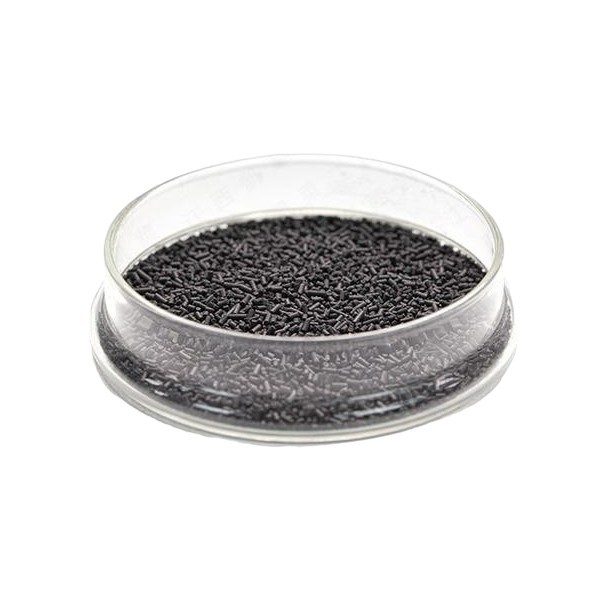
Carbon Molecular Sieve -330 has a certain degree of hydrophobicity, which means that it can resist the adsorption of moisture to some extent. This is important because excessive moisture can reduce the adsorption capacity of the molecular sieve for oxygen. Additionally, it is relatively resistant to oil contamination. Some other molecular sieves may be more sensitive to oil and moisture, and their performance can degrade rapidly in the presence of these impurities. The ability of Carbon Molecular Sieve -330 to withstand impurities allows for a more stable operation of the PSA system, even when the quality of the feed gas is not ideal.
5. Cost - Effectiveness
When considering the overall cost of a gas separation system, Carbon Molecular Sieve -330 offers a cost - effective solution. Although the initial purchase price of Carbon Molecular Sieve -330 may be comparable to some other high - performance molecular sieves, its long - term cost benefits are significant.
Due to its high selectivity, fast kinetics, good mechanical strength, and resistance to impurities, Carbon Molecular Sieve -330 can reduce the operating costs of the PSA system. It requires less energy consumption because of its fast adsorption and desorption processes, and it has a longer service life due to its mechanical strength and resistance to impurities. This means that the cost of replacement and maintenance is lower over time. In comparison, some other molecular sieves may require more frequent replacement and higher energy consumption, which can significantly increase the overall cost of the gas separation process.
Comparison with Other Specific Molecular Sieves
Let's compare Carbon Molecular Sieve -330 with some other well - known molecular sieves in the market.
- Carbon Molecular Sieve - JXSEP®LG - 560: While Carbon Molecular Sieve - JXSEP®LG - 560 also has good nitrogen separation performance, Carbon Molecular Sieve -330 generally offers higher nitrogen purity. The pore structure of Carbon Molecular Sieve -330 is more optimized for the separation of oxygen and nitrogen, resulting in a more efficient process. In addition, Carbon Molecular Sieve -330 has better mechanical strength, which makes it more suitable for long - term and high - pressure applications.
- Carbon Molecular Sieve - JXSEP®HG - 110ES: Carbon Molecular Sieve - JXSEP®HG - 110ES is another type of carbon - based molecular sieve. However, Carbon Molecular Sieve -330 has faster adsorption and desorption kinetics. This means that in a PSA system, Carbon Molecular Sieve -330 can achieve a higher throughput, which is crucial for large - scale nitrogen production.
- JXSEP HG - 90 Carbon Molecular Sieve: JXSEP HG - 90 Carbon Molecular Sieve may have a different pore size distribution and surface chemistry compared to Carbon Molecular Sieve -330. Carbon Molecular Sieve -330's superior resistance to impurities gives it an edge in applications where the feed gas contains contaminants. It can maintain its performance for a longer time without being significantly affected by moisture, oil, or other impurities.
Conclusion
In conclusion, Carbon Molecular Sieve -330 offers numerous advantages over other molecular sieves in terms of nitrogen separation selectivity, adsorption and desorption kinetics, mechanical strength, resistance to impurities, and cost - effectiveness. These advantages make it an ideal choice for PSA nitrogen generation systems in various industries.
If you are in need of a high - performance molecular sieve for your gas separation and purification processes, I encourage you to consider Carbon Molecular Sieve -330. Our company is committed to providing high - quality Carbon Molecular Sieve -330 products and excellent technical support. If you have any questions or are interested in purchasing our products, please feel free to contact us for further discussions and procurement negotiations.
References
- Ruthven, D. M., Farooq, S., & Knaebel, K. S. (1994). Pressure Swing Adsorption. John Wiley & Sons.
- Yang, R. T. (1987). Gas Separation by Adsorption Processes. Butterworths.
- Sircar, S., & Golden, T. C. (2005). Adsorption and Ion Exchange. In Kirk - Othmer Encyclopedia of Chemical Technology.