

Pressure Swing Adsorption (PSA) is a well-established and widely used separation technology in the gas industry. Carbon Molecular Sieve (CMS) is a crucial adsorbent in PSA processes, especially for the separation of nitrogen from air. As a Carbon Molecular Sieve supplier, I've witnessed firsthand the significance of understanding the key parameters in a PSA process using CMS. In this blog, I'll delve into these essential parameters to help you optimize your PSA system.

Adsorption Capacity
Adsorption capacity is one of the most fundamental parameters in a PSA process. It refers to the amount of gas that a unit mass of CMS can adsorb under specific conditions of temperature, pressure, and gas composition. For nitrogen generation from air using CMS, the primary goal is to selectively adsorb oxygen, allowing nitrogen to pass through the adsorber bed.
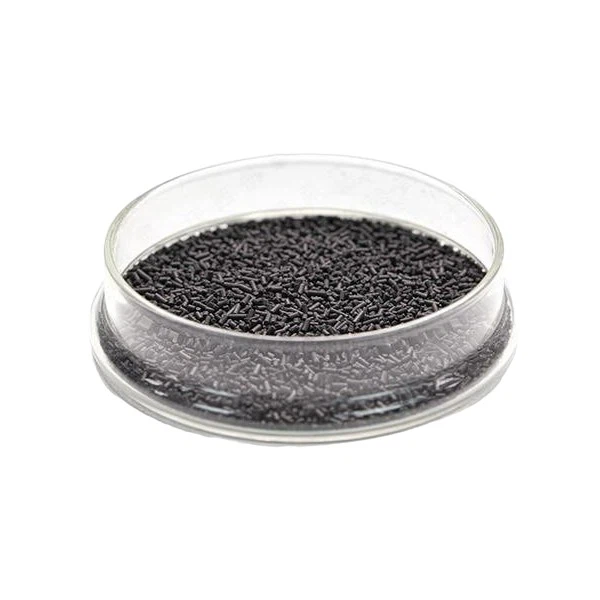
The adsorption capacity of CMS is influenced by several factors. Firstly, the pore structure of the CMS plays a vital role. Our Carbon Molecular Sieve-JXSEP®HG-110 is engineered with a well-controlled pore size distribution, which enables it to effectively adsorb oxygen molecules while excluding nitrogen. The micropores in the CMS act as molecular sieves, allowing only molecules with a suitable size to enter and be adsorbed.
Temperature also has a significant impact on adsorption capacity. Generally, adsorption is an exothermic process, meaning that lower temperatures favor higher adsorption capacity. However, in industrial PSA processes, operating at extremely low temperatures may not be practical due to energy costs and equipment limitations. Therefore, a balance needs to be struck between temperature and adsorption performance.
Pressure is another critical factor. Higher pressures increase the driving force for adsorption, leading to higher adsorption capacities. In a PSA process, the adsorption step is typically carried out at elevated pressures, while the desorption step is performed at lower pressures to regenerate the CMS.
Adsorption Kinetics
Adsorption kinetics describes the rate at which gas molecules are adsorbed onto the CMS surface. Fast adsorption kinetics are desirable in a PSA process to ensure efficient separation and high throughput. The adsorption rate is influenced by factors such as the diffusion rate of gas molecules within the CMS pores and the interaction between the gas molecules and the CMS surface.
Our JXSEP®LG-610 Carbon Molecular Sieve is designed to have excellent adsorption kinetics. The unique surface properties and pore structure of this CMS allow for rapid diffusion of oxygen molecules into the pores, resulting in quick adsorption. This enables the PSA system to achieve high separation efficiency in a relatively short time.
The particle size of the CMS also affects adsorption kinetics. Smaller particle sizes generally lead to faster adsorption rates because the diffusion path for gas molecules is shorter. However, using very small particles may increase the pressure drop across the adsorber bed, which can be a drawback in some applications. Therefore, an optimal particle size needs to be selected based on the specific requirements of the PSA process.
Selectivity
Selectivity is a measure of the ability of the CMS to preferentially adsorb one gas component over another. In the case of nitrogen generation from air, high selectivity for oxygen over nitrogen is essential to produce high-purity nitrogen. The selectivity of CMS is determined by the differences in the molecular size, shape, and polarity of the gas components, as well as the interaction between the gas molecules and the CMS surface.
Our Carbon Molecular Sieve-JXSEP®HG-110ES exhibits excellent selectivity for oxygen. The carefully designed pore structure and surface chemistry of this CMS ensure that oxygen molecules are preferentially adsorbed, while nitrogen molecules are largely excluded. This high selectivity allows for the production of nitrogen with a purity of up to 99.99% in a PSA process.
Regenerability
Regenerability is an important parameter in a PSA process because it determines the efficiency and cost-effectiveness of the system. After the adsorption step, the CMS needs to be regenerated to remove the adsorbed gas and restore its adsorption capacity for the next cycle. There are two main methods for regenerating CMS in a PSA process: pressure swing regeneration and vacuum swing regeneration.
In pressure swing regeneration, the pressure in the adsorber bed is reduced to desorb the adsorbed gas. This method is relatively simple and energy-efficient. However, the desorption may not be complete, especially for strongly adsorbed gases. Vacuum swing regeneration, on the other hand, involves applying a vacuum to the adsorber bed to enhance desorption. This method can achieve more complete regeneration but requires additional equipment and energy.
The regenerability of our CMS products is carefully optimized to ensure efficient and reliable operation. The pore structure and surface properties of our CMS are designed to facilitate easy desorption of the adsorbed gas, minimizing the energy consumption and downtime during the regeneration process.
Bed Stability
Bed stability is crucial for the long-term performance of a PSA process. The CMS adsorbent bed should maintain its physical and chemical properties over multiple adsorption-desorption cycles. Factors such as mechanical strength, thermal stability, and resistance to impurities can affect bed stability.
Our CMS products are manufactured with high mechanical strength to withstand the mechanical stresses during the PSA process. The particles are resistant to attrition, which ensures that the bed does not break down over time. Additionally, our CMS has good thermal stability, allowing it to operate at a wide range of temperatures without significant degradation.
Resistance to impurities is also an important aspect of bed stability. Impurities in the feed gas, such as water, oil, and dust, can foul the CMS surface and reduce its adsorption performance. Our CMS products are designed to be resistant to these impurities, which helps to maintain the long-term stability and efficiency of the PSA process.
Conclusion
In conclusion, understanding the key parameters in a PSA process using Carbon Molecular Sieve is essential for optimizing the performance of the system. Adsorption capacity, adsorption kinetics, selectivity, regenerability, and bed stability are all critical factors that need to be considered when selecting a CMS for your PSA application.
As a Carbon Molecular Sieve supplier, we offer a range of high-quality CMS products, including Carbon Molecular Sieve-JXSEP®HG-110, JXSEP®LG-610 Carbon Molecular Sieve, and Carbon Molecular Sieve-JXSEP®HG-110ES, which are designed to meet the diverse needs of our customers. If you are interested in learning more about our products or discussing your specific PSA requirements, please feel free to contact us for procurement and negotiation.
References
- Ruthven, D. M., Farooq, S., & Knaebel, K. S. (1994). Pressure Swing Adsorption. John Wiley & Sons.
- Yang, R. T. (1987). Gas Separation by Adsorption Processes. Butterworths.
- Sircar, S., & Golden, T. C. (2005). Pressure swing adsorption. Chemical Engineering Science, 60(21), 5853-5871.