

As a supplier of Carbon Molecular Sieve -330, I often encounter inquiries about its adsorption capacity, especially for hydrogen sulfide. Hydrogen sulfide is a common and hazardous gas in many industrial processes, and understanding how well Carbon Molecular Sieve -330 can adsorb it is crucial for applications in gas purification, environmental protection, and other fields.
Understanding Carbon Molecular Sieve -330
Carbon Molecular Sieve -330 is a highly porous material with a unique pore structure. It is made from carbonaceous materials through a series of complex processes such as carbonization and activation. The pore size distribution of Carbon Molecular Sieve -330 is carefully controlled to achieve specific adsorption properties. Its micropores and mesopores play a vital role in the adsorption process. Micropores, typically less than 2 nanometers in diameter, provide a large surface area for gas molecules to interact with the carbon surface. Mesopores, with diameters between 2 and 50 nanometers, facilitate the diffusion of gas molecules into the interior of the sieve.
Adsorption Mechanism of Carbon Molecular Sieve -330 for Hydrogen Sulfide
The adsorption of hydrogen sulfide by Carbon Molecular Sieve -330 involves both physical and chemical adsorption processes. Physical adsorption is mainly driven by van der Waals forces between the hydrogen sulfide molecules and the carbon surface. The large surface area of the sieve provides numerous adsorption sites for hydrogen sulfide molecules to adhere. Chemical adsorption, on the other hand, occurs when hydrogen sulfide reacts with the surface functional groups of the carbon. For example, the carbon surface may contain oxygen - containing functional groups such as hydroxyl and carbonyl groups. These groups can react with hydrogen sulfide to form stable compounds, enhancing the adsorption capacity.
Factors Affecting the Adsorption Capacity
Temperature
Temperature has a significant impact on the adsorption capacity of Carbon Molecular Sieve -330 for hydrogen sulfide. Generally, physical adsorption is an exothermic process. As the temperature increases, the kinetic energy of hydrogen sulfide molecules increases, making it easier for them to escape from the adsorption sites. Therefore, the adsorption capacity usually decreases with increasing temperature. However, at very low temperatures, the diffusion rate of hydrogen sulfide molecules may be too slow, which also affects the adsorption efficiency.
Pressure
Higher pressure usually leads to an increase in the adsorption capacity. According to the adsorption isotherm theory, under higher pressure, the concentration of hydrogen sulfide in the gas phase is higher, which increases the probability of gas molecules colliding with the adsorption sites on the carbon surface. As a result, more hydrogen sulfide molecules are adsorbed onto the sieve.
Gas Composition
The presence of other gases in the mixture can also affect the adsorption of hydrogen sulfide. For example, if there are gases that have a stronger affinity for the adsorption sites on the carbon surface, they may compete with hydrogen sulfide for these sites, reducing the adsorption capacity of hydrogen sulfide. On the other hand, some gases may react with hydrogen sulfide or the carbon surface, either promoting or inhibiting the adsorption process.
Experimental Studies on Adsorption Capacity
Many experimental studies have been conducted to determine the adsorption capacity of Carbon Molecular Sieve -330 for hydrogen sulfide. These studies typically involve using a fixed - bed adsorption column filled with Carbon Molecular Sieve -330. A gas mixture containing hydrogen sulfide is passed through the column at a controlled flow rate, temperature, and pressure. The concentration of hydrogen sulfide at the inlet and outlet of the column is measured over time. By analyzing the breakthrough curve, which shows the change in the outlet concentration of hydrogen sulfide with time, the adsorption capacity can be calculated.
The adsorption capacity is usually expressed in terms of the amount of hydrogen sulfide adsorbed per unit mass of the sieve. For example, in some studies, the adsorption capacity of Carbon Molecular Sieve -330 for hydrogen sulfide can reach several grams per 100 grams of the sieve under certain conditions. However, it should be noted that the actual adsorption capacity may vary depending on the specific experimental conditions and the quality of the sieve.
Comparison with Other Carbon Molecular Sieves
In the market, there are other types of carbon molecular sieves, such as JXSEP®LG - 610 Carbon Molecular Sieve, Carbon Molecular Sieve - JXSEP®HG - 110, and JXSEP HG - 90 Carbon Molecular Sieve. Each type has its own unique properties and adsorption characteristics.
Compared with these other sieves, Carbon Molecular Sieve -330 may have different pore size distributions, surface chemistries, and adsorption capacities for hydrogen sulfide. For example, some sieves may be more suitable for adsorbing larger gas molecules, while Carbon Molecular Sieve -330 is optimized for the adsorption of small molecules like hydrogen sulfide. The choice of the sieve depends on the specific application requirements, such as the concentration of hydrogen sulfide in the gas, the presence of other gases, and the operating conditions.

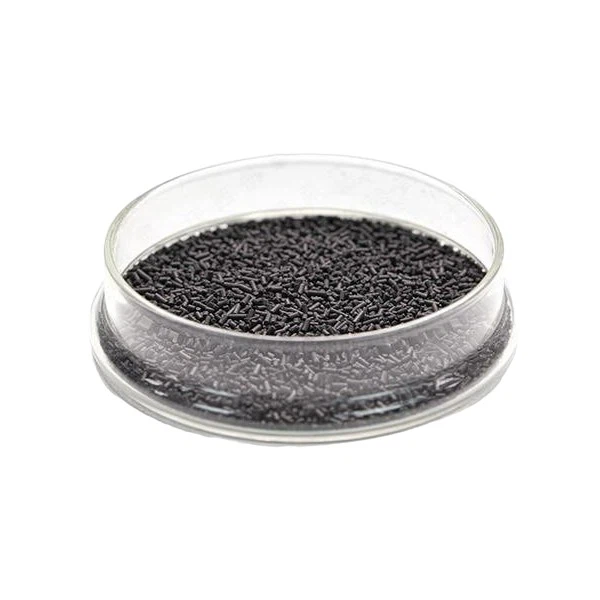
Applications of Carbon Molecular Sieve -330 in Hydrogen Sulfide Removal
Carbon Molecular Sieve -330 has a wide range of applications in the removal of hydrogen sulfide. In the natural gas industry, hydrogen sulfide is a common impurity that needs to be removed to meet the quality standards of natural gas. Carbon Molecular Sieve -330 can be used in gas purification plants to adsorb hydrogen sulfide from the natural gas stream. In the petrochemical industry, hydrogen sulfide is also produced during various processes, and the sieve can be used to treat the waste gas to reduce environmental pollution.
Conclusion
In conclusion, the adsorption capacity of Carbon Molecular Sieve -330 for hydrogen sulfide is affected by multiple factors such as temperature, pressure, and gas composition. Through physical and chemical adsorption mechanisms, it can effectively adsorb hydrogen sulfide. Experimental studies have provided valuable data on its adsorption capacity, and compared with other carbon molecular sieves, it has its own advantages in the adsorption of hydrogen sulfide.
If you are interested in our Carbon Molecular Sieve -330 products for hydrogen sulfide removal or other applications, please feel free to contact us for further discussion and procurement negotiation. We are committed to providing high - quality products and professional technical support to meet your specific needs.
References
- Yang, R. T. (1987). Gas Separation by Adsorption Processes. Butterworths.
- Ruthven, D. M. (1984). Principles of Adsorption and Adsorption Processes. John Wiley & Sons.
- Do, D. D. (1998). Adsorption Analysis: Equilibria and Kinetics. Imperial College Press.