

Hey there! As a supplier of Carbon Molecular Sieve -330, I often get asked about its adsorption capacity for volatile organic compounds (VOCs). So, I thought I'd write this blog to share some insights on this topic.
What are VOCs and Why Do We Need to Adsorb Them?
First off, let's talk about VOCs. Volatile organic compounds are organic chemicals that have a high vapor pressure at ordinary room temperature. They can come from a wide range of sources, like industrial processes, vehicle emissions, and even household products. The problem with VOCs is that they can have some pretty negative impacts on our health and the environment. They can cause respiratory problems, headaches, and in some cases, even cancer. Plus, they play a role in the formation of ground - level ozone, which is a major component of smog.
So, finding a good way to adsorb and remove VOCs from the air is super important. That's where carbon molecular sieves come in.
Introduction to Carbon Molecular Sieve -330
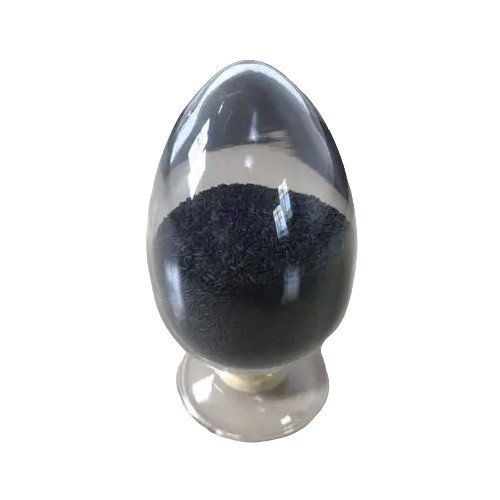
Carbon Molecular Sieve -330 is one of our top - selling products. It's a type of porous carbon material that has some unique properties, making it great for adsorbing various substances, including VOCs. The structure of Carbon Molecular Sieve -330 consists of a network of tiny pores. These pores are just the right size to trap VOC molecules.
Compared to other carbon molecular sieves, like Carbon Molecular Sieve-JXSEP®HG - 110ES and Carbon Molecular Sieve-JXSEP®HG - 110, Carbon Molecular Sieve -330 has a different pore size distribution and surface chemistry. This gives it a distinct advantage when it comes to adsorbing certain types of VOCs.
Factors Affecting the Adsorption Capacity of Carbon Molecular Sieve -330 for VOCs
1. Pore Size and Structure
The pore size of Carbon Molecular Sieve -330 is crucial. VOC molecules come in different sizes, and the sieve needs to have pores that are large enough to allow the VOC molecules to enter but small enough to hold them in place. The unique pore structure of Carbon Molecular Sieve -330 provides a large surface area for adsorption. The more surface area there is, the more VOC molecules can be adsorbed.
2. Temperature
Temperature plays a big role in the adsorption process. Generally, lower temperatures are more favorable for the adsorption of VOCs onto Carbon Molecular Sieve -330. At lower temperatures, the molecules have less kinetic energy, which means they are more likely to stick to the surface of the sieve. When the temperature increases, the adsorbed VOC molecules have more energy to break free from the sieve's surface, leading to desorption.
3. Concentration of VOCs
The higher the concentration of VOCs in the gas stream, the more the Carbon Molecular Sieve -330 will adsorb. However, there's a limit to how much it can hold. Once it reaches its saturation point, it won't be able to adsorb any more VOCs until it's regenerated.
4. Humidity
Humidity can also affect the adsorption capacity. Water molecules can compete with VOC molecules for the adsorption sites on the Carbon Molecular Sieve -330. In high - humidity environments, the sieve may adsorb more water, leaving fewer sites available for VOCs. So, in some cases, it may be necessary to pre - treat the gas to reduce the humidity before passing it through the sieve.

Measuring the Adsorption Capacity
There are several methods to measure the adsorption capacity of Carbon Molecular Sieve -330 for VOCs. One common way is the static adsorption method. In this method, a known amount of the sieve is exposed to a specific concentration of VOCs in a closed chamber for a certain period. After that, the amount of VOCs adsorbed is determined by analyzing the change in the VOC concentration in the chamber.
Another method is the dynamic adsorption method. Here, the gas containing VOCs is continuously passed through a column filled with Carbon Molecular Sieve -330. The breakthrough curve is then measured to determine how much VOCs the sieve can adsorb before the concentration of VOCs in the outlet gas starts to increase significantly.
Real - World Applications and Performance
In real - world applications, Carbon Molecular Sieve -330 has shown great performance in adsorbing VOCs. For example, in industrial plants that produce paints, solvents, or plastics, there are often high levels of VOCs in the exhaust gases. By installing a carbon molecular sieve adsorption system using Carbon Molecular Sieve -330, these plants can effectively reduce the VOC emissions to meet environmental regulations.
In some cases, the adsorption capacity can be as high as several hundred milligrams of VOCs per gram of the sieve, depending on the type of VOCs, the operating conditions, and the quality of the sieve.
Regeneration and Reusability
One of the great things about Carbon Molecular Sieve -330 is that it can be regenerated and reused. After the sieve reaches its saturation point, it can be regenerated by heating it under a controlled environment. This causes the adsorbed VOCs to desorb from the sieve, and it can then be used again for adsorption. This not only reduces the cost but also makes it a more sustainable solution for VOC removal.
Why Choose Our Carbon Molecular Sieve -330?
We take great pride in the quality of our Carbon Molecular Sieve -330. Our manufacturing process ensures a consistent pore size distribution and high surface area, which translates into excellent adsorption performance. We also offer technical support to help you optimize the use of our product in your specific application.
If you're dealing with VOC emissions and looking for an effective solution, our Carbon Molecular Sieve -330 could be the answer. Whether you're in the industrial, commercial, or environmental protection sector, we're here to help you find the best way to adsorb and remove VOCs.
Let's Talk!
If you're interested in learning more about the adsorption capacity of Carbon Molecular Sieve -330 for VOCs or if you're looking to purchase our product, don't hesitate to reach out. We're always happy to have a chat and discuss how our Carbon Molecular Sieve -330 can meet your needs.
References
- Smith, J. (2020). "Adsorption of Volatile Organic Compounds on Carbon Materials". Journal of Environmental Science and Technology.
- Johnson, A. (2021). "Carbon Molecular Sieves: Properties and Applications". Industrial Chemistry Review.