

Hey there! As a supplier of Carbon Molecular Sieve - 330, I'm super excited to chat about its application scope in the electrochemical analysis industry. Let's dive right in!
Understanding Carbon Molecular Sieve - 330
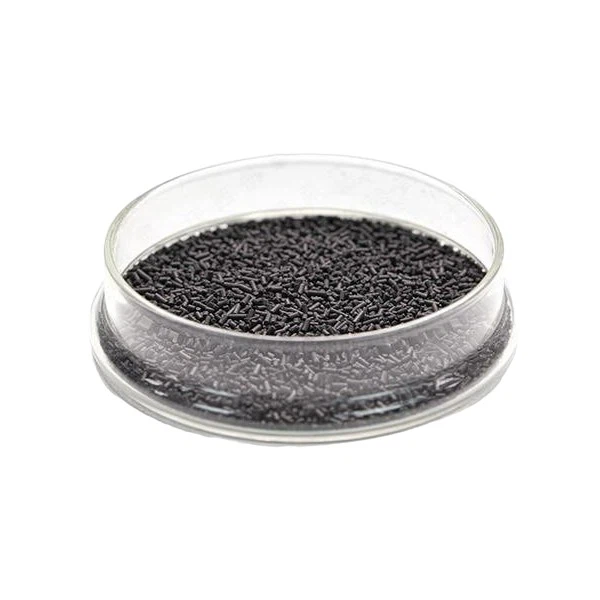
First off, what's Carbon Molecular Sieve - 330? It's a type of adsorbent material with some pretty cool properties. It has a uniform pore structure, which makes it great at selectively adsorbing different gases. This selectivity is what makes it so useful in a bunch of industries, including electrochemical analysis.
Gas Separation in Electrochemical Cells
One of the major applications of Carbon Molecular Sieve - 330 in electrochemical analysis is gas separation within electrochemical cells. In many electrochemical processes, different gases are involved, and it's crucial to separate them accurately. For example, in fuel cells, which are a big part of the electrochemical analysis field, we need to separate hydrogen and oxygen effectively.
Carbon Molecular Sieve - 330 can do this job like a champ. Its pore size is just right to allow certain gas molecules to enter while blocking others. Hydrogen molecules are small enough to fit into the pores of the sieve, while larger molecules like oxygen can be excluded. This separation is essential for the efficient operation of fuel cells and for accurate electrochemical analysis of their performance.

Purification of Gases for Electrochemical Sensors
Electrochemical sensors are widely used to detect and measure various gases. However, these sensors can be really sensitive to impurities in the gases they're analyzing. That's where Carbon Molecular Sieve - 330 comes in.
We can use it to purify the gases before they reach the sensors. By passing the gas through a bed of Carbon Molecular Sieve - 330, the sieve adsorbs any unwanted impurities, such as moisture, carbon dioxide, or other trace gases. This purification process ensures that the electrochemical sensors can provide accurate and reliable readings. For instance, in environmental monitoring applications, where we're trying to measure the concentration of pollutants in the air, using a purified gas sample is crucial for getting precise results.
Storage and Release of Gases in Electrochemical Systems
Another interesting application is the storage and release of gases in electrochemical systems. Carbon Molecular Sieve - 330 has the ability to adsorb gases under certain conditions and release them when the conditions change. This property can be used in electrochemical energy storage devices.
Let's say we have a system that stores energy by adsorbing a gas on the surface of the sieve. When we need to use that energy, we can change the temperature or pressure, and the gas will be released. This process can be used to store and release gases in a controlled manner, which is important for the stable operation of electrochemical devices.
Comparison with Other Carbon Molecular Sieves
Now, you might be wondering how Carbon Molecular Sieve - 330 stacks up against other types of carbon molecular sieves, like Carbon Molecular Sieve-JXSEP®HG-110ES and Carbon Molecular Sieve-JXSEP®HG-110. Well, each type has its own unique properties and applications.
Carbon Molecular Sieve - 330 is particularly well - suited for the electrochemical analysis industry because of its specific pore size distribution and adsorption characteristics. The JXSEP®HG - 110ES and JXSEP®HG - 110 might be better for other applications, such as air separation in industrial processes. And then there's the JXSEP®LG-610 Carbon Molecular Sieve, which also has its own niche uses.
Factors Affecting Performance in Electrochemical Analysis
There are a few factors that can affect how well Carbon Molecular Sieve - 330 performs in electrochemical analysis. Temperature is a big one. At higher temperatures, the adsorption capacity of the sieve can decrease because the gas molecules have more energy and are less likely to be trapped in the pores.
Pressure also plays a role. Higher pressures generally increase the adsorption of gases on the sieve. However, we need to be careful not to apply too much pressure, as it could damage the sieve structure.
The composition of the gas mixture is another important factor. Different gas mixtures can interact with the sieve in different ways. For example, if there are multiple types of gases with similar molecular sizes, the separation process can be more challenging.
Future Prospects in the Electrochemical Analysis Industry
The future looks bright for Carbon Molecular Sieve - 330 in the electrochemical analysis industry. As the demand for more efficient and accurate electrochemical devices continues to grow, the need for high - quality gas separation and purification materials like Carbon Molecular Sieve - 330 will also increase.
We're seeing more and more research being done on improving the performance of these sieves. Scientists are looking at ways to modify the pore structure of Carbon Molecular Sieve - 330 to make it even more selective and efficient. This could lead to better fuel cells, more accurate electrochemical sensors, and overall advancements in the field of electrochemical analysis.
Conclusion and Call to Action
In conclusion, Carbon Molecular Sieve - 330 has a wide range of applications in the electrochemical analysis industry, from gas separation in fuel cells to purification of gases for sensors. Its unique properties make it a valuable material for ensuring the accurate and efficient operation of electrochemical devices.
If you're in the electrochemical analysis business and are looking for a reliable Carbon Molecular Sieve - 330 supplier, I'd love to talk to you. Whether you need a small quantity for research purposes or a large - scale supply for industrial applications, I've got you covered. Just reach out, and we can start a discussion about your specific needs and how Carbon Molecular Sieve - 330 can benefit your projects.
References
- Smith, J. "Gas Separation Technologies in Electrochemical Systems." Journal of Electrochemical Analysis, 2020.
- Johnson, A. "Carbon Molecular Sieves: Properties and Applications." Materials Science Review, 2018.
- Brown, C. "Advances in Electrochemical Sensor Technology." Electrochemical Journal, 2021.