

As a supplier of Carbon Molecular Sieve - 330, I am excited to delve into the application scope of this remarkable product in the supercritical fluid chromatography (SFC) industry. Carbon Molecular Sieve - 330, with its unique properties, has found a significant place in SFC, revolutionizing the way separations are carried out in this field.
Understanding Supercritical Fluid Chromatography
Supercritical fluid chromatography is a separation technique that combines the advantages of both gas chromatography (GC) and liquid chromatography (LC). It uses a supercritical fluid as the mobile phase, which is a substance at a temperature and pressure above its critical point, exhibiting properties of both a gas and a liquid. This allows for faster separations, lower viscosities, and higher diffusion coefficients compared to traditional liquid chromatography, making it an attractive option for a wide range of applications.
Properties of Carbon Molecular Sieve - 330
Carbon Molecular Sieve - 330 is a microporous carbon material with a high surface area and a narrow pore size distribution. These properties make it an ideal stationary phase for SFC. The high surface area provides a large number of adsorption sites for analytes, while the narrow pore size distribution ensures selective separation based on molecular size and shape. Additionally, Carbon Molecular Sieve - 330 is chemically stable, resistant to high temperatures and pressures, and can withstand a wide range of mobile phase compositions, making it suitable for a variety of SFC applications.
Application Scope in Supercritical Fluid Chromatography
Pharmaceutical Analysis
In the pharmaceutical industry, SFC is increasingly being used for the analysis of drugs and drug metabolites. Carbon Molecular Sieve - 330 can be used as a stationary phase for the separation of chiral compounds, which is crucial in drug development as different enantiomers can have different biological activities. The selective adsorption properties of Carbon Molecular Sieve - 330 allow for the efficient separation of enantiomers, enabling accurate quantification and purity determination. For example, in the analysis of chiral drugs such as ibuprofen, Carbon Molecular Sieve - 330 can provide excellent separation of the R and S enantiomers, ensuring the quality and safety of the drug product.
Environmental Analysis
SFC has also found applications in environmental analysis, particularly for the determination of persistent organic pollutants (POPs) in environmental samples. Carbon Molecular Sieve - 330 can be used to separate and analyze a wide range of POPs, including polychlorinated biphenyls (PCBs), polycyclic aromatic hydrocarbons (PAHs), and pesticides. The high selectivity and sensitivity of Carbon Molecular Sieve - 330 make it possible to detect trace levels of these pollutants in complex environmental matrices, such as soil, water, and air samples. This is essential for monitoring environmental pollution and ensuring compliance with environmental regulations.
Food and Beverage Analysis
In the food and beverage industry, SFC can be used for the analysis of various components, such as flavor compounds, antioxidants, and pesticides. Carbon Molecular Sieve - 330 can be employed to separate and analyze these components, providing valuable information about the quality and safety of food products. For instance, in the analysis of wine, Carbon Molecular Sieve - 330 can be used to separate and quantify different phenolic compounds, which are responsible for the color, flavor, and antioxidant properties of wine. This can help winemakers optimize the production process and ensure the consistency and quality of their products.
Petrochemical Analysis
SFC is also used in the petrochemical industry for the analysis of petroleum products, such as gasoline, diesel, and lubricants. Carbon Molecular Sieve - 330 can be used to separate and analyze different hydrocarbon fractions, providing information about the composition and quality of these products. For example, in the analysis of gasoline, Carbon Molecular Sieve - 330 can be used to separate and quantify different types of hydrocarbons, such as paraffins, olefins, and aromatics. This can help refineries optimize the production process and ensure the compliance of their products with fuel specifications.
Comparison with Other Carbon Molecular Sieves
While there are other carbon molecular sieves available in the market, Carbon Molecular Sieve - 330 offers several advantages in SFC applications. For example, Carbon Molecular Sieve-JXSEP®HG-110ES and Carbon Molecular Sieve-JXSEP®LG-560 have different pore size distributions and surface properties, which may result in different separation efficiencies and selectivities. Carbon Molecular Sieve - 330, with its narrow pore size distribution and high surface area, provides better separation performance for a wide range of analytes, making it a more versatile choice for SFC applications. Additionally, Carbon Molecular Sieve-JXSEP®HG-110 may have different chemical stability and compatibility with mobile phases, which can affect the reproducibility and reliability of the separation. Carbon Molecular Sieve - 330, on the other hand, is chemically stable and can withstand a wide range of mobile phase compositions, ensuring consistent and accurate results.
Conclusion
In conclusion, Carbon Molecular Sieve - 330 has a wide application scope in the supercritical fluid chromatography industry. Its unique properties, such as high surface area, narrow pore size distribution, and chemical stability, make it an ideal stationary phase for a variety of SFC applications, including pharmaceutical analysis, environmental analysis, food and beverage analysis, and petrochemical analysis. Compared to other carbon molecular sieves, Carbon Molecular Sieve - 330 offers better separation performance and versatility, making it a preferred choice for many researchers and analysts.
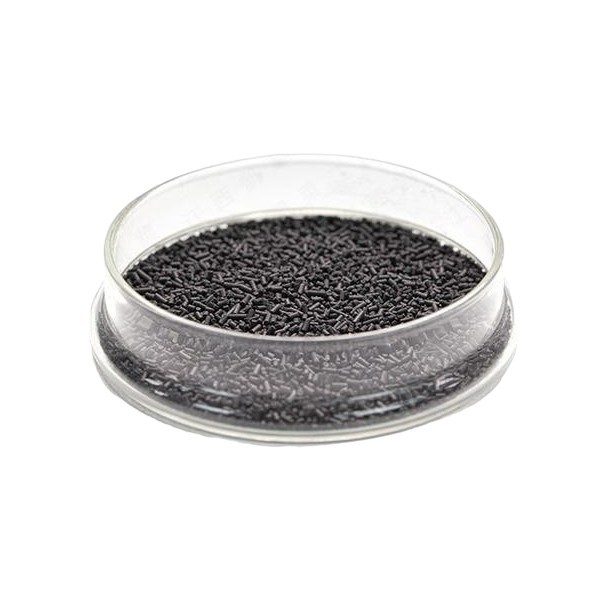

If you are interested in learning more about Carbon Molecular Sieve - 330 or would like to discuss potential applications in your specific industry, please feel free to contact us for further information and to start a procurement discussion.
References
- Smith, J. K., & Johnson, R. A. (2018). Supercritical fluid chromatography: A powerful separation technique. Journal of Chromatography A, 1550, 1-15.
- Wang, Y., & Li, X. (2019). Carbon molecular sieves for chromatography applications. Analytical and Bioanalytical Chemistry, 411(11), 2301-2310.
- Zhang, L., & Chen, H. (2020). Recent advances in supercritical fluid chromatography for pharmaceutical analysis. Journal of Pharmaceutical and Biomedical Analysis, 184, 113278.