

Hey there! As a supplier of Carbon Molecular Sieve - JXH, I often get asked about how it stacks up against activated carbon. So, I thought I'd write this blog to break down the comparison and help you understand which one might be the better fit for your needs.
Basics of Carbon Molecular Sieve - JXH and Activated Carbon
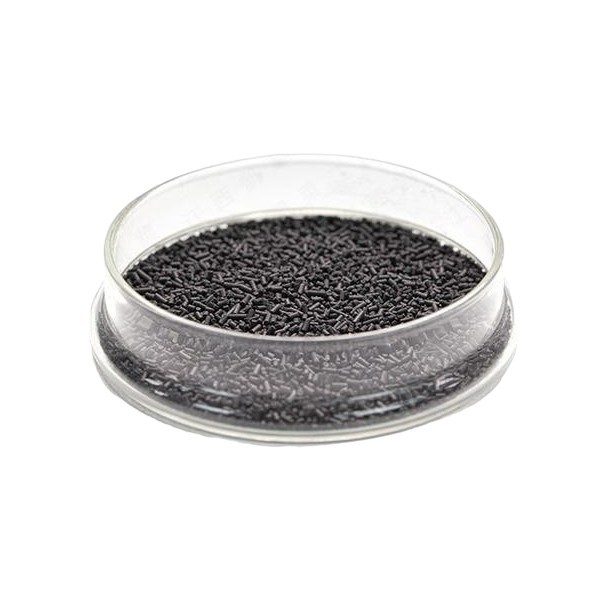
First off, let's get a quick lowdown on what these two things are. Carbon Molecular Sieve - JXH is a type of porous carbon material with a very specific pore size distribution. It's designed to selectively adsorb different gases based on their molecular size and shape. We offer several great products like Carbon Molecular Sieve - JXSEP®HG - 110, Carbon Molecular Sieve - JXSEP®HG - 110ES, and Carbon Molecular Sieve - JXSEP®LG - 560, each tailored for different applications.
On the other hand, activated carbon is also a porous carbon, but it has a much broader pore size range. It works mainly through physical adsorption, attracting and holding various substances on its surface. It's widely used in water purification, air filtration, and many other areas.
Adsorption Selectivity
One of the biggest differences between Carbon Molecular Sieve - JXH and activated carbon is their adsorption selectivity. Carbon Molecular Sieve - JXH is like a picky eater. It has a very precise pore size that allows it to adsorb specific molecules. For example, in the separation of nitrogen and oxygen from air, Carbon Molecular Sieve - JXH can preferentially adsorb oxygen molecules because of their size, leaving nitrogen to pass through. This makes it super useful in industries that need high - purity nitrogen, like the electronics and food packaging industries.
Activated carbon, in contrast, is more of a generalist. It can adsorb a wide variety of substances, including organic compounds, gases, and even some heavy metals. It doesn't really care about the specific size or shape of the molecule as much as it just wants to stick to something. So, if you have a mixture of different contaminants and you need to get rid of most of them, activated carbon might be your go - to.
Adsorption Capacity
When it comes to adsorption capacity, it depends on what you're trying to adsorb. For small molecules and specific gases, Carbon Molecular Sieve - JXH can have a high adsorption capacity. Since its pores are just the right size for certain molecules, it can pack a lot of them in. For instance, in the case of oxygen adsorption for nitrogen generation, our Carbon Molecular Sieve - JXSEP®HG - 110 can hold a significant amount of oxygen, allowing for efficient separation.
Activated carbon, with its large surface area and diverse pore sizes, can have a high overall adsorption capacity for a wide range of substances. However, its capacity for specific molecules might not be as high as that of Carbon Molecular Sieve - JXH when dealing with targeted applications.
Regeneration
Regeneration is an important factor, especially if you want to reuse the adsorbent. Carbon Molecular Sieve - JXH is usually regenerated by reducing the pressure (pressure swing adsorption) or by increasing the temperature (thermal swing adsorption). This process is relatively straightforward and can be done in a short time, which means you can get back to using it quickly.
Activated carbon can also be regenerated, but the process is often more complex. It might involve heating it to high temperatures in an inert atmosphere to drive off the adsorbed substances. This process can take longer and might require more energy.
Physical Properties
In terms of physical properties, Carbon Molecular Sieve - JXH is typically more rigid and has a higher mechanical strength. This means it can withstand higher pressures and flow rates without breaking down. It's also less likely to generate dust during handling and operation, which is a big plus in industrial settings where dust can cause problems.
Activated carbon is more brittle and can generate dust more easily. It also has a lower density compared to Carbon Molecular Sieve - JXH, which can affect its packing density in adsorption columns.
Cost
Cost is always a consideration. Generally, Carbon Molecular Sieve - JXH can be more expensive upfront than activated carbon. However, when you factor in its high selectivity, efficient separation performance, and ease of regeneration, it can be a cost - effective option in the long run, especially for applications where high - purity separation is required.
Activated carbon is more affordable initially, but if you need to replace it frequently or if you're using it in a large - scale application, the long - term cost might add up.
Applications
Let's talk about where each of these materials shines. Carbon Molecular Sieve - JXH is commonly used in gas separation processes, such as nitrogen generation for industrial use, hydrogen purification, and carbon dioxide capture. Its ability to selectively adsorb specific gases makes it ideal for these applications.
Activated carbon is used in a wide range of applications, including water treatment to remove organic contaminants and odors, air purification to filter out volatile organic compounds (VOCs) and other pollutants, and in the pharmaceutical industry for the purification of drugs.
Conclusion
So, in conclusion, both Carbon Molecular Sieve - JXH and activated carbon have their own unique advantages. If you need high - selectivity adsorption for specific gases or molecules, short regeneration times, and high mechanical strength, Carbon Molecular Sieve - JXH is the way to go. On the other hand, if you need to adsorb a wide variety of substances and cost is a major concern, activated carbon might be a better choice.
If you're still not sure which one is right for your application or if you want to learn more about our Carbon Molecular Sieve - JXH products, don't hesitate to reach out. We're here to help you make the best decision for your needs. Whether you're in the process of setting up a new gas separation system or looking to upgrade your existing one, we can provide you with the right solutions and support. Let's start a conversation about your requirements and see how we can work together.

References
- "Adsorption Technology and Design" by D. Q. Yang.
- "Carbon Materials for Advanced Technologies" edited by M. S. Dresselhaus, G. Dresselhaus, and A. J. Rouff.