

Hey there! As a supplier of Carbon Molecular Sieve - JXF, I've been getting a lot of questions lately about how gas velocity impacts mass transfer in our product. So, I thought I'd sit down and write this blog to share some insights based on my experience and knowledge in the field.
Let's start with the basics. Carbon Molecular Sieve - JXF is a highly porous material that's widely used in gas separation processes. It works by selectively adsorbing different gases based on their molecular size and shape. The mass transfer, which is the movement of gas molecules from the bulk gas phase to the surface of the carbon molecular sieve, is a crucial step in this separation process.
Now, gas velocity plays a significant role in mass transfer. When the gas velocity is low, the gas molecules have more time to interact with the surface of the carbon molecular sieve. This allows for a more thorough adsorption process as the molecules can diffuse into the pores of the sieve at a relatively slow pace. As a result, the mass transfer efficiency can be quite high in this scenario.
For example, in a small - scale laboratory setup where we're testing the separation of nitrogen and oxygen using our JXSEP HG - 90 Carbon Molecular Sieve, when we set a low gas velocity, we can see that the sieve is able to adsorb a large amount of oxygen, leaving a high - purity nitrogen stream. The slow movement of the gas gives the oxygen molecules enough time to find their way into the appropriate pores of the sieve and get adsorbed.
However, there's a downside to low gas velocity. In industrial applications, low gas velocity means a lower throughput. This means that we can't process a large volume of gas in a short period of time. For a company that needs to produce a large amount of separated gas, this can be a major drawback.
On the other hand, when the gas velocity is high, the gas passes through the carbon molecular sieve bed much faster. At first glance, this might seem like a good thing as it allows for a higher throughput. But in terms of mass transfer, it can be a bit of a double - edged sword.
With high gas velocity, the gas molecules have less time to interact with the surface of the sieve. They rush through the bed, and many of them might not have the opportunity to diffuse into the pores and get adsorbed. This can lead to a decrease in the mass transfer efficiency.
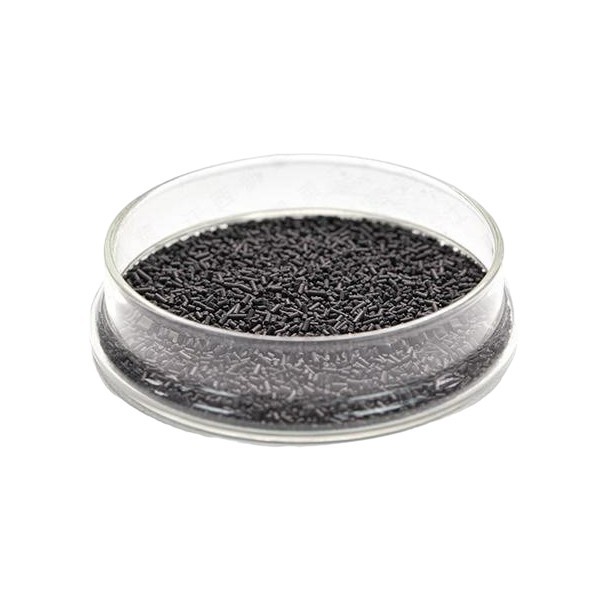

Let's say we're using our JXSEP®LG - 610 Carbon Molecular Sieve in an industrial gas separation unit. If we increase the gas velocity too much, we might notice that the purity of the separated gas decreases. This is because not all of the unwanted gas molecules are being adsorbed, and they end up in the product stream.
But it's not all bad news for high gas velocity. There are ways to optimize the process to take advantage of the high throughput while still maintaining a reasonable level of mass transfer efficiency. One approach is to increase the length of the carbon molecular sieve bed. By doing this, we give the gas molecules more distance to travel through the sieve, which increases the chances of them interacting with the surface and getting adsorbed.
Another strategy is to improve the pore structure of the carbon molecular sieve. Our Carbon Molecular Sieve - JXSEP®LG - 560 is designed with a more optimized pore structure that can enhance mass transfer even at higher gas velocities. The pores are carefully engineered to be more accessible to the gas molecules, allowing for faster diffusion and adsorption.
In addition to these factors, temperature also plays a role in the relationship between gas velocity and mass transfer. Generally, higher temperatures can increase the kinetic energy of the gas molecules, making them move faster. This can be beneficial at low gas velocities as it can speed up the diffusion process. But at high gas velocities, it might exacerbate the problem of reduced mass transfer efficiency as the molecules are moving even faster through the sieve bed.
To sum it up, gas velocity has a complex relationship with mass transfer in Carbon Molecular Sieve - JXF. Low gas velocity can lead to high mass transfer efficiency but low throughput, while high gas velocity offers high throughput but can reduce mass transfer efficiency. As a supplier, we're constantly working on developing new products and processes to find the right balance for our customers.
If you're in the market for a carbon molecular sieve and want to learn more about how gas velocity might impact your specific application, we'd love to have a chat with you. Whether you're running a small - scale laboratory experiment or a large - scale industrial operation, we can provide you with the right product and advice to optimize your gas separation process. Don't hesitate to reach out to us for more information and to start a procurement discussion.
References
- Ruthven, D. M. (1984). Principles of Adsorption and Adsorption Processes. John Wiley & Sons.
- Yang, R. T. (1987). Gas Separation by Adsorption Processes. Butterworths.