

Hey there! As a supplier of Carbon Molecular Sieve - 330, I've been getting a lot of questions lately about how the feed gas temperature affects its adsorption capacity. So, I thought I'd take a deep dive into this topic and share what I've learned.
First off, let's talk a bit about Carbon Molecular Sieve - 330. It's a super important material in the gas separation industry. It's used to separate different gases, like nitrogen from air, and it does this through a process called adsorption. Adsorption is when gas molecules stick to the surface of the sieve. The better the adsorption capacity, the more efficient the gas separation process.
Now, let's get to the main point - the impact of feed gas temperature. Temperature plays a huge role in how well Carbon Molecular Sieve - 330 can adsorb gases. You see, adsorption is an exothermic process. That means it releases heat. When the feed gas temperature is low, the adsorption process is more favorable. Why? Well, think of it like this. At lower temperatures, the gas molecules have less energy. They move around more slowly, which makes it easier for them to stick to the surface of the sieve. It's like trying to catch a slow - moving ball compared to a fast - moving one.

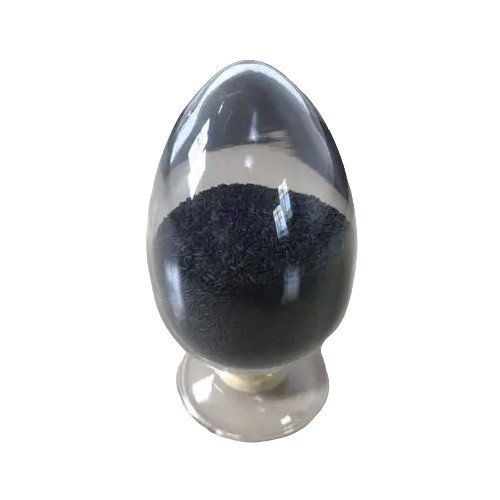
On the other hand, when the feed gas temperature is high, things get a bit tricky. High temperatures give the gas molecules more energy. They start moving around more vigorously, and it becomes harder for them to be adsorbed by the sieve. The heat also competes with the adsorption process. Since adsorption releases heat, a high - temperature environment can slow down or even reverse the adsorption process. This is known as desorption, where the gas molecules that were previously adsorbed start to break free from the sieve's surface.
Let's look at some numbers to really understand the impact. In a typical nitrogen generation system using Carbon Molecular Sieve - 330, if the feed gas temperature is around 25°C, the adsorption capacity can be quite high. The sieve can effectively adsorb oxygen and other impurities, leaving behind a high - purity nitrogen stream. But if the temperature rises to, say, 40°C or 50°C, the adsorption capacity starts to drop significantly. Tests have shown that for every 10°C increase in temperature, the adsorption capacity of Carbon Molecular Sieve - 330 can decrease by about 10 - 15%.
This drop in adsorption capacity has some real - world consequences. In industrial applications, a lower adsorption capacity means that the gas separation process becomes less efficient. You might need to use more sieve material to achieve the same level of gas purity. This can increase costs and also make the system more complex. For example, in a nitrogen - filled packaging process, if the adsorption capacity of the sieve is reduced due to high feed gas temperature, the nitrogen produced might not be pure enough. This could lead to spoilage of the packaged products.
But it's not all bad news. There are ways to manage the feed gas temperature to optimize the adsorption capacity of Carbon Molecular Sieve - 330. One common method is to use a pre - cooler. A pre - cooler is a device that cools down the feed gas before it enters the adsorption column. By reducing the temperature of the feed gas, we can ensure that the Carbon Molecular Sieve - 330 can work at its best.
Another thing to consider is the regeneration process. After the sieve has adsorbed a certain amount of gas, it needs to be regenerated. Regeneration is basically the opposite of adsorption. It's a process where the adsorbed gases are removed from the sieve so that it can be used again. Temperature also plays a role here. A higher temperature can actually be beneficial during the regeneration process. By heating the sieve, we can speed up the desorption process and get the sieve ready for the next adsorption cycle more quickly.
Now, I also want to mention some of our other products. We offer JXSEP HG - 90 Carbon Molecular Sieve, which has its own unique properties and is suitable for different applications. It might have a different response to feed gas temperature compared to Carbon Molecular Sieve - 330. Then there's Carbon Molecular Sieve - JXSEP®HG - 110 and Carbon Molecular Sieve - JXSEP®HG - 110ES. These products are designed to meet specific customer needs, and the impact of feed gas temperature on their adsorption capacity can vary.
In conclusion, the feed gas temperature has a significant impact on the adsorption capacity of Carbon Molecular Sieve - 330. Low temperatures are generally better for adsorption, while high temperatures can reduce the efficiency of the process. By understanding this relationship, we can take steps to optimize the gas separation process and get the most out of our Carbon Molecular Sieve - 330.
If you're in the market for Carbon Molecular Sieve - 330 or any of our other products, and you want to learn more about how to manage the feed gas temperature for optimal performance, feel free to reach out. We're here to help you make the best choice for your gas separation needs. Whether you're running a small - scale operation or a large industrial plant, we've got the expertise and the products to support you.
References:
- Gas Separation Technology Handbook, Third Edition
- Research papers on adsorption processes in carbon molecular sieves