

Carbon molecular sieves (CMS) have gained significant attention in various industries due to their unique properties and wide - ranging applications. As a supplier of Carbon Molecular Sieve - JXH, I am well - versed in the production process and the characteristics of these materials. In this blog, I will delve into the influence of the carbonization process on the properties of Carbon Molecular Sieve - JXH.
The Basics of Carbon Molecular Sieve - JXH
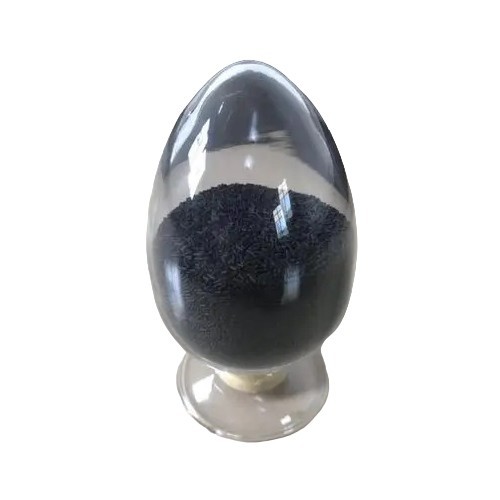
Carbon Molecular Sieve - JXH is a type of porous carbon material with a narrow pore size distribution. It is widely used in gas separation processes, such as nitrogen generation from air, due to its ability to selectively adsorb different gas molecules based on their size and shape. Our company offers a range of Carbon Molecular Sieve - JXH products, including Carbon Molecular Sieve - JXSEP®HG - 110ES, JXSEP®LG - 610 Carbon Molecular Sieve, and Carbon Molecular Sieve - JXSEP®LG - 560. These products have different properties and are suitable for various applications.
The Carbonization Process
The carbonization process is a crucial step in the production of Carbon Molecular Sieve - JXH. It involves heating a carbon - rich precursor material in an inert atmosphere at high temperatures (usually between 600°C and 1200°C). During carbonization, the precursor material undergoes a series of chemical and physical changes, including the decomposition of volatile components, the formation of a carbonaceous structure, and the development of porosity.
Influence on Pore Structure
One of the most significant effects of the carbonization process on Carbon Molecular Sieve - JXH is its influence on the pore structure. The pore size, pore volume, and pore size distribution of the CMS are highly dependent on the carbonization temperature, heating rate, and the type of precursor material.
At lower carbonization temperatures (around 600 - 800°C), the precursor material begins to decompose, and small pores start to form. These pores are mainly micropores (pores with a diameter less than 2 nm). As the temperature increases, the decomposition reaction becomes more intense, and the micropores gradually expand. At the same time, some mesopores (pores with a diameter between 2 and 50 nm) may also be formed.
However, if the carbonization temperature is too high (above 1000°C), the carbon atoms may rearrange and form a more ordered graphite - like structure. This can lead to a decrease in the pore volume and an increase in the average pore size, which is not desirable for gas separation applications. Therefore, it is essential to carefully control the carbonization temperature to obtain a CMS with the desired pore structure.
The heating rate also plays an important role in the development of the pore structure. A slow heating rate allows for a more controlled decomposition of the precursor material, resulting in a more uniform pore size distribution. On the other hand, a fast heating rate may cause rapid gas evolution, which can lead to the formation of large pores and a less uniform pore structure.
Influence on Adsorption Capacity
The adsorption capacity of Carbon Molecular Sieve - JXH is closely related to its pore structure. A CMS with a large pore volume and a narrow pore size distribution has a higher adsorption capacity for gas molecules. Since the carbonization process affects the pore structure, it also has a direct impact on the adsorption capacity.
A well - developed microporous structure is particularly important for the adsorption of small gas molecules, such as nitrogen and oxygen. The small pores can provide a large surface area for gas adsorption, and the narrow pore size distribution ensures that only gas molecules of a certain size can enter the pores. This selective adsorption property is the basis for the use of CMS in gas separation processes.
For example, in the nitrogen generation process, Carbon Molecular Sieve - JXH can selectively adsorb oxygen molecules, allowing nitrogen to pass through. The adsorption capacity of the CMS for oxygen determines the efficiency of the nitrogen generation system. By optimizing the carbonization process, we can improve the adsorption capacity of the CMS and enhance the performance of the gas separation system.
Influence on Mechanical Strength
Another important property of Carbon Molecular Sieve - JXH is its mechanical strength. The CMS needs to withstand the pressure and friction during the gas separation process without breaking or crumbling. The carbonization process can also affect the mechanical strength of the CMS.
During carbonization, the carbon atoms in the precursor material form a three - dimensional network structure, which provides the mechanical strength of the CMS. The carbonization temperature and the type of precursor material can influence the degree of cross - linking and the density of the carbon network.
At higher carbonization temperatures, the carbon atoms are more likely to form a stronger and more stable network structure, resulting in a higher mechanical strength. However, as mentioned earlier, too high a temperature can also lead to a decrease in the pore volume and an increase in the average pore size, which may have a negative impact on the adsorption capacity. Therefore, a balance needs to be struck between the mechanical strength and the adsorption performance.

Optimization of the Carbonization Process
Based on the above analysis, optimizing the carbonization process is crucial for obtaining Carbon Molecular Sieve - JXH with excellent properties. Here are some key factors to consider:
Selection of Precursor Material
The type of precursor material has a significant impact on the properties of the final CMS. Different precursor materials have different chemical compositions and structures, which can lead to different pore structures and adsorption properties after carbonization. Commonly used precursor materials include coal, coconut shell, phenolic resin, etc. Each precursor material has its own advantages and disadvantages, and the selection should be based on the specific application requirements.
Control of Carbonization Parameters
As discussed earlier, the carbonization temperature, heating rate, and holding time are important parameters that need to be carefully controlled. By conducting a series of experiments, we can determine the optimal carbonization conditions for different precursor materials and application scenarios.
Applications of Carbon Molecular Sieve - JXH
Due to its excellent gas separation properties, Carbon Molecular Sieve - JXH has a wide range of applications in various industries.
Nitrogen Generation
One of the most common applications of CMS is in nitrogen generation systems. By using Carbon Molecular Sieve - JXH, air can be separated into nitrogen and oxygen, and high - purity nitrogen can be obtained. This is widely used in industries such as food packaging, chemical production, and electronics manufacturing, where nitrogen is used for inerting, purging, and protecting products from oxidation.
Hydrogen Purification
CMS can also be used for hydrogen purification. In the production of hydrogen, there are often impurities such as carbon monoxide, carbon dioxide, and methane. By using a CMS - based adsorption system, these impurities can be selectively adsorbed, and high - purity hydrogen can be obtained.
Conclusion
In conclusion, the carbonization process has a profound influence on the properties of Carbon Molecular Sieve - JXH, including its pore structure, adsorption capacity, and mechanical strength. By carefully controlling the carbonization parameters and selecting the appropriate precursor material, we can produce CMS with excellent properties for various gas separation applications.
If you are interested in our Carbon Molecular Sieve - JXH products, such as Carbon Molecular Sieve - JXSEP®HG - 110ES, JXSEP®LG - 610 Carbon Molecular Sieve, and Carbon Molecular Sieve - JXSEP®LG - 560, please feel free to contact us for more information and to discuss your specific requirements. We are committed to providing high - quality products and excellent customer service.
References
- Yang, R. T. (1987). Gas Separation by Adsorption Processes. Butterworth Publishers.
- Rodriguez - Reinoso, F. (1998). Porous carbon materials: a review. Carbon, 36(6), 159 - 175.
- Bandosz, T. J., & Schwarz, J. A. (1999). Adsorbent Materials: Fundamentals and Applications. Elsevier.