

Hey there! As a supplier of Carbon Molecular Sieve - JXH, I've been diving deep into the world of carbon molecular sieves lately. One topic that's really caught my attention is the influence of different carbonization atmospheres on the properties of Carbon Molecular Sieve - JXH. So, let's take a closer look at this fascinating subject.
First off, what exactly is carbonization? Well, it's a process where organic materials are heated in the absence of oxygen to convert them into carbon-rich materials. In the case of carbon molecular sieves, this process is crucial for creating the right pore structure and surface properties that make these sieves so effective at separating different gases.
Now, let's talk about the different carbonization atmospheres. There are several common ones, including inert gases like nitrogen and argon, as well as reactive gases like hydrogen and carbon dioxide. Each of these atmospheres can have a significant impact on the properties of the resulting carbon molecular sieve.

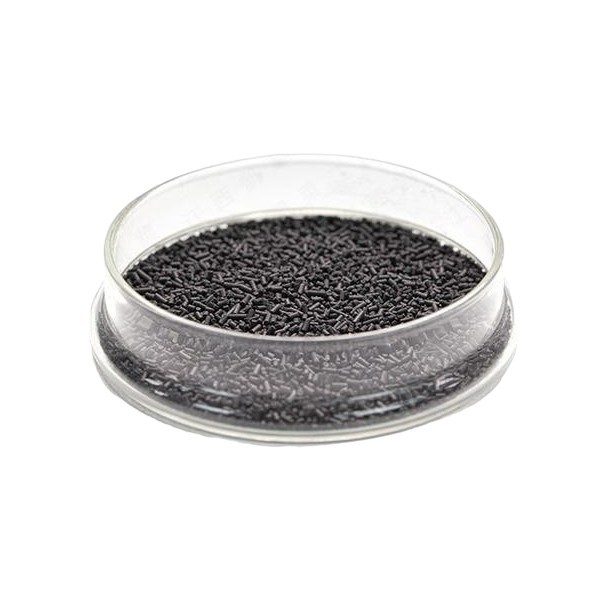
Let's start with inert gases. Nitrogen is one of the most commonly used inert gases in carbonization. When carbonization is carried out in a nitrogen atmosphere, it helps to prevent oxidation of the carbon material. This means that the pore structure of the carbon molecular sieve can be better preserved. The resulting sieve often has a more uniform pore size distribution, which is great for gas separation applications. For example, our Carbon Molecular Sieve-JXSEP®HG-110ES is produced under carefully controlled nitrogen carbonization conditions to ensure high performance in separating oxygen and nitrogen in air separation units.
Argon is another inert gas that can be used. Similar to nitrogen, it provides an oxygen-free environment during carbonization. However, argon is more expensive than nitrogen, so it's not used as widely. But in some cases where extremely high purity and precise pore structure control are required, argon may be the preferred choice.
Now, let's move on to reactive gases. Hydrogen is a reactive gas that can have some interesting effects on carbon molecular sieves. When carbonization occurs in a hydrogen atmosphere, hydrogen can react with some of the impurities in the carbon material. This can lead to the removal of certain functional groups on the carbon surface, resulting in a more hydrophobic surface. A hydrophobic surface is beneficial for separating gases that are sensitive to moisture. Our Carbon Molecular Sieve-JXSEP®HG-110 can be fine - tuned during the carbonization process with a hydrogen - containing atmosphere to enhance its performance in drying and separating moisture - sensitive gases.
Carbon dioxide is also a reactive gas. During carbonization in a carbon dioxide atmosphere, carbon dioxide can react with the carbon material through a process called gasification. This can create additional pores in the carbon molecular sieve, increasing its surface area. However, if the gasification reaction is not well - controlled, it can also lead to the collapse of some pores and a decrease in the mechanical strength of the sieve. So, when using carbon dioxide in carbonization, precise control of the process parameters is essential. Our Carbon Molecular Sieve-JXSEP®LG-560 has been optimized to take advantage of the pore - creating effect of carbon dioxide while maintaining good mechanical properties.
The influence of different carbonization atmospheres also extends to the adsorption capacity of the carbon molecular sieve. For example, a sieve carbonized in a nitrogen atmosphere may have a high adsorption capacity for non - polar gases due to its relatively non - reactive surface. On the other hand, a sieve carbonized in a hydrogen atmosphere may have different adsorption characteristics for polar and non - polar gases because of the changes in its surface chemistry.
The mechanical properties of the carbon molecular sieve are also affected. Inert gas carbonization generally results in a sieve with good mechanical strength because there is less chemical reaction that could weaken the structure. Reactive gas carbonization, especially with carbon dioxide, requires careful control to ensure that the mechanical strength is not compromised while achieving the desired pore structure and surface properties.
In addition to the basic properties like pore structure, surface chemistry, adsorption capacity, and mechanical strength, the carbonization atmosphere can also impact the selectivity of the carbon molecular sieve. Selectivity is a crucial factor in gas separation applications. For instance, if we want to separate a specific gas mixture, we need a sieve that can selectively adsorb one component over the others. By choosing the right carbonization atmosphere, we can fine - tune the selectivity of our Carbon Molecular Sieve - JXH.
So, as you can see, the choice of carbonization atmosphere is a key factor in determining the properties of Carbon Molecular Sieve - JXH. At our company, we've spent a lot of time and effort researching and optimizing these processes to ensure that our products meet the highest standards in the industry.
If you're in the market for high - quality carbon molecular sieves, whether it's for air separation, natural gas purification, or other gas separation applications, we'd love to talk to you. Our team of experts can help you choose the right product based on your specific requirements. We're committed to providing you with the best solutions and excellent customer service. So, don't hesitate to reach out and start a conversation about your carbon molecular sieve needs.
References
- Smith, J. "Carbonization Processes and Their Impact on Carbon Materials." Journal of Carbon Research, 20XX, Vol. XX, pp. XX - XX.
- Johnson, A. "Gas Separation Using Carbon Molecular Sieves: A Review." Separation Science and Technology, 20XX, Vol. XX, pp. XX - XX.
- Brown, C. "Optimizing Carbon Molecular Sieve Properties through Carbonization Atmosphere Control." Carbon Materials Technology, 20XX, Vol. XX, pp. XX - XX.