

Hey there! I'm a supplier of Carbon Molecular Sieve - JXH, and today I wanna talk about how the production process impacts the quality of this product.
Let's start with the basics. Carbon Molecular Sieve - JXH is a super important material, especially in the gas separation industry. It's used to separate different gases like nitrogen from oxygen, and it does this job pretty darn well. But the quality of this sieve can vary a lot, and a big part of that variation comes down to the production process.
Raw Material Selection
The first step in the production process is choosing the right raw materials. We're not just picking any old carbon - it has to be high - quality stuff. The type of carbon source can really affect the final properties of the Carbon Molecular Sieve - JXH. For example, if we use a raw material with a lot of impurities, those impurities can end up in the final product. And that's a big no - no because impurities can block the pores in the sieve, reducing its ability to separate gases effectively.
We usually look for carbon sources that have a high carbon content and a relatively uniform structure. This helps us create a sieve with consistent pore sizes. Pore size is crucial because it determines which gases can be adsorbed and separated. If the pores are too big, smaller molecules might not get trapped properly. If they're too small, larger molecules won't be able to enter the pores at all.
Activation Process
After we've got our raw materials, the next big step is the activation process. This is where we turn that basic carbon into a highly porous material. There are different ways to activate the carbon, but the most common methods involve using heat and chemicals.
One popular activation method is steam activation. In this process, we heat the carbon in the presence of steam. The steam reacts with the carbon, creating tiny pores in the material. The temperature and duration of this process are really important. If we heat it too much or for too long, the pores might become too large or the structure of the sieve could break down. On the other hand, if we don't heat it enough, the pores won't be fully developed, and the sieve won't have good gas separation properties.
Another activation method uses chemicals like potassium hydroxide (KOH). KOH activation can create a different type of pore structure compared to steam activation. It can result in a sieve with a higher surface area, which means more space for gas molecules to be adsorbed. But again, the amount of chemical used and the reaction conditions need to be carefully controlled. Otherwise, we could end up with a product that's either too reactive or has inconsistent pore sizes.
Shaping and Forming
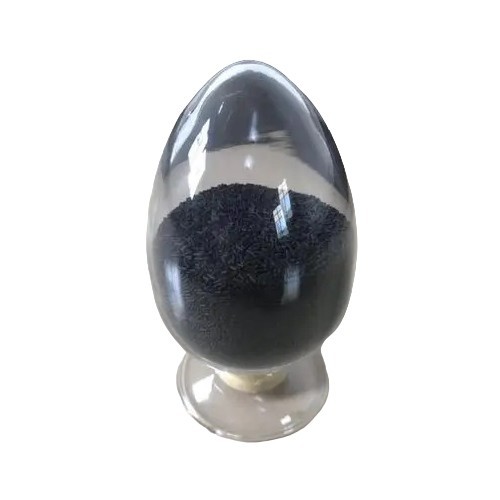
Once the carbon is activated, we need to shape it into a form that's useful for industrial applications. We can make the Carbon Molecular Sieve - JXH into pellets, granules, or even blocks. The shaping process can also have an impact on the quality of the final product.
If we're making pellets, for example, we need to make sure they have a uniform size and shape. Uneven pellets can cause problems in gas separation columns. They might not pack together properly, leading to uneven gas flow and reduced separation efficiency.
We also need to consider the binder we use during the shaping process. A binder is a substance that holds the carbon particles together. The type of binder and the amount used can affect the mechanical strength of the sieve. If the binder is too weak, the pellets or granules might break apart easily during handling or in the gas separation process. But if we use too much binder, it can block the pores in the sieve, reducing its performance.
Heat Treatment
After shaping, we often perform a heat treatment on the Carbon Molecular Sieve - JXH. This heat treatment can help to further strengthen the structure of the sieve and improve its stability. It can also remove any remaining impurities or volatile substances from the material.
The heat treatment temperature and time are critical factors. If we heat the sieve at too high a temperature, it can cause the pores to collapse or the structure to change in an undesirable way. On the other hand, if the temperature is too low or the time is too short, the treatment might not be effective.
Impact on Product Quality
All these steps in the production process have a direct impact on the quality of the Carbon Molecular Sieve - JXH. A well - controlled production process can result in a sieve with the following characteristics:
- High Purity: A pure sieve is less likely to have impurities that can interfere with gas separation. This means better performance and a longer lifespan for the sieve.
- Uniform Pore Size Distribution: A consistent pore size distribution ensures that the sieve can effectively separate different gases. It allows for more precise control over which gases are adsorbed and which are not.
- Good Mechanical Strength: A strong sieve can withstand the physical stresses of handling and operation in gas separation equipment. This reduces the risk of breakage and ensures a more reliable performance.
- High Adsorption Capacity: A well - produced sieve has a large surface area and well - developed pores, which means it can adsorb more gas molecules. This leads to higher separation efficiency and better overall performance.
Product Examples
We offer different types of Carbon Molecular Sieve - JXH products, each with its own unique properties and applications. For example, the Carbon Molecular Sieve - JXSEP®HG - 110 is designed for high - purity nitrogen production. It has a very fine pore size distribution, which allows it to selectively adsorb oxygen and other impurities from the air, leaving behind high - purity nitrogen.
The Carbon Molecular Sieve - JXSEP®LG - 560 is suitable for applications where a larger volume of gas needs to be processed. It has a slightly larger pore size and a higher adsorption capacity, making it ideal for large - scale gas separation operations.
And then there's the Carbon Molecular Sieve - JXSEP®HG - 110ES, which is an enhanced version of the HG - 110. It offers even better performance and longer service life, thanks to our advanced production techniques and quality control measures.
Conclusion
In conclusion, the production process of Carbon Molecular Sieve - JXH is a complex and delicate operation. Every step, from raw material selection to heat treatment, plays a crucial role in determining the quality of the final product. By carefully controlling each step in the process, we can produce high - quality sieves that meet the specific needs of our customers.
If you're in the market for Carbon Molecular Sieve - JXH products, I encourage you to get in touch with us. We can help you choose the right product for your application and provide you with all the technical support you need. Whether you're looking for a sieve for small - scale laboratory use or large - scale industrial production, we've got you covered.

References
- Yang, R. T. (1987). Gas Separation by Adsorption Processes. Butterworth Publishers.
- Ruthven, D. M., Farooq, S., & Knaebel, K. S. (1994). Adsorption and Adsorption Processes in the Chemical and Biochemical Industries. John Wiley & Sons.