

Hey there! As a supplier of Carbon Molecular Sieve -330, I've been getting a lot of questions about how the surface functional groups of this material impact its adsorption properties. So, I thought I'd dive into this topic and share some insights with you all.
First off, let's quickly understand what Carbon Molecular Sieve -330 is. It's a type of porous carbon material that's widely used in gas separation processes. Its unique pore structure allows it to selectively adsorb different gas molecules based on their size and shape. But what many people don't realize is that the surface functional groups on this carbon molecular sieve play a crucial role in its adsorption performance.
What are Surface Functional Groups?
Surface functional groups are like the "active sites" on the surface of the Carbon Molecular Sieve -330. They're groups of atoms that are attached to the carbon framework and have specific chemical properties. These groups can be things like hydroxyl (-OH), carboxyl (-COOH), carbonyl (C=O), and others. Each of these functional groups has a different ability to interact with gas molecules, which directly affects the adsorption process.
Impact on Adsorption Capacity
One of the most significant influences of surface functional groups is on the adsorption capacity of Carbon Molecular Sieve -330. For example, hydroxyl groups are polar in nature. They can form hydrogen bonds with polar gas molecules like water vapor or ammonia. This means that if the Carbon Molecular Sieve -330 has a high concentration of hydroxyl groups on its surface, it'll have a greater affinity for these polar gases, leading to a higher adsorption capacity for them.
On the other hand, carboxyl groups are acidic. They can react with basic gas molecules through acid - base reactions. So, if you're dealing with a gas stream that contains basic gases like amines, a Carbon Molecular Sieve -330 with more carboxyl groups will be able to adsorb more of these gases.
Selectivity in Adsorption
Selectivity is another important aspect of adsorption, especially in gas separation applications. Surface functional groups can enhance the selectivity of Carbon Molecular Sieve -330 towards certain gas molecules. For instance, carbonyl groups can interact with unsaturated hydrocarbon molecules through π - π interactions. This means that if you want to separate unsaturated hydrocarbons from a mixture of gases, a carbon molecular sieve with a significant number of carbonyl groups on its surface will be more selective towards these unsaturated hydrocarbons.
Let's say you're working in a natural gas purification process. You want to separate methane from other impurities like carbon dioxide and nitrogen. The surface functional groups on the Carbon Molecular Sieve -330 can be tailored to have a higher affinity for carbon dioxide and nitrogen, allowing for a more efficient separation of methane.
Adsorption Kinetics
The surface functional groups also affect the adsorption kinetics, which is how fast the adsorption process occurs. Some functional groups can act as "anchoring points" for gas molecules, allowing them to quickly attach to the surface of the carbon molecular sieve. For example, positively charged functional groups can attract negatively charged gas molecules through electrostatic interactions, speeding up the initial adsorption step.
However, in some cases, the presence of certain functional groups can also hinder the adsorption kinetics. If the functional groups are too bulky or form a dense layer on the surface, they can block the pores of the carbon molecular sieve, making it more difficult for gas molecules to reach the internal adsorption sites. This is why finding the right balance of surface functional groups is crucial for optimizing the adsorption performance.
Tailoring the Surface Functional Groups
As a supplier of Carbon Molecular Sieve -330, we have the ability to tailor the surface functional groups according to your specific needs. We can use different activation and modification techniques to control the type and concentration of these functional groups. For example, heat treatment in the presence of certain gases can introduce or remove specific functional groups on the surface.

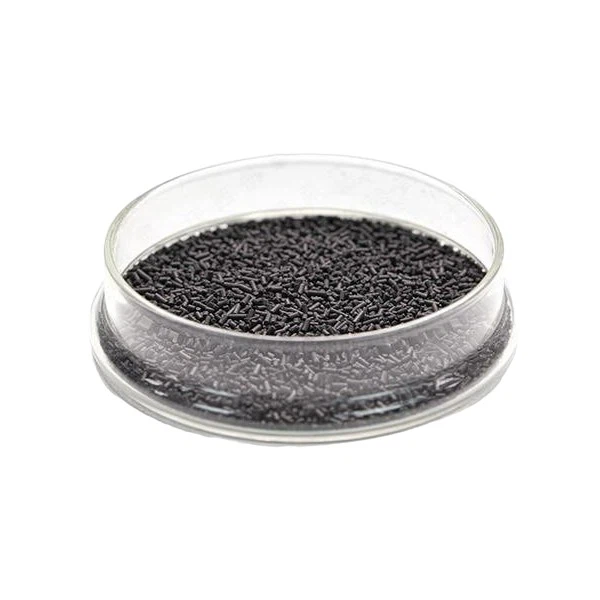
If you're interested in other products related to carbon molecular sieves, we also offer JXSEP®LG - 610 Carbon Molecular Sieve, Carbon Molecular Sieve - JXSEP®HG - 110, and Carbon Molecular Sieve - JXSEP®LG - 560. Each of these products has its own unique surface properties and is suitable for different applications.
Conclusion
In conclusion, the surface functional groups of Carbon Molecular Sieve -330 have a profound influence on its adsorption properties, including adsorption capacity, selectivity, and kinetics. By understanding these relationships, you can make more informed decisions when it comes to choosing the right carbon molecular sieve for your specific gas separation or purification needs.
If you're in the market for high - quality Carbon Molecular Sieve -330 or any of our other carbon molecular sieve products, we'd love to have a chat with you. Whether you have questions about the surface functional groups, need help with product selection, or are ready to place an order, don't hesitate to reach out. We're here to provide you with the best solutions for your adsorption requirements.
References
- Yang, R. T. (1987). Gas Separation by Adsorption Processes. Butterworth Publishers.
- Foley, H. C. (1992). Chemistry of Catalytic Processes. Wiley.
- Do, D. D. (1998). Adsorption Analysis: Equilibria and Kinetics. Imperial College Press.