

Alright, folks! As a supplier of Carbon Molecular Sieve (CMS), I often get asked about one crucial question: "What is the lifespan of Carbon Molecular Sieve?" Well, let's dive right into it and break this down in a way that's easy to understand.
First off, let's talk a bit about what Carbon Molecular Sieve is. CMS is a porous material that's used in a variety of applications, but one of its main uses is in Pressure Swing Adsorption (PSA) systems for nitrogen generation. It works by selectively adsorbing oxygen from the air, allowing nitrogen to pass through and be collected.
Now, the lifespan of Carbon Molecular Sieve isn't set in stone. It can vary quite a bit depending on several factors. One of the most significant factors is the quality of the feed gas. If the air that's being fed into the PSA system contains a lot of contaminants like oil, water, or dust, it can really take a toll on the CMS. These contaminants can clog up the pores of the sieve, reducing its ability to adsorb oxygen effectively. Over time, this can lead to a decrease in nitrogen purity and flow rate, which is a clear sign that the CMS might be reaching the end of its useful life.
For example, in an industrial setting where the air quality is relatively poor, with high levels of particulate matter and oil vapors, the CMS might only last for 3 - 5 years. On the other hand, if the feed gas is clean and well - filtered, the CMS can last much longer, potentially up to 10 years or more. This is why it's so important to have proper pre - filtration systems in place to protect the CMS.
Another factor that affects the lifespan is the operating conditions of the PSA system. Things like temperature, pressure, and cycle time can all play a role. High temperatures can cause the CMS to degrade more quickly. If the PSA system is running at a temperature that's too high for the CMS to handle, it can lead to a decrease in its performance and a shorter lifespan. Similarly, if the pressure is too high or the cycle time is too short, it can put extra stress on the CMS and reduce its longevity.
Let's take a look at some of the products we offer. We have the Carbon Molecular Sieve -330. This is a high - quality CMS that's designed to provide excellent nitrogen separation performance. Under normal operating conditions with clean feed gas, it can have a relatively long lifespan. Our customers who use this product in well - maintained PSA systems often report that it lasts for 7 - 8 years without any major issues.
Then there's the Carbon Molecular Sieve-JXSEP®LG - 560. This is another great option. It has a unique pore structure that allows for efficient oxygen adsorption. In applications where the feed gas quality is good and the operating conditions are stable, it can last even longer than the average CMS. Some of our long - term customers have seen this product perform well for over 9 years.
And we also have the JXSEP HG - 90 Carbon Molecular Sieve. This one is known for its high mechanical strength, which means it can withstand the rigors of continuous operation in a PSA system. It's a reliable choice, and with proper care, it can have a lifespan of 6 - 8 years or more.
So, how can you tell if your Carbon Molecular Sieve needs to be replaced? One of the easiest ways is to monitor the nitrogen purity and flow rate. If you notice a significant drop in either of these, it could be a sign that the CMS is no longer working as effectively as it should. Other signs include an increase in the oxygen content in the nitrogen product or an increase in the energy consumption of the PSA system.
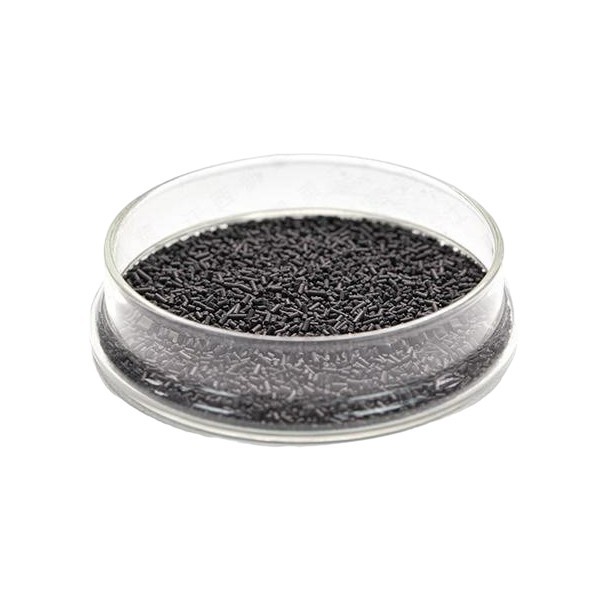

Regular maintenance and monitoring are key to extending the lifespan of your Carbon Molecular Sieve. Make sure to check the pre - filtration system regularly to ensure it's working properly. Replace the filters as needed to keep the feed gas clean. Also, keep an eye on the operating conditions of the PSA system. If you notice any abnormal changes in temperature, pressure, or cycle time, take action to correct them as soon as possible.
In conclusion, the lifespan of Carbon Molecular Sieve can range anywhere from 3 - 10 years or more, depending on the quality of the feed gas and the operating conditions of the PSA system. By choosing a high - quality product like the ones we offer and taking good care of it, you can get the most out of your CMS investment.
If you're in the market for Carbon Molecular Sieve or have any questions about its lifespan and performance, don't hesitate to reach out. We're here to help you make the best choice for your nitrogen generation needs. Whether you need a small - scale system for a laboratory or a large - scale industrial setup, we've got the right CMS product for you. Let's start a conversation and see how we can work together to meet your requirements.
References:
- Industry - standard literature on Carbon Molecular Sieve applications and performance.
- Internal technical reports from our company's research and development department.