

As a supplier of Carbon Molecular Sieve -330, I often encounter inquiries about its various properties, and one of the most frequently asked questions is about its mechanical strength. In this blog post, I'll delve into the mechanical strength of Carbon Molecular Sieve -330, exploring what it means, why it matters, and how it compares to other related products.
Understanding Mechanical Strength
Mechanical strength refers to the ability of a material to withstand various mechanical forces without undergoing significant deformation or failure. For Carbon Molecular Sieve -330, which is widely used in gas separation processes such as nitrogen generation from air, mechanical strength is a crucial property. In industrial applications, the carbon molecular sieve is subjected to different types of mechanical stresses, including compression, abrasion, and impact.
Compression strength is an important aspect of mechanical strength for Carbon Molecular Sieve -330. When the sieve is packed into a pressure swing adsorption (PSA) or vacuum swing adsorption (VSA) column, it experiences pressure from the gas flow and the weight of the sieve itself. A high compression strength ensures that the sieve particles do not break or crush under this pressure, which could lead to channeling of the gas flow, decreased separation efficiency, and increased pressure drop across the column.
Abrasion resistance is another key factor. During the adsorption and desorption cycles, the gas flow can cause the sieve particles to rub against each other and the column walls. If the sieve has poor abrasion resistance, the particles will wear down over time, generating fines. These fines can clog the gas flow channels, reducing the performance of the separation system and potentially causing damage to downstream equipment.
Impact strength is relevant when the carbon molecular sieve is being transported, loaded, or unloaded. A sieve with good impact strength can withstand the shocks and vibrations during these processes without breaking, ensuring that the product reaches the customer in good condition and maintains its performance.
Factors Affecting the Mechanical Strength of Carbon Molecular Sieve -330
The mechanical strength of Carbon Molecular Sieve -330 is influenced by several factors, including its manufacturing process, raw materials, and pore structure.
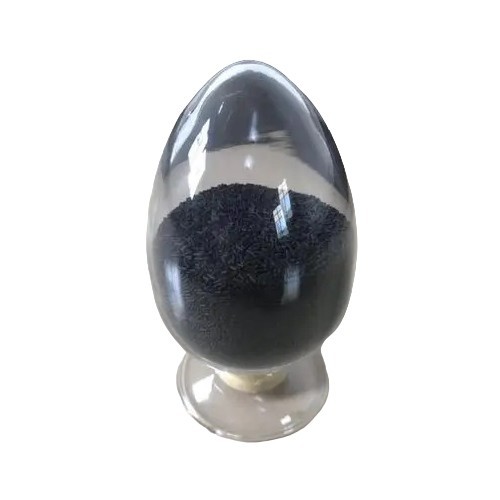

The manufacturing process plays a significant role. The carbonization and activation steps are critical in determining the final structure and properties of the sieve. During carbonization, the precursor material is heated in an inert atmosphere to convert it into carbon. The temperature, heating rate, and duration of carbonization can affect the degree of carbonization and the formation of the carbon matrix, which in turn influences the mechanical strength. Activation is then carried out to create the pore structure. The activation method and conditions can also impact the strength of the sieve. For example, steam activation at high temperatures can create a more open pore structure, but it may also reduce the mechanical strength if not carefully controlled.
The choice of raw materials is also important. Different precursor materials, such as coal, coconut shell, or phenolic resin, have different chemical compositions and physical properties. These differences can affect the mechanical strength of the final carbon molecular sieve. For instance, coconut shell-based carbon molecular sieves generally have a higher mechanical strength compared to coal-based ones due to the more uniform and dense structure of the coconut shell precursor.
The pore structure of the carbon molecular sieve is closely related to its mechanical strength. A well-developed and uniform pore structure can enhance the strength by providing a stable framework. However, if the pores are too large or too irregular, they can act as weak points in the sieve, reducing its mechanical strength. The pore size distribution also affects the strength. A narrow pore size distribution can result in a more homogeneous structure and better mechanical properties.
Measuring the Mechanical Strength of Carbon Molecular Sieve -330
There are several methods to measure the mechanical strength of Carbon Molecular Sieve -330. One common method is the single-particle compression test. In this test, a single sieve particle is placed between two flat plates, and a gradually increasing load is applied until the particle breaks. The maximum load at which the particle fails is recorded as the compression strength of the particle. This method provides information about the strength of individual particles, which is useful for quality control and research purposes.
Another method is the bulk crushing strength test. A sample of the sieve is placed in a container, and a pressure is applied to the sample. The pressure is increased until a certain percentage of the particles break. The pressure at which this occurs is reported as the bulk crushing strength. This test gives an indication of the overall strength of the sieve in a packed bed and is more relevant to industrial applications.
Abrasion resistance can be measured by subjecting the sieve to a simulated abrasion process, such as tumbling the sieve in a drum with abrasive media. The amount of fines generated after a certain period of tumbling is then measured to assess the abrasion resistance.
Comparing Carbon Molecular Sieve -330 with Other Products
When comparing Carbon Molecular Sieve -330 Carbon Molecular Sieve -330 with other carbon molecular sieves, such as JXSEP®LG-610 Carbon Molecular Sieve and Carbon Molecular Sieve-JXSEP®HG-110ES, the mechanical strength is an important aspect to consider.
Carbon Molecular Sieve -330 is designed to have a balanced combination of mechanical strength and gas separation performance. It offers good compression strength, abrasion resistance, and impact strength, making it suitable for a wide range of industrial applications. Compared to some other carbon molecular sieves, it may have a higher mechanical strength, which can result in longer service life and lower maintenance costs.
JXSEP®LG-610 Carbon Molecular Sieve is known for its high nitrogen purity and production capacity. While it also has good mechanical properties, the specific mechanical strength may vary depending on the application requirements. In some cases, Carbon Molecular Sieve -330 may be a better choice if the application requires a sieve with higher mechanical strength to withstand harsh operating conditions.
Carbon Molecular Sieve-JXSEP®HG-110ES is another product in the market. It has its own unique features in terms of gas separation efficiency and mechanical strength. When choosing between these products, customers need to consider their specific needs, such as the desired nitrogen purity, production rate, and the operating conditions of the separation system.
Importance of Mechanical Strength in Industrial Applications
In industrial gas separation applications, the mechanical strength of Carbon Molecular Sieve -330 is of utmost importance. A sieve with high mechanical strength can ensure the reliable operation of the PSA or VSA system. It reduces the risk of equipment failure, improves the separation efficiency, and lowers the overall cost of the gas production process.
For example, in a nitrogen generation plant, a carbon molecular sieve with good mechanical strength can maintain its performance over a long period of time. This means less frequent replacement of the sieve, which reduces the downtime of the plant and the cost of purchasing new sieve material. Additionally, a sieve with high abrasion resistance can prevent the generation of fines, which can clog the gas filters and damage the compressor. This helps to keep the downstream equipment in good working condition and reduces the maintenance requirements.
Conclusion and Call to Action
In conclusion, the mechanical strength of Carbon Molecular Sieve -330 is a crucial property that affects its performance and suitability for industrial gas separation applications. It is influenced by factors such as the manufacturing process, raw materials, and pore structure. Measuring the mechanical strength using appropriate methods can ensure the quality of the product. When compared to other carbon molecular sieves, Carbon Molecular Sieve -330 offers a good balance of mechanical strength and gas separation performance.
If you are in the market for a high-quality carbon molecular sieve with excellent mechanical strength, Carbon Molecular Sieve -330 is a great choice. Whether you are involved in nitrogen generation, hydrogen purification, or other gas separation processes, our product can meet your needs. We invite you to contact us for more information and to discuss your specific requirements. Our team of experts is ready to assist you in choosing the right carbon molecular sieve for your application.
References
- Yang, R. T. (1997). Gas Separation by Adsorption Processes. World Scientific.
- Ruthven, D. M., Farooq, S., & Knaebel, K. S. (1994). Pressure Swing Adsorption. VCH Publishers.
- Rodriguez-Reinoso, F. (1998). Adsorption by Carbons. Elsevier.