

As a supplier of Carbon Molecular Sieve (CMS), I often encounter inquiries about its nitrogen production capacity. Understanding the nitrogen production capacity of CMS is crucial for industries that rely on nitrogen gas for various applications, such as food packaging, electronics manufacturing, and chemical processing. In this blog, I will delve into the factors that influence the nitrogen production capacity of CMS and provide insights into how to optimize its performance.
What is Carbon Molecular Sieve?
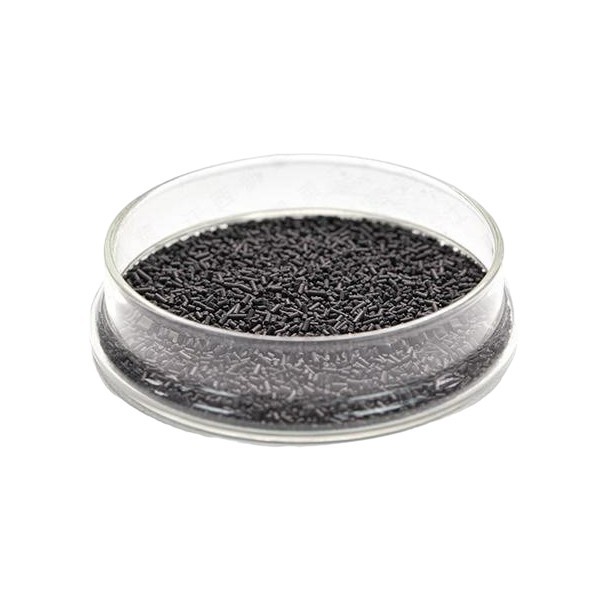
Carbon Molecular Sieve is a porous material made from activated carbon. It has a unique pore structure that allows it to selectively adsorb oxygen molecules while allowing nitrogen molecules to pass through. This property makes CMS an ideal material for nitrogen generation through the Pressure Swing Adsorption (PSA) process.
Factors Affecting Nitrogen Production Capacity
The nitrogen production capacity of CMS is influenced by several factors, including:
1. Pore Structure
The pore structure of CMS plays a crucial role in its nitrogen production capacity. The pore size distribution determines the selectivity of the CMS towards oxygen and nitrogen molecules. A well-designed CMS should have a narrow pore size distribution with pores that are just large enough to allow nitrogen molecules to pass through while excluding oxygen molecules.

2. Adsorption Kinetics
The adsorption kinetics of CMS refers to the rate at which oxygen molecules are adsorbed onto the surface of the CMS. Faster adsorption kinetics result in higher nitrogen production capacity. The adsorption kinetics are influenced by factors such as temperature, pressure, and the concentration of oxygen in the feed gas.
3. Feed Gas Composition
The composition of the feed gas also affects the nitrogen production capacity of CMS. The presence of impurities such as moisture, carbon dioxide, and hydrocarbons can reduce the performance of the CMS by blocking the pores and reducing the adsorption capacity. Therefore, it is essential to pre-treat the feed gas to remove these impurities before it enters the PSA system.
4. Operating Conditions
The operating conditions of the PSA system, such as pressure, temperature, and cycle time, also have a significant impact on the nitrogen production capacity of CMS. Higher operating pressures generally result in higher nitrogen production capacity, but they also require more energy. Lower temperatures can improve the adsorption capacity of the CMS, but they may also increase the cost of refrigeration. The cycle time of the PSA system determines the frequency of adsorption and desorption cycles, which affects the overall nitrogen production rate.
Measuring Nitrogen Production Capacity
The nitrogen production capacity of CMS is typically measured in terms of the nitrogen flow rate and purity. The nitrogen flow rate is the volume of nitrogen gas produced per unit time, usually expressed in cubic meters per hour (m³/h) or standard cubic feet per minute (SCFM). The nitrogen purity is the percentage of nitrogen in the produced gas, usually expressed as a percentage by volume.
To measure the nitrogen production capacity of CMS, a PSA system is typically used. The PSA system consists of two or more adsorption vessels filled with CMS. The feed gas is passed through one of the adsorption vessels, where oxygen molecules are adsorbed onto the surface of the CMS, leaving behind a stream of nitrogen gas. When the CMS in one vessel becomes saturated with oxygen, the feed gas is switched to the other vessel, and the saturated vessel is regenerated by reducing the pressure and purging it with a small amount of nitrogen gas.
Optimizing Nitrogen Production Capacity
To optimize the nitrogen production capacity of CMS, several strategies can be employed:
1. Select the Right CMS
Choosing the right CMS for your specific application is crucial. Different types of CMS have different pore structures and adsorption properties, which affect their nitrogen production capacity. For example, JXSEP HG-90 Carbon Molecular Sieve is designed for high-purity nitrogen generation, while Carbon Molecular Sieve -330 is suitable for medium-purity applications.
2. Pre-Treat the Feed Gas
As mentioned earlier, the presence of impurities in the feed gas can reduce the performance of the CMS. Therefore, it is essential to pre-treat the feed gas to remove moisture, carbon dioxide, and hydrocarbons. This can be achieved using filters, dryers, and activated carbon beds.
3. Optimize the Operating Conditions
The operating conditions of the PSA system, such as pressure, temperature, and cycle time, should be optimized to maximize the nitrogen production capacity of the CMS. This can be done through experimental testing and simulation.
4. Maintain the CMS
Regular maintenance of the CMS is essential to ensure its long-term performance. This includes monitoring the nitrogen production capacity, checking the pressure and temperature of the PSA system, and replacing the CMS when necessary.
Conclusion
The nitrogen production capacity of Carbon Molecular Sieve is influenced by several factors, including pore structure, adsorption kinetics, feed gas composition, and operating conditions. By understanding these factors and implementing the appropriate strategies, it is possible to optimize the nitrogen production capacity of CMS and achieve high-purity nitrogen generation at a lower cost.
If you are interested in learning more about our Carbon Molecular Sieve products or have any questions about nitrogen production capacity, please feel free to contact us. We would be happy to discuss your specific requirements and provide you with a customized solution.
References
- Yang, R. T. (1987). Gas Separation by Adsorption Processes. Butterworths.
- Ruthven, D. M., Farooq, S., & Knaebel, K. S. (1994). Pressure Swing Adsorption. John Wiley & Sons.
- Sircar, S., & Golden, T. C. (2000). Adsorption-based Gas Separation Processes. Marcel Dekker.