

Hey there! As a supplier of Carbon Molecular Sieve (CMS), I'm super excited to share with you the ins and outs of what makes this nifty material tick. So, what's the principle of Carbon Molecular Sieve? Let's dig in!
The Basics of Carbon Molecular Sieve
First off, Carbon Molecular Sieve is a kind of porous carbon material. It's not your ordinary carbon, though. It has a unique pore structure that gives it some pretty amazing separation properties. You can think of it like a super - fine sieve, but instead of separating grains of different sizes, it separates different gas molecules.
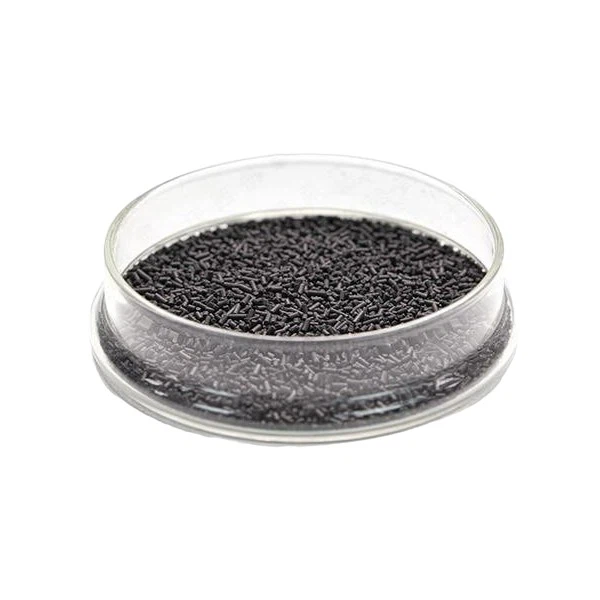

CMS is made through a special process. Usually, it starts with a carbon - rich precursor, like coal or coconut shells. These precursors are then treated in a series of steps including carbonization and activation. During carbonization, the precursor is heated in an oxygen - free environment. This drives off non - carbon elements and leaves behind a carbon skeleton. The activation step further modifies the pore structure to create the right size and distribution of pores for gas separation.
How Does It Work? The Principle of Gas Separation
The key principle behind Carbon Molecular Sieve is based on the difference in the diffusion rates of different gas molecules. Different gases have different molecular sizes and shapes. For example, nitrogen and oxygen, two of the most common gases in the air, have different molecular characteristics.
When a gas mixture, say air, comes into contact with the Carbon Molecular Sieve, the smaller and more mobile gas molecules can diffuse into the pores of the CMS more quickly than the larger ones. In the case of separating nitrogen from oxygen in air, oxygen molecules are smaller and can penetrate the pores of the CMS faster than nitrogen molecules.
Once the oxygen molecules enter the pores, they are adsorbed on the surface of the CMS. Adsorption is a process where molecules stick to the surface of a solid. Meanwhile, the nitrogen molecules, which have a slower diffusion rate, remain in the gas phase and can be collected as a product. This is the basic principle of how Carbon Molecular Sieve can be used to produce high - purity nitrogen from air.
Pore Structure and Its Role
The pore structure of Carbon Molecular Sieve is crucial for its performance. There are two main types of pores in CMS: micropores and mesopores. Micropores are very small, usually less than 2 nanometers in diameter. These micropores are where the selective adsorption of gas molecules occurs. They are just the right size to allow certain gas molecules to enter while excluding others.
Mesopores, on the other hand, are larger, with diameters between 2 and 50 nanometers. They act as channels that help the gas molecules to reach the micropores more easily. A well - designed CMS has a balanced distribution of micropores and mesopores to optimize the gas separation process.
The pore size distribution also affects the adsorption capacity and selectivity of the CMS. If the pores are too large, the selectivity for different gas molecules will be poor. If they are too small, the diffusion rate of the gas molecules will be very slow, reducing the overall efficiency of the separation process.
Applications and Our Products
Carbon Molecular Sieve has a wide range of applications. One of the most common applications is in nitrogen generation systems. Industries like food packaging, chemical processing, and electronics manufacturing need high - purity nitrogen for various processes. For example, in food packaging, nitrogen is used to replace oxygen in the package to prevent spoilage of food products.
As a supplier, we offer a variety of Carbon Molecular Sieve products to meet different customer needs. For instance, our Carbon Molecular Sieve - JXSEP®HG - 110ES is designed for high - efficiency nitrogen generation. It has a well - optimized pore structure that provides excellent separation performance.
Another great product is our JXSEP®LG - 610 Carbon Molecular Sieve. This product is suitable for applications where a large amount of nitrogen is required. It has a high adsorption capacity and good stability, ensuring long - term and reliable operation.
Our Carbon Molecular Sieve - JXSEP®HG - 110 is also a popular choice. It offers a good balance between performance and cost - effectiveness. Whether you need a small - scale nitrogen generation system or a large - scale industrial setup, we have the right Carbon Molecular Sieve product for you.
Factors Affecting Performance
Several factors can affect the performance of Carbon Molecular Sieve. Temperature is one of them. Generally, lower temperatures are more favorable for adsorption. As the temperature increases, the adsorption capacity of the CMS decreases because the gas molecules have more energy and are less likely to stick to the surface of the CMS.
The pressure of the gas mixture also plays a role. Higher pressures usually increase the adsorption capacity. However, there is a limit to how much pressure can be applied, as excessive pressure can damage the CMS structure.
The presence of impurities in the gas mixture can also impact the performance of CMS. For example, water vapor and oil mist can block the pores of the CMS and reduce its adsorption capacity. That's why pre - treatment of the gas mixture, such as removing water and oil, is often necessary before it enters the nitrogen generation system.
Why Choose Our Carbon Molecular Sieve?
We take pride in our Carbon Molecular Sieve products. Our manufacturing process is carefully controlled to ensure high - quality and consistent performance. We use advanced techniques to optimize the pore structure and improve the adsorption properties of our CMS.
Our products are also tested rigorously to meet international standards. Whether you are a small business or a large - scale industrial enterprise, you can rely on our Carbon Molecular Sieve to provide efficient and reliable gas separation solutions.
Conclusion
In conclusion, the principle of Carbon Molecular Sieve is based on the difference in gas molecule diffusion rates and selective adsorption in its unique pore structure. This allows it to separate different gases effectively, especially nitrogen from oxygen in air.
If you're in the market for a reliable Carbon Molecular Sieve for your nitrogen generation needs, we'd love to talk to you. We can help you choose the right product based on your specific requirements. Contact us to start a procurement discussion and see how our Carbon Molecular Sieve can benefit your business.
References
- Yang, R. T. (1987). Gas Separation by Adsorption Processes. Butterworths.
- Ruthven, D. M., Farooq, S., & Knaebel, K. S. (1994). Pressure Swing Adsorption. VCH Publishers.