

Hey there! As a supplier of Carbon Molecular Sieve (CMS), I'm super excited to dive into the role of CMS in oxygen production. It's a topic that's not only fascinating but also crucial in many industries. So, let's get started!
The Basics of Oxygen Production
Before we talk about CMS, let's quickly go over how oxygen is produced. There are a few methods out there, but one of the most common ones is Pressure Swing Adsorption (PSA). PSA is a technology that separates gases based on their adsorption properties on a solid adsorbent. In the case of oxygen production, the goal is to separate oxygen from nitrogen in the air.
What is Carbon Molecular Sieve?
Carbon Molecular Sieve is a porous material made from carbon. It has a unique pore structure that allows it to selectively adsorb different gases based on their molecular size and shape. In the context of oxygen production, CMS is used to adsorb nitrogen from the air, leaving behind a high - purity oxygen stream.
The pore size of CMS is carefully engineered. It has micropores that are just the right size to trap nitrogen molecules while allowing oxygen molecules to pass through. When air is passed through a bed of CMS under pressure, nitrogen molecules are adsorbed onto the surface of the CMS, and oxygen is collected as the product gas.
How Carbon Molecular Sieve Works in PSA Oxygen Generation
Adsorption Phase
In the PSA process, the first step is the adsorption phase. Compressed air is fed into a vessel filled with CMS. At this stage, the CMS bed is at a high pressure. Nitrogen molecules, being smaller and more polarizable than oxygen molecules, are preferentially adsorbed onto the surface of the CMS. The oxygen, which is not adsorbed as strongly, passes through the bed and is collected as the product.
For example, in a typical PSA oxygen generator, the air is compressed to around 7 - 8 bar and then passed through the CMS bed. As the air moves through the bed, the nitrogen is gradually removed, and the oxygen concentration in the gas stream increases.
Desorption Phase
Once the CMS bed is saturated with nitrogen, it needs to be regenerated. This is done during the desorption phase. The pressure in the vessel is reduced, usually to near atmospheric pressure. When the pressure drops, the nitrogen molecules that were adsorbed onto the CMS surface are released back into the gas phase. The nitrogen is then vented out of the system, and the CMS bed is ready for the next adsorption cycle.
This cycle of adsorption and desorption is repeated continuously to produce a steady stream of high - purity oxygen.
Advantages of Using Carbon Molecular Sieve in Oxygen Production
High Selectivity
One of the biggest advantages of CMS is its high selectivity for nitrogen over oxygen. This means that it can effectively separate nitrogen from air, resulting in oxygen with a high purity level. In many industrial applications, oxygen purity of 90 - 95% is required, and CMS - based PSA systems can easily achieve this.
Cost - Effectiveness
Compared to other oxygen production methods, such as cryogenic distillation, PSA systems using CMS are generally more cost - effective. Cryogenic distillation requires large, complex, and energy - intensive equipment. In contrast, PSA systems are relatively compact, easy to operate, and have lower energy consumption.
Flexibility
PSA systems with CMS can be easily scaled up or down depending on the oxygen demand. Whether you need a small - scale oxygen generator for a laboratory or a large - scale system for an industrial plant, CMS - based PSA technology can be customized to meet your requirements.
Different Types of Carbon Molecular Sieve for Oxygen Production
As a supplier, we offer several types of CMS for oxygen production. For instance, the JXSEP®LG - 610 Carbon Molecular Sieve is known for its high nitrogen adsorption capacity and long service life. It's suitable for medium - to large - scale PSA oxygen generators.
Another great option is the Carbon Molecular Sieve - JXSEP®HG - 110ES. This CMS has excellent kinetic selectivity, which means it can quickly adsorb nitrogen and release it during the desorption phase. It's ideal for applications where a fast cycle time is required.
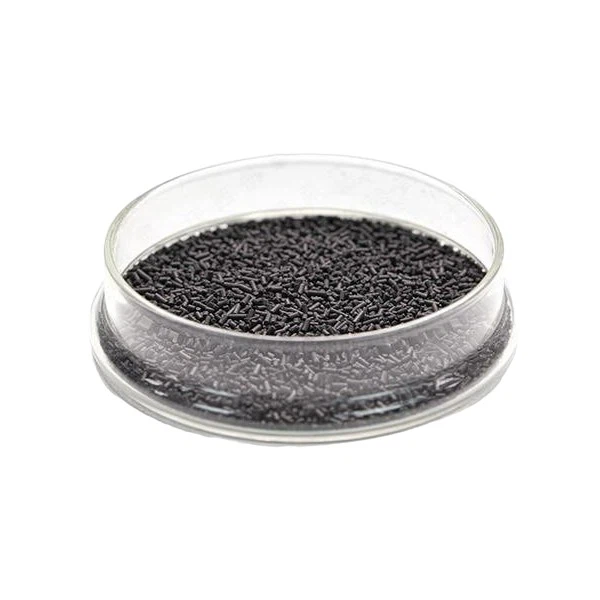

We also have the JXSEP HG - 90 Carbon Molecular Sieve, which is a cost - effective solution for small - scale oxygen production. It provides a good balance between performance and price.
Applications of Oxygen Produced with Carbon Molecular Sieve
Medical Industry
In the medical field, high - purity oxygen is essential for patient care. Oxygen produced using CMS - based PSA systems is used in hospitals for respiratory support, anesthesia, and other medical procedures. These systems can be installed directly at the hospital, providing a reliable and cost - effective source of oxygen.
Metal Cutting and Welding
In the metalworking industry, oxygen is used for cutting and welding metals. The high - purity oxygen produced by CMS - based PSA systems helps in achieving clean and precise cuts, as well as strong welds.
Water Treatment
Oxygen is also used in water treatment plants to enhance the oxidation process. It helps in removing contaminants from water, improving water quality, and reducing the presence of harmful substances.
Conclusion
Carbon Molecular Sieve plays a vital role in oxygen production. Its unique properties allow for efficient separation of nitrogen from air, resulting in high - purity oxygen. With its advantages of high selectivity, cost - effectiveness, and flexibility, CMS - based PSA systems are widely used in various industries.
If you're in the market for a reliable and efficient oxygen production solution, we'd love to talk to you. Whether you need a small - scale system for a specific application or a large - scale industrial setup, our range of JXSEP®LG - 610 Carbon Molecular Sieve, Carbon Molecular Sieve - JXSEP®HG - 110ES, and JXSEP HG - 90 Carbon Molecular Sieve can meet your needs. Contact us today to discuss your requirements and let's work together to find the best solution for you.
References
- Ruthven, D. M., Farooq, S., & Knaebel, K. S. (1994). Pressure Swing Adsorption. John Wiley & Sons.
- Yang, R. T. (1987). Gas Separation by Adsorption Processes. Butterworth Publishers.