

Hey there! As a supplier of CMS (Carbon Molecular Sieve) in nitrogen plants, I've seen firsthand how humidity can have a big impact on the performance of these systems. In this blog, I'll share some insights on how humidity affects CMS in a nitrogen plant and why it's crucial to understand these dynamics.
What is CMS and How Does it Work in a Nitrogen Plant?
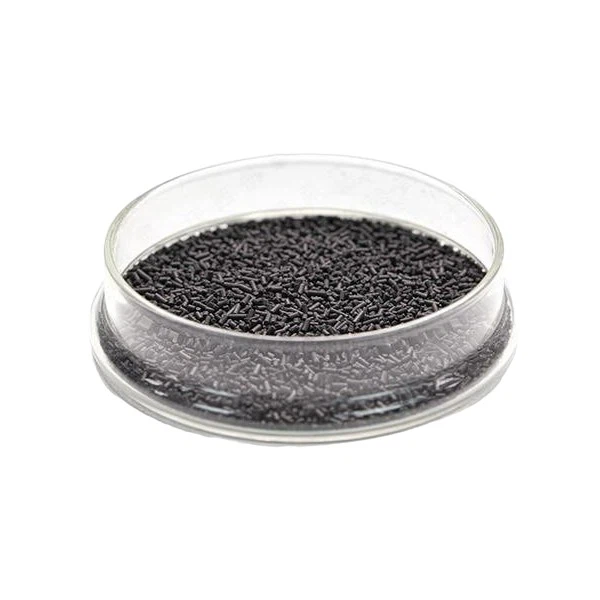
First off, let's quickly go over what CMS is and its role in a nitrogen plant. Carbon Molecular Sieve is a porous material that has a unique ability to separate nitrogen from other gases, mainly oxygen, through a process called pressure swing adsorption (PSA). In a nitrogen plant, air is fed into a vessel filled with CMS. The CMS adsorbs oxygen and other impurities, allowing nitrogen to pass through and be collected as the product gas.
The Impact of Humidity on CMS
Humidity, which refers to the amount of water vapor in the air, can significantly affect the performance of CMS in several ways.
1. Adsorption Capacity Reduction
One of the most significant impacts of humidity on CMS is the reduction of its adsorption capacity. Water molecules are polar, and they have a strong affinity for the surface of the CMS. When the air fed into the nitrogen plant contains a high level of humidity, the water molecules will compete with oxygen molecules for the adsorption sites on the CMS. As a result, less oxygen can be adsorbed, which means that the nitrogen purity produced by the plant will decrease.
For example, if the humidity in the incoming air is too high, the CMS may become saturated with water molecules before it can effectively adsorb oxygen. This can lead to a situation where the nitrogen product contains a higher percentage of oxygen than desired, which is a big no - no in many industrial applications.
2. Accelerated Aging
Humidity can also accelerate the aging process of CMS. Water can cause the pores of the CMS to expand and contract, which can lead to structural damage over time. This damage can reduce the surface area available for adsorption and decrease the overall efficiency of the CMS.
In addition, the presence of water can promote chemical reactions within the CMS. For instance, it can react with impurities in the air or with the CMS itself, leading to the formation of new compounds that can block the pores of the CMS. Over time, this can make the CMS less effective at separating nitrogen from oxygen.
3. Increased Pressure Drop
High humidity can also lead to an increased pressure drop across the CMS bed. When water is adsorbed onto the CMS, it can cause the particles to stick together, which can create a more dense packing of the CMS in the vessel. This increased density can impede the flow of gas through the bed, resulting in a higher pressure drop.
A higher pressure drop means that more energy is required to push the air through the nitrogen plant, which can increase the operating costs. It can also put additional stress on the equipment, potentially leading to more frequent maintenance and shorter equipment lifespan.

How to Mitigate the Effects of Humidity
As a supplier of CMS for nitrogen plants, I understand the importance of mitigating the effects of humidity. Here are some common strategies:
1. Pre - drying the Incoming Air
One of the most effective ways to reduce the impact of humidity is to pre - dry the incoming air. This can be done using various types of dryers, such as refrigerated dryers, desiccant dryers, or membrane dryers. Refrigerated dryers work by cooling the air to a temperature where the water vapor condenses and can be removed. Desiccant dryers use a desiccant material to adsorb water from the air, while membrane dryers separate water vapor from the air using a semi - permeable membrane.
2. Monitoring and Control
Regular monitoring of the humidity levels in the incoming air and the performance of the nitrogen plant is essential. By keeping an eye on these parameters, operators can detect any changes in the system's performance early and take appropriate action. For example, if the humidity levels are rising, operators can adjust the dryer settings or increase the frequency of maintenance to ensure that the CMS continues to perform optimally.
3. Using High - Quality CMS
Investing in high - quality CMS can also help mitigate the effects of humidity. At our company, we offer a range of high - performance CMS products, such as Carbon Molecular Sieve - JXSEP®LG - 560, JXSEP®LG - 610 Carbon Molecular Sieve, and Carbon Molecular Sieve - JXSEP®HG - 110. These products are designed to have a high resistance to humidity and can maintain their performance even in challenging operating conditions.
Why Choose Our CMS Products?
Our CMS products are carefully engineered to provide high - quality performance in nitrogen plants. They are made using advanced manufacturing processes that ensure a uniform pore structure and a large surface area for efficient adsorption.
In addition, our products are tested rigorously to ensure that they meet the highest industry standards. We understand that every nitrogen plant is unique, and we work closely with our customers to provide customized solutions that meet their specific needs.
Contact Us for Purchase and Consultation
If you're in the market for CMS for your nitrogen plant or if you have any questions about how humidity affects CMS performance, don't hesitate to reach out. We're here to help you make the best decisions for your nitrogen plant and ensure that it operates at peak efficiency. Whether you need advice on pre - drying systems, product selection, or any other aspect of nitrogen plant operation, we've got you covered.
References
- Ruthven, D. M. (1984). Principles of Adsorption and Adsorption Processes. John Wiley & Sons.
- Yang, R. T. (1987). Gas Separation by Adsorption Processes. Butterworths.