

Hey there! As a supplier of industrial nitrogen molecular sieves, I've been getting a lot of questions lately about how the shape of these sieves affects their performance. So, I thought I'd take a moment to share some insights on this topic.
First off, let's talk about what industrial nitrogen molecular sieves are. These are porous materials that are used to separate nitrogen from other gases in a process called pressure swing adsorption (PSA). They work by selectively adsorbing certain molecules based on their size and shape. The most common types of industrial nitrogen molecular sieves are carbon molecular sieves (CMS) and zeolite molecular sieves.
Now, let's get into the shape factor. The shape of an industrial nitrogen molecular sieve can have a significant impact on its performance. There are several common shapes, including pellets, beads, and granules, each with its own set of advantages and disadvantages.
Pellets
Pellets are one of the most popular shapes for industrial nitrogen molecular sieves. They are typically cylindrical in shape and come in various sizes. One of the main advantages of pellets is their high mechanical strength. This means they can withstand the pressure and flow conditions in a PSA system without breaking or crumbling.
Another benefit of pellets is their uniform shape and size. This allows for a more consistent flow of gas through the sieve bed, which can improve the efficiency of the separation process. Pellets also have a relatively large surface area, which provides more sites for gas adsorption.
However, pellets do have some drawbacks. They can be more expensive to produce compared to other shapes, and their large size can sometimes limit the packing density in the sieve bed. This can result in a lower overall capacity for gas separation.
Beads
Beads are spherical in shape and are often used in applications where a high packing density is required. They can be packed more tightly than pellets, which means more sieve material can be fit into a given volume. This can lead to a higher capacity for gas separation.
Beads also have a smooth surface, which reduces the resistance to gas flow through the sieve bed. This can improve the efficiency of the PSA process and reduce the energy consumption of the system. Additionally, the spherical shape of beads allows for better distribution of gas within the sieve bed, which can enhance the separation performance.
On the downside, beads may have a lower mechanical strength compared to pellets. This means they are more likely to break or crush under high pressure or flow conditions. Also, the production of beads can be more complex and costly, which can increase the overall price of the molecular sieve.
Granules
Granules are irregularly shaped particles that are typically smaller in size compared to pellets and beads. They are often used in applications where a high surface area is needed. The irregular shape of granules provides a large number of nooks and crannies, which increases the surface area available for gas adsorption.
Granules are also relatively inexpensive to produce, making them a cost - effective option for some applications. They can be easily packed into the sieve bed, and their small size allows for a more intimate contact between the gas and the sieve material.
However, granules may have a lower packing density compared to beads, which can limit the overall capacity of the sieve bed. They can also be more difficult to handle due to their small size and irregular shape, and they may generate more dust during handling and installation.
Impact on Gas Separation Performance
The shape of the industrial nitrogen molecular sieve can affect several aspects of its gas separation performance. For example, the shape can influence the adsorption rate of nitrogen. A sieve with a larger surface area, such as granules, will generally have a higher adsorption rate because there are more sites available for nitrogen molecules to bind to.
The shape can also affect the selectivity of the sieve. Selectivity refers to the ability of the sieve to separate nitrogen from other gases. A well - designed shape can enhance the selectivity by allowing only nitrogen molecules of a certain size and shape to enter the pores of the sieve.
The flow characteristics of the gas through the sieve bed are also affected by the shape. As mentioned earlier, a uniform shape like pellets or beads can provide a more consistent flow, while an irregular shape like granules can create a more turbulent flow. The type of flow can impact the efficiency of the separation process.
Our Product Offerings
At our company, we offer a range of industrial nitrogen molecular sieves in different shapes to meet the diverse needs of our customers. For example, we have the JXSEP®LG - 610 Carbon Molecular Sieve, which is available in pellet form. This sieve offers high mechanical strength and excellent separation performance, making it suitable for a wide range of industrial applications.
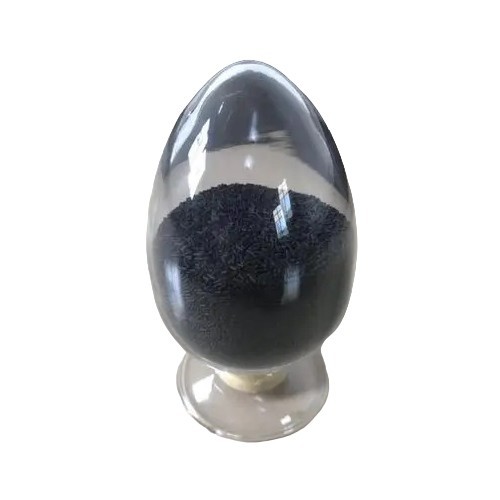

We also have the Carbon Molecular Sieve - JXSEP®LG - 560 in bead form. The spherical shape of these beads allows for a high packing density and efficient gas flow, making it a great choice for applications where space is limited.
And for those who need a high - surface - area option, we offer the Carbon Molecular Sieve - JXSEP®HG - 110ES in granule form. This sieve provides a large number of adsorption sites, which can improve the efficiency of nitrogen separation.
Conclusion
In conclusion, the shape of an industrial nitrogen molecular sieve plays a crucial role in its performance. Each shape has its own unique set of properties that can impact the adsorption capacity, mechanical strength, gas flow characteristics, and overall efficiency of the gas separation process.
When choosing an industrial nitrogen molecular sieve, it's important to consider the specific requirements of your application. Factors such as the type of gas to be separated, the pressure and flow conditions, and the available space in the PSA system should all be taken into account.
If you're interested in learning more about our industrial nitrogen molecular sieves or have any questions about which shape is best for your application, we'd love to hear from you. Contact us to start a discussion about your needs and let's work together to find the perfect solution for your industrial gas separation requirements.
References
- Ruthven, D. M., Farooq, S., & Knaebel, K. S. (1994). Pressure Swing Adsorption. John Wiley & Sons.
- Yang, R. T. (1987). Gas Separation by Adsorption Processes. Butterworths.