

As a reliable supplier of Carbon Molecular Sieve - JXH, I've often been asked about its abrasion resistance. In this blog, I'll delve into the concept of abrasion resistance for Carbon Molecular Sieve - JXH, exploring its significance, influencing factors, and how it compares with other products in the market.
Understanding Abrasion Resistance
Abrasion resistance refers to the ability of a material to withstand wear and tear caused by friction, scratching, or rubbing against other surfaces. For Carbon Molecular Sieve - JXH, which is widely used in adsorption and separation processes such as pressure swing adsorption (PSA) for nitrogen generation, high abrasion resistance is crucial. In PSA systems, the carbon molecular sieve is constantly exposed to gas flow, and the particles may collide with each other or the inner walls of the adsorption vessel. If the abrasion resistance is poor, the sieve particles may break down, leading to a decrease in adsorption performance, an increase in pressure drop, and even damage to downstream equipment.
Factors Affecting the Abrasion Resistance of Carbon Molecular Sieve - JXH
1. Raw Materials
The quality and characteristics of the raw materials used in the production of Carbon Molecular Sieve - JXH play a fundamental role in determining its abrasion resistance. High - quality carbonaceous materials with a uniform structure and appropriate particle size distribution can form a more stable and dense molecular sieve structure. For example, using high - purity coal or coconut shell charcoal as the base material can provide better mechanical strength and abrasion resistance compared to lower - quality alternatives. The inherent properties of these raw materials, such as their carbon content, porosity, and hardness, directly influence the final performance of the carbon molecular sieve.
2. Production Process
The manufacturing process of Carbon Molecular Sieve - JXH is a complex and critical factor. Precise control of carbonization, activation, and post - treatment processes is essential. During carbonization, the temperature, heating rate, and atmosphere need to be carefully regulated to ensure the formation of a well - developed pore structure and a strong carbon matrix. Activation processes, such as steam activation or chemical activation, can further enhance the porosity and surface area of the sieve, but improper activation conditions may also weaken the mechanical strength. Post - treatment steps, like surface coating or impregnation, can improve the abrasion resistance by providing a protective layer on the surface of the sieve particles.
3. Particle Size and Shape
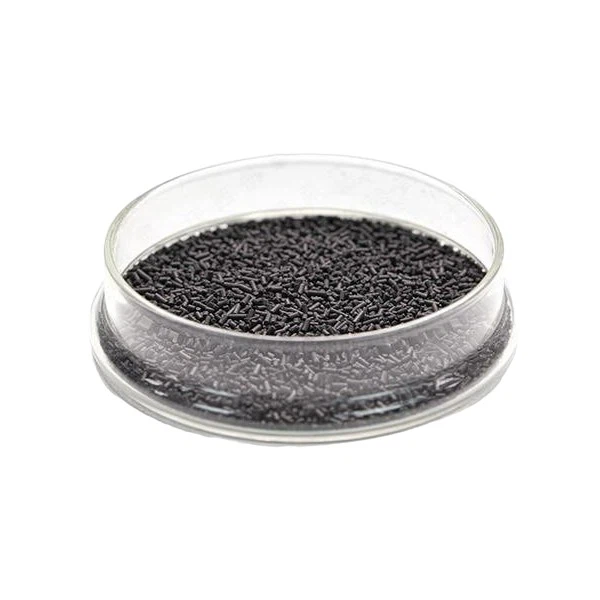
The particle size and shape of Carbon Molecular Sieve - JXH also affect its abrasion resistance. Generally, larger and more spherical particles tend to have better abrasion resistance. Spherical particles have a more uniform stress distribution during collisions, reducing the likelihood of breakage. Moreover, a narrow particle size distribution is beneficial because it minimizes the differences in the movement and collision behavior of individual particles within the adsorption bed. Irregularly shaped or fine particles may be more prone to abrasion and attrition, leading to a shorter service life of the carbon molecular sieve.
Measuring the Abrasion Resistance of Carbon Molecular Sieve - JXH
There are several methods to evaluate the abrasion resistance of Carbon Molecular Sieve - JXH. One common approach is the attrition test. In this test, a sample of the carbon molecular sieve is placed in a rotating drum or a vibrating device along with abrasive media or under a specific gas flow condition. After a certain period of time, the weight loss of the sieve sample is measured. A lower weight loss indicates better abrasion resistance. Another method is the hardness test, which measures the resistance of the sieve particles to indentation or scratching. These tests provide quantitative data that can be used to compare different batches of Carbon Molecular Sieve - JXH or to evaluate its performance against industry standards.
Comparison with Other Carbon Molecular Sieves
When comparing the abrasion resistance of Carbon Molecular Sieve - JXH with other products in the market, such as Carbon Molecular Sieve -330, JXSEP®LG - 610 Carbon Molecular Sieve, and Carbon Molecular Sieve - JXSEP®HG - 110, our Carbon Molecular Sieve - JXH shows excellent performance. Through strict quality control in raw material selection and production processes, our product has a high - density carbon matrix and a well - protected surface, resulting in a lower attrition rate. In practical applications, users have reported that Carbon Molecular Sieve - JXH maintains its adsorption performance for a longer time, with less powder generation and a more stable pressure drop in PSA systems compared to some competing products.

Importance of Abrasion Resistance in Applications
In nitrogen generation plants, the abrasion resistance of Carbon Molecular Sieve - JXH is of utmost importance. A carbon molecular sieve with high abrasion resistance ensures the long - term stability of the PSA system. It reduces the frequency of sieve replacement, which not only saves costs but also minimizes the downtime of the production process. Additionally, in the petrochemical, electronics, and food packaging industries, where high - purity nitrogen is required, the reliable performance of Carbon Molecular Sieve - JXH due to its good abrasion resistance is crucial for maintaining product quality and production efficiency.
Conclusion
The abrasion resistance of Carbon Molecular Sieve - JXH is a key property that determines its performance and service life in adsorption and separation applications. Through careful control of raw materials, production processes, and particle characteristics, we have been able to produce a carbon molecular sieve with excellent abrasion resistance. Our Carbon Molecular Sieve - JXH offers a reliable solution for industries that require high - quality nitrogen generation.
If you are interested in our Carbon Molecular Sieve - JXH or want to discuss your specific requirements for carbon molecular sieves, please feel free to contact us for further procurement and negotiation. We are committed to providing you with the best products and services.
References
- [1] Ruthven, D. M. Principles of Adsorption and Adsorption Processes. John Wiley & Sons, 1984.
- [2] Yang, R. T. Gas Separation by Adsorption Processes. Butterworths, 1987.
- [3] Sircar, S. "Pressure Swing Adsorption." Chemical Reviews, 1992, 92(1), 191 - 211.