

Adsorption selectivity is a crucial property when it comes to adsorbents, especially in industrial applications. As a supplier of Carbon Molecular Sieve -330, I am excited to delve into the topic of what exactly the adsorption selectivity of Carbon Molecular Sieve -330 entails.
Understanding Adsorption Selectivity
Adsorption selectivity refers to the ability of an adsorbent to preferentially adsorb one component over another from a mixture of gases or liquids. This property is determined by several factors, including the pore size distribution, surface chemistry, and the nature of the adsorbate molecules. A highly selective adsorbent can effectively separate different components in a mixture, which is of great significance in various industries such as gas separation, purification, and environmental protection.
Carbon Molecular Sieve -330: An Overview
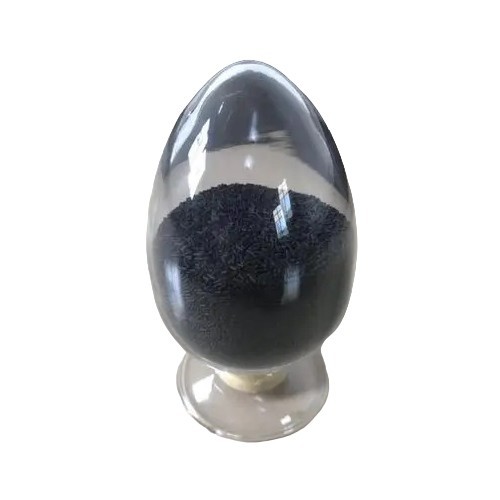
Carbon Molecular Sieve -330 is a type of porous carbon material with a well - defined pore structure. It has a narrow pore size distribution, which plays a key role in its adsorption selectivity. The pores in Carbon Molecular Sieve -330 are typically in the range of micropores (less than 2 nm), allowing it to selectively adsorb small molecules based on their size and shape.
You can find more information about Carbon Molecular Sieve -330 on our website: Carbon Molecular Sieve -330.
Adsorption Selectivity Mechanisms of Carbon Molecular Sieve -330
Size Exclusion
One of the primary mechanisms of adsorption selectivity in Carbon Molecular Sieve -330 is size exclusion. The narrow micropores act as a molecular sieve, allowing only molecules smaller than a certain size to enter the pores and be adsorbed. For example, in air separation applications, Carbon Molecular Sieve -330 can selectively adsorb nitrogen over oxygen. Nitrogen molecules (diameter approximately 0.364 nm) are slightly larger than oxygen molecules (diameter approximately 0.346 nm). The pore size of Carbon Molecular Sieve -330 is carefully engineered to allow nitrogen molecules to enter and be adsorbed more readily than oxygen molecules, thus enabling the separation of nitrogen from oxygen in air.
Kinetic Selectivity
In addition to size exclusion, kinetic selectivity also contributes to the adsorption behavior of Carbon Molecular Sieve -330. Different molecules have different diffusion rates through the pores of the carbon molecular sieve. Smaller molecules can diffuse more quickly into the pores, while larger molecules may experience slower diffusion or even be excluded. For instance, in the separation of hydrogen from a mixture of gases, hydrogen molecules, being very small, can rapidly diffuse into the pores of Carbon Molecular Sieve -330, while larger hydrocarbon molecules have slower diffusion rates and are less likely to be adsorbed, leading to the separation of hydrogen.
Adsorption Affinity
The surface chemistry of Carbon Molecular Sieve -330 also affects its adsorption selectivity. The carbon surface can have different functional groups or active sites that interact differently with various adsorbate molecules. Some molecules may have a higher affinity for the carbon surface due to electrostatic interactions, van der Waals forces, or chemical bonding. For example, polar molecules may have a stronger interaction with the carbon surface compared to non - polar molecules, leading to preferential adsorption.
Applications Based on Adsorption Selectivity
Air Separation
As mentioned earlier, one of the most common applications of Carbon Molecular Sieve -330 is in air separation to produce nitrogen. The high adsorption selectivity for nitrogen over oxygen allows for the efficient production of high - purity nitrogen. This nitrogen can be used in a wide range of industries, such as food packaging, electronics manufacturing, and chemical processing, where an inert atmosphere is required to prevent oxidation and degradation.
Hydrogen Purification
Carbon Molecular Sieve -330 can also be used in hydrogen purification processes. By selectively adsorbing impurities such as carbon monoxide, carbon dioxide, and hydrocarbons from a hydrogen - containing gas mixture, it can produce high - purity hydrogen. High - purity hydrogen is essential in fuel cell applications, semiconductor manufacturing, and other industries that require clean hydrogen.
Natural Gas Purification
In the natural gas industry, Carbon Molecular Sieve -330 can be employed to remove nitrogen and other impurities from natural gas. The adsorption selectivity for nitrogen helps in increasing the heating value of natural gas and meeting the quality requirements for pipeline transportation and end - use applications.
Comparison with Other Carbon Molecular Sieves
There are other types of carbon molecular sieves available in the market, such as Carbon Molecular Sieve-JXSEP®HG - 110ES and Carbon Molecular Sieve-JXSEP®HG - 110. While they all share some common features as carbon - based adsorbents, each type has its own unique adsorption selectivity characteristics.
Carbon Molecular Sieve -330 is specifically designed for applications where high - selectivity separation of small molecules is required. In contrast, Carbon Molecular Sieve - JXSEP®HG - 110ES and Carbon Molecular Sieve - JXSEP®HG - 110 may have different pore size distributions and surface chemistries, which make them more suitable for other specific separation tasks. For example, they may be better at separating larger molecules or have different adsorption affinities for certain gases compared to Carbon Molecular Sieve -330.
Factors Affecting Adsorption Selectivity
The adsorption selectivity of Carbon Molecular Sieve -330 can be influenced by several factors. Temperature is one of the important factors. Generally, as the temperature increases, the adsorption capacity and selectivity may change. Higher temperatures can reduce the adsorption strength, leading to a decrease in the amount of adsorbed molecules. However, the effect of temperature on selectivity depends on the specific adsorbate - adsorbent system.
Pressure also plays a role in adsorption selectivity. Higher pressures can increase the driving force for adsorption, allowing more molecules to enter the pores. But similar to temperature, the impact of pressure on selectivity is complex and depends on the nature of the gases and the pore structure of the carbon molecular sieve.

The presence of impurities or contaminants in the gas or liquid mixture can also affect the adsorption selectivity. Some impurities may block the pores or interact with the carbon surface, altering the adsorption behavior of the target molecules.
Conclusion
The adsorption selectivity of Carbon Molecular Sieve -330 is a complex property determined by size exclusion, kinetic selectivity, and adsorption affinity. Its unique pore structure and surface chemistry enable it to selectively adsorb specific molecules from gas or liquid mixtures, making it a valuable adsorbent in various industrial applications such as air separation, hydrogen purification, and natural gas purification.
If you are interested in learning more about Carbon Molecular Sieve -330 or have any needs for adsorption - based separation solutions, we invite you to contact us for further discussion and potential procurement. Our team of experts is ready to provide you with detailed information and customized solutions based on your specific requirements.
References
- Ruthven, D. M. (1984). Principles of Adsorption and Adsorption Processes. John Wiley & Sons.
- Yang, R. T. (1987). Gas Separation by Adsorption Processes. Butterworths.