

Carbon Molecular Sieve -JXF is a crucial adsorbent widely used in Pressure Swing Adsorption (PSA) systems, which are essential for gas separation processes. As a supplier of Carbon Molecular Sieve -JXF, I am delighted to delve into the application principle of this remarkable material in PSA systems.
Understanding PSA Systems
PSA systems are based on the principle of selective adsorption of gases on a solid adsorbent under different pressures. The basic operation of a PSA system involves two main steps: adsorption and desorption. During the adsorption step, the feed gas mixture is passed through a bed of adsorbent at high pressure. The adsorbent selectively adsorbs certain components of the gas mixture, allowing the desired gas to pass through the bed and be collected as the product. In the desorption step, the pressure is reduced, and the adsorbed components are released from the adsorbent, regenerating the adsorbent bed for the next adsorption cycle.

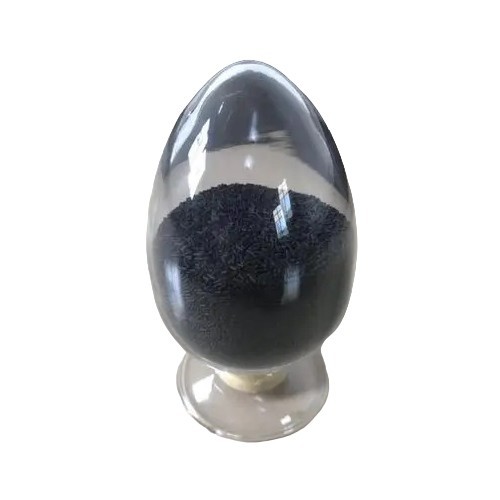
Properties of Carbon Molecular Sieve -JXF
Carbon Molecular Sieve -JXF has several unique properties that make it an ideal adsorbent for PSA systems. It has a well - defined pore structure with a narrow pore size distribution. The pores of Carbon Molecular Sieve -JXF are in the range of micropores, typically around 0.3 - 0.5 nanometers. This narrow pore size allows for the selective adsorption of different gas molecules based on their molecular size and kinetic diameter.
For example, in the separation of nitrogen from air, oxygen molecules have a smaller kinetic diameter (about 0.346 nm) compared to nitrogen molecules (about 0.364 nm). Carbon Molecular Sieve -JXF can preferentially adsorb oxygen molecules due to its appropriate pore size, while nitrogen molecules pass through the bed with relatively little adsorption.
Another important property of Carbon Molecular Sieve -JXF is its high adsorption capacity. It can adsorb a significant amount of the target gas component under high - pressure conditions. This high capacity ensures that the PSA system can achieve a high purity and high - flow rate of the product gas.
In addition, Carbon Molecular Sieve -JXF has good mechanical strength and stability. It can withstand the repeated pressure changes and gas flow in the PSA system without significant attrition or degradation. This long - term stability is crucial for the reliable operation of PSA systems over an extended period.
Application Principle in PSA Systems for Air Separation
The most common application of Carbon Molecular Sieve -JXF in PSA systems is air separation to produce nitrogen. The feed air, which contains approximately 78% nitrogen, 21% oxygen, and small amounts of other gases such as argon, carbon dioxide, and water vapor, is first pre - treated to remove water and carbon dioxide.
Adsorption Step
The pre - treated air is then compressed to a high pressure, typically around 6 - 10 bar, and fed into the adsorption column filled with Carbon Molecular Sieve -JXF. Due to the difference in the kinetic diameter of oxygen and nitrogen molecules, oxygen molecules diffuse more rapidly into the micropores of the carbon molecular sieve and are adsorbed, while nitrogen molecules pass through the column and are collected as the product gas. The adsorption process is exothermic, and the temperature of the adsorbent bed may increase slightly during this step.
Desorption Step
After a certain period of adsorption, the pressure in the adsorption column is reduced to near - atmospheric pressure. This reduction in pressure causes the adsorbed oxygen molecules to desorb from the Carbon Molecular Sieve -JXF. The desorbed oxygen, along with a small amount of nitrogen and other impurities, is vented out of the system. The adsorbent bed is then ready for the next adsorption cycle.
In a typical PSA air separation unit, there are usually two or more adsorption columns working in parallel. While one column is in the adsorption step, the other column is in the desorption or regeneration step. This alternating operation ensures a continuous supply of nitrogen gas.
Other Applications
Carbon Molecular Sieve -JXF can also be used in other PSA - based gas separation processes. For example, it can be used in the separation of hydrogen from a gas mixture containing hydrogen, carbon monoxide, and other gases. In this case, the carbon molecular sieve can selectively adsorb carbon monoxide and other impurities, allowing hydrogen to be produced with high purity.
Different Grades of Carbon Molecular Sieve -JXF
We offer different grades of Carbon Molecular Sieve -JXF to meet the diverse needs of our customers. For instance, Carbon Molecular Sieve -JXSEP®HG - 110 is a high - performance grade that is suitable for large - scale PSA air separation units. It has a high nitrogen production rate and good stability, making it ideal for industrial applications where a large amount of high - purity nitrogen is required.
Carbon Molecular Sieve -JXSEP®HG - 110ES is an enhanced - performance grade. It has been optimized for energy - efficient operation. This grade can achieve a high nitrogen purity with relatively lower energy consumption, which is beneficial for reducing the operating cost of PSA systems.
JXSEP HG - 90 Carbon Molecular Sieve is a cost - effective option for small - to medium - scale PSA applications. It provides a good balance between performance and cost, making it suitable for applications where the demand for nitrogen is not extremely high.
Factors Affecting the Performance of Carbon Molecular Sieve -JXF in PSA Systems
Several factors can affect the performance of Carbon Molecular Sieve -JXF in PSA systems. The feed gas composition is an important factor. If the feed gas contains a high concentration of impurities such as oil, water, or carbon dioxide, these impurities can be adsorbed on the surface of the carbon molecular sieve and reduce its adsorption capacity for the target gas. Therefore, proper pre - treatment of the feed gas is essential to ensure the long - term performance of the carbon molecular sieve.
The operating pressure and temperature also have a significant impact on the adsorption and desorption processes. Higher operating pressures generally increase the adsorption capacity of the carbon molecular sieve, but they also require more energy for compression. The temperature affects the adsorption equilibrium and the diffusion rate of gas molecules. In general, lower temperatures are more favorable for adsorption, while higher temperatures are beneficial for desorption.
The cycle time of the PSA system, which includes the adsorption time and the desorption time, also needs to be optimized. A too - short adsorption time may result in incomplete adsorption of the target gas, while a too - long adsorption time may lead to over - adsorption and reduced product purity. Similarly, the desorption time should be sufficient to fully regenerate the adsorbent bed.
Conclusion and Call for Contact
In conclusion, Carbon Molecular Sieve -JXF plays a vital role in PSA systems, especially in air separation and other gas separation processes. Its unique pore structure, high adsorption capacity, and good mechanical stability make it an excellent choice for selective gas adsorption. By understanding the application principle of Carbon Molecular Sieve -JXF in PSA systems and optimizing the operating conditions, we can achieve high - purity and high - efficiency gas separation.
If you are interested in our Carbon Molecular Sieve -JXF products, including Carbon Molecular Sieve -JXSEP®HG - 110, Carbon Molecular Sieve -JXSEP®HG - 110ES, and JXSEP HG - 90 Carbon Molecular Sieve, and would like to discuss your specific requirements for PSA systems, please feel free to contact us. We are committed to providing you with high - quality products and professional technical support to meet your gas separation needs.
References
- Yang, R. T. (1987). Gas Separation by Adsorption Processes. Butterworth Publishers.
- Ruthven, D. M., Farooq, S., & Knaebel, K. S. (1994). Pressure Swing Adsorption. VCH Publishers.
- Sircar, S., & Golden, T. C. (2000). Adsorbent Materials for Hydrogen Separation and Purification. Adsorption, 6(1 - 4), 139 - 149.