

Yo, folks! As a supplier of Carbon Molecular Sieve -330, I've been in the thick of the gas separation game for a while. Today, I wanna chat about how Carbon Molecular Sieve -330 stacks up against activated carbon in gas separation applications.
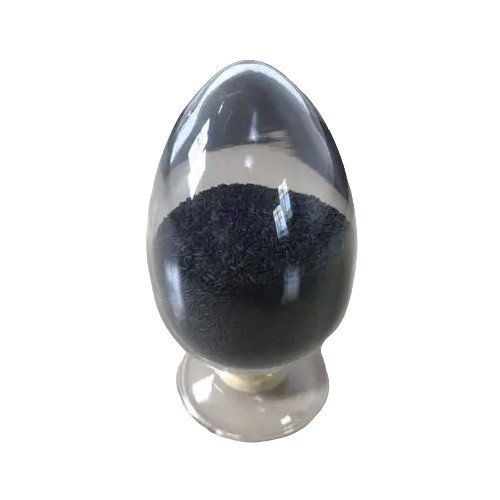

Let's start with a quick intro to both. Carbon Molecular Sieve -330 is a specialized type of carbon material with a well - defined pore structure. It's designed to selectively adsorb different gases based on their molecular size and shape. On the other hand, activated carbon is a porous carbon material known for its high surface area and excellent adsorption properties. It's been around for a long time and has a wide range of applications.
Adsorption Selectivity
One of the key factors in gas separation is adsorption selectivity. Carbon Molecular Sieve -330 really shines here. Its pore size distribution is engineered to be very precise. For example, when it comes to separating nitrogen from oxygen in air, Carbon Molecular Sieve -330 can adsorb oxygen more readily because of the difference in the size of oxygen and nitrogen molecules. Oxygen molecules are smaller and can fit into the narrow pores of the sieve, while nitrogen molecules are relatively larger and pass through.
Activated carbon, however, has a more general adsorption mechanism. It adsorbs gases based on factors like the gas's polarity, molecular weight, and the surface - gas interactions. It doesn't have the same level of molecular - size - based selectivity as Carbon Molecular Sieve -330. So, in applications where you need to separate gases with similar physical properties but different molecular sizes, Carbon Molecular Sieve -330 is the clear winner. For instance, in PSA (Pressure Swing Adsorption) nitrogen generators, Carbon Molecular Sieve -330 is commonly used to produce high - purity nitrogen. You can check out JXSEP HG - 90 Carbon Molecular Sieve which is a great option for such applications.
Adsorption Capacity
When it comes to adsorption capacity, activated carbon has a reputation for having a high surface area. Its porous structure can provide a large area for gas molecules to adhere to. However, the capacity of Carbon Molecular Sieve -330 can be very competitive depending on the gas and the operating conditions.
Carbon Molecular Sieve -330 has a unique pore system that can hold a significant amount of the targeted gas. For some gases, especially those that match well with its pore size, it can have an adsorption capacity comparable to or even better than activated carbon. And here's the thing: the adsorption capacity of Carbon Molecular Sieve -330 can be optimized by adjusting its manufacturing process. We've seen some great results with Carbon Molecular Sieve - JXSEP®HG - 110ES in terms of getting a high adsorption capacity for specific gas separation tasks.
Activated carbon's capacity can be affected by factors like the quality of activation, the type of raw material used, and the presence of contaminants. In some cases where the gas has a strong affinity for the activated carbon surface, it can have a high capacity. But in gas separation applications where we need to separate a specific gas from a mixture, the non - specific adsorption of activated carbon can be a drawback as it may adsorb other unwanted gases as well.
Regeneration
Regeneration is an important aspect in gas separation applications. It's all about getting the adsorbed gas out of the adsorbent so that it can be reused. Carbon Molecular Sieve -330 can be regenerated relatively easily in many cases. For PSA systems, the pressure is decreased, and the adsorbed gas is released from the sieve. This is a fast and efficient process that allows for continuous operation of the gas separation unit.
Activated carbon regeneration can be more complex. Thermal regeneration is a common method, but it requires a lot of energy. You need to heat the activated carbon to a high temperature to drive off the adsorbed gases. This process can also damage the activated carbon structure over time, reducing its effectiveness and lifespan. Carbon Molecular Sieve -330 generally has better stability during regeneration cycles, which means it can be used for a longer period without significant loss of performance. Take a look at JXSEP®LG - 610 Carbon Molecular Sieve, which has shown good regeneration properties in practical applications.
Cost
Cost is always a consideration in any industrial process. The initial cost of Carbon Molecular Sieve -330 might be a bit higher compared to some types of activated carbon. But when you look at the whole picture, factoring in things like the efficiency of gas separation, the regeneration process, and the lifespan of the adsorbent, Carbon Molecular Sieve -330 can be a cost - effective choice.
Since Carbon Molecular Sieve -330 has better selectivity, it can produce higher - purity gases in a single - stage process, which may eliminate the need for additional purification steps. Its easier regeneration process also saves on energy costs in the long run. Activated carbon, while cheaper in some cases, may require more complex and energy - intensive regeneration methods, and its non - specific adsorption may lead to lower - quality product gases and the need for further purification.
Applications
Carbon Molecular Sieve -330 is widely used in industries where high - purity gas separation is required. As mentioned earlier, PSA nitrogen generators are a major application. It's also used in hydrogen purification, where it can separate hydrogen from other gases like carbon monoxide and methane.
Activated carbon has a broader range of applications. It's used in water treatment for removing organic compounds, in air purification for removing odors and volatile organic compounds, and in the food and beverage industry for decolorization and purification. But in gas separation applications where precise molecular - level separation is crucial, Carbon Molecular Sieve -330 takes the lead.
Conclusion
In conclusion, Carbon Molecular Sieve -330 and activated carbon each have their own strengths and weaknesses in gas separation applications. Carbon Molecular Sieve -330 stands out for its high selectivity, good adsorption capacity for targeted gases, easy regeneration, and long - term stability. While activated carbon has a high surface area and a wide range of general - purpose adsorption applications, it lacks the same level of precision in gas separation.
If you're in the market for gas separation solutions, I highly recommend considering Carbon Molecular Sieve -330. Whether you need it for nitrogen generation, hydrogen purification, or other specialty gas separation processes, we've got the right product for you. If you're interested in learning more or starting a procurement discussion, don't hesitate to reach out. We're always happy to help you find the best solution for your specific needs.
References
- Ruthven, D. M., Farooq, S., & Knaebel, K. S. (1994). Pressure Swing Adsorption. John Wiley & Sons.
- Yang, R. T. (1997). Gas Separation by Adsorption Processes. World Scientific Publishing.