

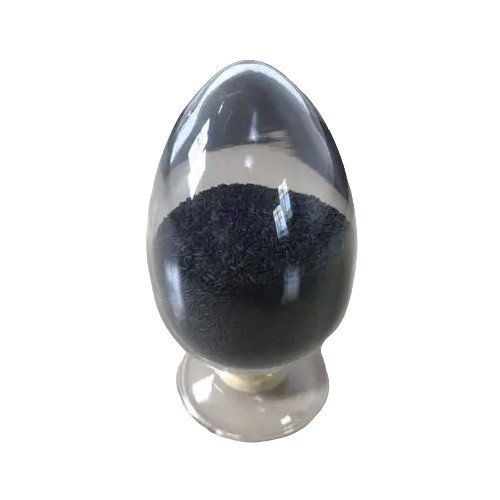
Carbon Molecular Sieve - 330 (CMS - 330) is a widely used adsorbent material in the field of gas separation, especially in the process of nitrogen production from air. As a well - established supplier of CMS - 330, I am delighted to share with you the detailed production process of this remarkable material.
Raw Material Selection
The production of CMS - 330 starts with the careful selection of raw materials. Generally, high - quality carbonaceous materials are chosen. Commonly used raw materials include coconut shell, coal, and phenolic resin. Coconut shell is favored for its high carbon content and relatively uniform pore structure after carbonization. Coal, on the other hand, is an abundant and cost - effective source, but it requires more complex purification and modification processes. Phenolic resin offers excellent controllability in terms of porosity and carbon structure during the subsequent production steps.
For our company, we often select a combination of coconut shell and high - grade phenolic resin. The coconut shell provides a natural and stable carbon framework, while the phenolic resin helps to fine - tune the pore size distribution and improve the mechanical strength of the final product. After procurement, the raw materials are subjected to a series of pre - treatment processes. They are washed thoroughly to remove impurities such as dirt, sand, and metal particles. This step is crucial as impurities can affect the carbonization process and the performance of the final CMS - 330.
Carbonization
The pre - treated raw materials are then transferred to a high - temperature furnace for carbonization. Carbonization is a key step in the production of CMS - 330, which involves heating the raw materials in an oxygen - free or low - oxygen environment to decompose non - carbon elements and form a carbon - rich structure.
The carbonization process usually takes place at temperatures ranging from 600°C to 900°C. At this stage, the organic components in the raw materials are gradually broken down, and volatile substances such as water, carbon dioxide, and hydrocarbons are released. The heating rate is carefully controlled to ensure a uniform carbonization process. A slow heating rate allows for a more complete decomposition of the organic matter and the formation of a well - structured carbon matrix.
During carbonization, the carbon atoms start to rearrange themselves, creating a basic pore structure. However, at this initial stage, the pore size distribution is relatively wide, and the pores may not be well - developed for efficient gas separation.
Activation
After carbonization, the carbonized material undergoes an activation process. Activation is essential for creating a large number of micropores and mesopores in the carbon structure, which greatly increases the surface area and adsorption capacity of the CMS - 330.
There are two main methods of activation: physical activation and chemical activation. Physical activation typically uses steam or carbon dioxide as the activating agent. The carbonized material is heated in the presence of steam or carbon dioxide at high temperatures (usually around 800°C - 1000°C). The activating agent reacts with the carbon atoms on the surface of the material, selectively removing some carbon atoms and creating pores.
Chemical activation involves the use of chemical agents such as potassium hydroxide (KOH), zinc chloride (ZnCl₂), or phosphoric acid (H₃PO₄). The carbonized material is impregnated with the chemical agent and then heated. The chemical agent reacts with the carbon, expanding the pore structure and increasing the surface area.
In our production process, we mainly use physical activation with steam. This method is environmentally friendly and can produce a more uniform pore structure. After activation, the surface area of the material can reach several hundred square meters per gram, which is crucial for efficient gas adsorption.
Deposition and Pore Size Adjustment
To obtain the desired pore size distribution for efficient nitrogen separation, a deposition process is carried out. This step is aimed at precisely controlling the pore size of the CMS - 330 to ensure that it can selectively adsorb oxygen and other impurities while allowing nitrogen to pass through.
A hydrocarbon gas, such as methane or propane, is introduced into the activated carbon material at high temperatures. The hydrocarbon gas decomposes on the surface of the carbon pores, depositing a thin layer of carbon on the pore walls. By carefully controlling the amount of hydrocarbon gas, the temperature, and the reaction time, we can adjust the pore size to the optimal range for nitrogen purification.
The goal is to create a narrow pore size distribution centered around 3 - 5 Å. This pore size allows oxygen molecules, which are smaller in size, to be adsorbed more readily than nitrogen molecules, enabling the separation of nitrogen from air with high efficiency.
Shaping and Post - treatment
After the pore size adjustment, the CMS - 330 material is shaped into the desired form. It can be made into pellets, granules, or other shapes depending on the specific application requirements. Shaping is usually achieved through extrusion or compression methods.
Extrusion involves forcing the CMS - 330 material through a die to create continuous strands of the desired cross - sectional shape. These strands are then cut into appropriate lengths to form pellets or granules. Compression, on the other hand, uses a press to compact the material into specific shapes.
After shaping, the CMS - 330 undergoes post - treatment processes. This includes washing to remove any residual chemicals or impurities, drying to remove moisture, and heat treatment to improve the mechanical strength and stability of the material.
Quality Control
Throughout the production process, strict quality control measures are implemented. Various analytical techniques are used to monitor the properties of the CMS - 330 at different stages.
For example, BET (Brunauer - Emmett - Teller) analysis is used to measure the specific surface area of the material. Porosimetry techniques, such as mercury intrusion porosimetry and gas adsorption porosimetry, are employed to determine the pore size distribution. The adsorption capacity and selectivity of the CMS - 330 for different gases are also tested using gas chromatography and other analytical methods.
We ensure that our CMS - 330 meets or exceeds the industry standards for nitrogen production. Only products that pass all the quality control tests are packaged and shipped to our customers.
Other Related Products
In addition to Carbon Molecular Sieve - 330, we also offer a range of other high - quality carbon molecular sieves, such as Carbon Molecular Sieve - JXSEP®HG - 110ES, Carbon Molecular Sieve - JXSEP®LG - 560, and JXSEP HG - 90 Carbon Molecular Sieve. These products have different pore size distributions and adsorption properties, catering to a wide variety of gas separation applications.

Conclusion
In summary, the production of Carbon Molecular Sieve - 330 is a complex and precise process that involves multiple steps, from raw material selection to quality control. Each step plays a crucial role in determining the final properties and performance of the product.
If you are in the market for high - quality carbon molecular sieves for your gas separation needs, we are here to provide you with the best solutions. Our CMS - 330 and other related products are known for their excellent adsorption performance, high mechanical strength, and long service life. We welcome you to contact us for procurement discussions and to learn more about how our products can meet your specific requirements.
References
- Yang, R. T. (1997). Gas Separation by Adsorption Processes. World Scientific.
- Foley, H. C., & Parikh, B. (2010). Adsorbents: Fundamentals and Applications. John Wiley & Sons.
- Ruthven, D. M. (1984). Principles of Adsorption and Adsorption Processes. John Wiley & Sons.