

As a supplier of Carbon Molecular Sieve - JXF, I am often asked about the diffusion coefficient of gases in this remarkable material. In this blog post, I will delve into the concept of the diffusion coefficient, explain how it relates to Carbon Molecular Sieve - JXF, and discuss its significance in various applications.
Understanding the Diffusion Coefficient
The diffusion coefficient, denoted as D, is a fundamental parameter in the study of mass transfer. It quantifies the rate at which a substance diffuses through a medium under the influence of a concentration gradient. In the context of gases, the diffusion coefficient describes how quickly gas molecules move through a porous material like Carbon Molecular Sieve - JXF.
Mathematically, Fick's first law of diffusion states that the flux of a diffusing species (J) is proportional to the concentration gradient (∇C) and the diffusion coefficient:
[J = -D\nabla C]
where the negative sign indicates that diffusion occurs in the direction of decreasing concentration.
The diffusion coefficient depends on several factors, including the nature of the diffusing gas, the properties of the medium (such as porosity and pore size distribution), temperature, and pressure. For gases diffusing in porous materials, the diffusion mechanism can be classified into different types, such as Knudsen diffusion, molecular diffusion, and surface diffusion, each with its own characteristic diffusion coefficient.
Diffusion in Carbon Molecular Sieve - JXF
Carbon Molecular Sieve - JXF is a microporous carbon material with a narrow pore size distribution, typically in the range of 0.3 - 1.0 nm. This unique pore structure allows it to selectively adsorb and separate different gases based on their molecular size, shape, and polarity.
When a gas mixture comes into contact with Carbon Molecular Sieve - JXF, the gas molecules diffuse into the pores of the material. The diffusion process is influenced by the interaction between the gas molecules and the pore walls, as well as the steric hindrance caused by the narrow pores.
For small gas molecules, such as nitrogen (N₂) and oxygen (O₂), the diffusion mechanism in Carbon Molecular Sieve - JXF is mainly Knudsen diffusion. In Knudsen diffusion, the gas molecules collide more frequently with the pore walls than with each other. The Knudsen diffusion coefficient (Dₖ) can be calculated using the following equation:
[D_{k}=\frac{2}{3}r\sqrt{\frac{8RT}{\pi M}}]
where r is the pore radius, R is the gas constant, T is the temperature, and M is the molar mass of the gas.
The diffusion coefficient of different gases in Carbon Molecular Sieve - JXF can vary significantly. For example, the diffusion coefficient of oxygen is generally higher than that of nitrogen due to its smaller molecular size. This difference in diffusion rates forms the basis for the separation of nitrogen and oxygen using Carbon Molecular Sieve - JXF in pressure swing adsorption (PSA) processes.
Significance of the Diffusion Coefficient in Applications
The diffusion coefficient of gases in Carbon Molecular Sieve - JXF plays a crucial role in its performance in various applications, such as gas separation, purification, and storage.
Gas Separation
In gas separation processes, such as PSA for nitrogen production, the difference in diffusion coefficients of different gases allows Carbon Molecular Sieve - JXF to selectively adsorb and separate the target gas from the gas mixture. By controlling the adsorption and desorption cycles, high - purity nitrogen can be obtained. The efficiency of the separation process is directly related to the diffusion rates of the gases in the carbon molecular sieve. A higher diffusion coefficient for the unwanted gas (e.g., oxygen) and a lower diffusion coefficient for the target gas (e.g., nitrogen) result in better separation performance.
Gas Purification
Carbon Molecular Sieve - JXF can also be used for gas purification by removing trace impurities from a gas stream. The diffusion of the impurity molecules into the pores of the carbon molecular sieve determines the rate of adsorption and purification. A high diffusion coefficient for the impurity gas ensures rapid removal of the impurities, leading to a high - purity gas product.
Gas Storage
In gas storage applications, the diffusion of gas molecules into the pores of Carbon Molecular Sieve - JXF affects the adsorption capacity and the rate of gas uptake and release. A suitable diffusion coefficient allows for efficient filling and discharging of the gas storage system, ensuring a reliable supply of the gas when needed.
Factors Affecting the Diffusion Coefficient in Carbon Molecular Sieve - JXF
Several factors can influence the diffusion coefficient of gases in Carbon Molecular Sieve - JXF:
Pore Structure
The pore size, pore volume, and pore size distribution of Carbon Molecular Sieve - JXF have a significant impact on the diffusion coefficient. A narrower pore size distribution and smaller average pore size can enhance the selectivity of gas separation but may also reduce the diffusion rate. Therefore, optimizing the pore structure is crucial to achieve a balance between selectivity and diffusion rate.
Temperature
Temperature affects the kinetic energy of the gas molecules and the interaction between the gas molecules and the pore walls. Generally, an increase in temperature leads to an increase in the diffusion coefficient due to the higher kinetic energy of the gas molecules. However, at very high temperatures, the adsorption capacity of the carbon molecular sieve may decrease, which can affect the overall performance of the separation or storage process.
Pressure
Pressure can influence the diffusion coefficient through its effect on the gas density and the interaction between the gas molecules. At high pressures, the gas molecules are more likely to interact with each other, which can reduce the Knudsen diffusion contribution and increase the molecular diffusion contribution.
Our Carbon Molecular Sieve Products
As a supplier, we offer a range of high - quality Carbon Molecular Sieve products, including Carbon Molecular Sieve - JXSEP®HG - 110ES, Carbon Molecular Sieve - 330, and Carbon Molecular Sieve - JXSEP®HG - 110. These products are carefully engineered to have optimal pore structures and diffusion properties for different applications.
Our Carbon Molecular Sieve - JXSEP®HG - 110ES is designed for high - efficiency nitrogen production, with a well - controlled pore size distribution that ensures excellent separation performance. Carbon Molecular Sieve - 330 is suitable for a wide range of gas separation and purification applications, offering high adsorption capacity and fast diffusion rates. Our Carbon Molecular Sieve - JXSEP®HG - 110 combines good selectivity and diffusion properties, making it a versatile choice for various industrial processes.
Conclusion
The diffusion coefficient of gases in Carbon Molecular Sieve - JXF is a critical parameter that determines its performance in gas separation, purification, and storage applications. Understanding the factors that affect the diffusion coefficient and optimizing the pore structure of the carbon molecular sieve are essential for achieving high - efficiency and high - performance processes.

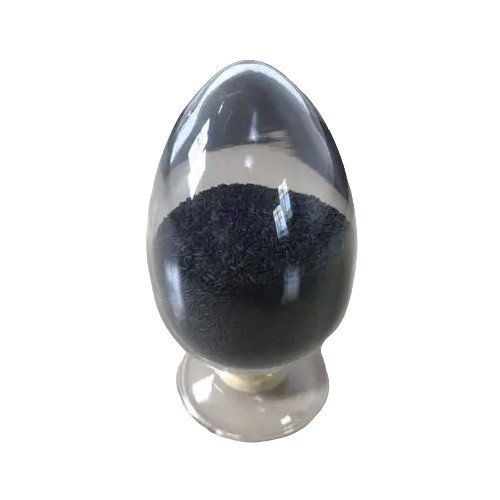
If you are interested in our Carbon Molecular Sieve products or have any questions about gas diffusion and separation, please feel free to contact us for further discussion and potential procurement. We are committed to providing you with the best solutions for your specific needs.
References
- Ruthven, D. M. Principles of Adsorption and Adsorption Processes. John Wiley & Sons, 1984.
- Yang, R. T. Gas Separation by Adsorption Processes. Butterworths, 1987.
- Suzuki, M. Adsorption Engineering. Kodansha Ltd., 1990.