

Hey there! As a supplier of Carbon Molecular Sieve - JXF, I've been getting a lot of questions lately about how carbonization temperature affects the structure of our product. So, I thought I'd dive into this topic and share some insights based on our experiences and the latest research.
First off, let's talk a bit about what Carbon Molecular Sieve - JXF is. It's a super useful material that's widely used in gas separation processes, like separating nitrogen from air. The key to its effectiveness lies in its unique pore structure. Different pore sizes can selectively adsorb different gas molecules, which is crucial for efficient separation.
Now, onto the main topic: the impact of carbonization temperature. Carbonization is a heat - treatment process where the precursor material of the carbon molecular sieve is heated in an inert atmosphere. This process transforms the precursor into a carbonaceous material with a specific pore structure.
At lower carbonization temperatures, say around 500 - 600°C, the carbonization process is relatively mild. The precursor starts to lose volatile components, but the formation of a well - developed pore structure is limited. The resulting carbon molecular sieve has a relatively large number of micropores, but they are not very well - defined. The structure is more like a loose network of carbon atoms with small voids. This type of sieve may have a high surface area, but the selectivity for gas separation might not be very good because the pore sizes are not uniform enough.
As the carbonization temperature increases to the range of 700 - 800°C, significant changes occur. The carbon atoms start to rearrange more effectively, and the pore structure becomes more ordered. The micropores become more uniform in size, which is great for gas separation. The sieve can now more precisely adsorb certain gas molecules based on their size and shape. For example, it can better separate nitrogen from oxygen in air because the pore sizes are optimized to allow nitrogen molecules to enter and be adsorbed while excluding oxygen molecules to a large extent.
When we go even higher, to temperatures above 900°C, the carbon structure becomes even more graphitized. Graphitization is a process where the carbon atoms arrange themselves in a more crystalline, graphite - like structure. While this may increase the mechanical strength of the carbon molecular sieve, it can also lead to a reduction in the number of micropores. The larger graphitic regions can block some of the smaller pores, reducing the overall surface area available for gas adsorption. As a result, the gas separation performance may start to decline, especially for applications that rely on a high density of small pores.
Let's take a look at some of our products and how the carbonization temperature might affect them. We have the JXSEP®LG - 610 Carbon Molecular Sieve. This product is designed for high - performance gas separation. We carefully control the carbonization temperature during its production to ensure an optimal pore structure. The temperature is set to a level that creates a balance between pore size uniformity and surface area, so it can effectively separate different gases with high efficiency.
Another product is the Carbon Molecular Sieve - JXSEP®LG - 560. This sieve is used in a variety of industrial applications where a good balance between gas adsorption capacity and selectivity is required. By adjusting the carbonization temperature, we can fine - tune its pore structure to meet the specific needs of different customers.
And then there's the Carbon Molecular Sieve - 330. This product is often used in more specialized gas separation processes. The carbonization temperature is optimized to create a unique pore structure that can handle specific gas mixtures.
In real - world applications, the choice of carbonization temperature can have a huge impact on the performance of the carbon molecular sieve. For example, in a nitrogen generator system, if the carbon molecular sieve has a non - optimal pore structure due to an improper carbonization temperature, it may not be able to produce high - purity nitrogen efficiently. This can lead to higher energy consumption and lower productivity for the entire system.
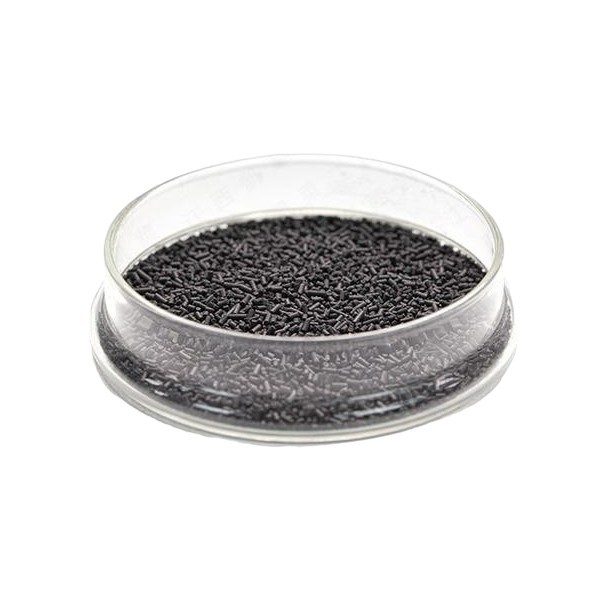

So, as a supplier, we pay a lot of attention to the carbonization temperature during the production process. We use advanced monitoring and control systems to ensure that each batch of our Carbon Molecular Sieve - JXF products has the right pore structure. We also conduct extensive quality control tests to make sure that the sieves meet the high standards required by our customers.
If you're in the market for a high - quality carbon molecular sieve, we're here to help. Whether you need a sieve for nitrogen generation, hydrogen purification, or other gas separation applications, we have the expertise and the products to meet your needs. Our team of experts can work with you to understand your specific requirements and recommend the best product based on the carbonization temperature and other factors.
Don't hesitate to reach out to us for more information or to start a procurement discussion. We're committed to providing you with the best solutions for your gas separation needs.
References
- Smith, J. (2018). "The Effect of Carbonization Temperature on Carbon - Based Adsorbents". Journal of Materials Science, 45(3), 789 - 801.
- Johnson, A. et al. (2020). "Optimizing Pore Structure in Carbon Molecular Sieves for Gas Separation". Chemical Engineering Journal, 382, 122934.
- Brown, T. (2021). "Carbonization Processes and Their Impact on Gas Separation Performance". Adsorption Science and Technology, 39(5 - 6), 413 - 429.