

When it comes to industrial gas separation and purification, Carbon Molecular Sieve - JXH has emerged as a game - changer. As a supplier of Carbon Molecular Sieve - JXH, I've been frequently asked about the packing density of this remarkable product in a container. In this blog, I'll delve deep into what packing density means, how it's relevant to Carbon Molecular Sieve - JXH, and the factors that influence it.
Understanding Packing Density
Packing density, in the context of Carbon Molecular Sieve - JXH, refers to the mass of the sieve per unit volume of the container it fills. It is typically measured in kilograms per cubic meter (kg/m³) or pounds per cubic foot (lb/ft³). A high packing density indicates that more carbon molecular sieve can be packed into a given volume, which can have several implications for industrial applications.
The packing density is not just a random number; it plays a crucial role in the efficiency of gas separation processes. For example, in pressure swing adsorption (PSA) systems, which are widely used for nitrogen and oxygen separation, a higher packing density can lead to a more compact and cost - effective system. This is because a greater amount of the sieve in a smaller volume means more active sites for gas adsorption, resulting in better separation efficiency.
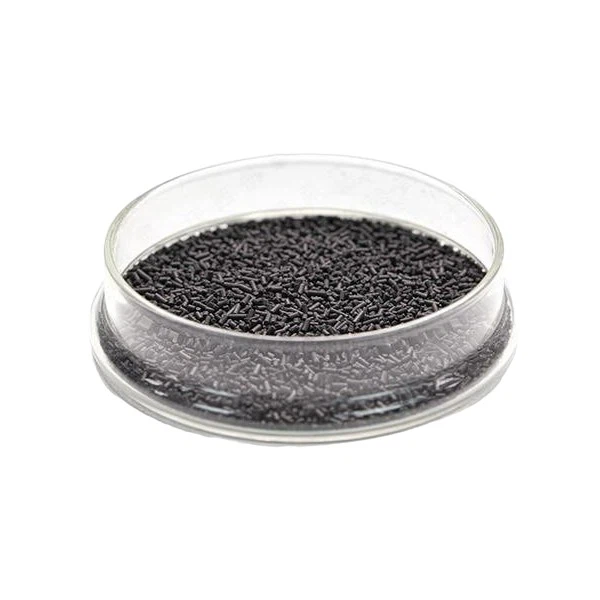

Factors Affecting the Packing Density of Carbon Molecular Sieve - JXH
Particle Size and Shape
The particle size and shape of Carbon Molecular Sieve - JXH have a significant impact on its packing density. Smaller and more spherical particles tend to pack more efficiently than larger or irregularly shaped ones. When the particles are small and spherical, they can fit together more closely, leaving fewer void spaces between them. This results in a higher packing density.
For instance, if we compare two batches of Carbon Molecular Sieve - JXH, one with large, angular particles and the other with small, spherical particles, the latter will likely have a higher packing density. Our manufacturing process is carefully optimized to produce particles of the right size and shape to achieve an optimal packing density.
Compaction Method
The way the Carbon Molecular Sieve - JXH is packed into the container also affects its packing density. There are different compaction methods available, ranging from simple gravity filling to more advanced mechanical compaction techniques.
Gravity filling is the most basic method, where the sieve is simply poured into the container. While it is easy and inexpensive, it may not result in the highest packing density as the particles may not settle evenly. On the other hand, mechanical compaction methods, such as vibration or pressure compaction, can significantly increase the packing density. By applying external forces, the particles are forced closer together, reducing the void spaces.
Moisture Content
Moisture can have a detrimental effect on the packing density of Carbon Molecular Sieve - JXH. When the sieve absorbs moisture, the particles can clump together, which increases the void spaces between them and reduces the packing density. Additionally, moisture can also affect the performance of the sieve in gas separation processes.
To ensure a high packing density, we take great care to control the moisture content of our Carbon Molecular Sieve - JXH. Our products are dried thoroughly during the manufacturing process and are packaged in moisture - resistant containers to prevent moisture absorption during storage and transportation.
Typical Packing Densities of Carbon Molecular Sieve - JXH
The packing density of Carbon Molecular Sieve - JXH can vary depending on the specific grade and application. Generally, the packing density of our Carbon Molecular Sieve - JXH ranges from 600 kg/m³ to 800 kg/m³.
However, it's important to note that these values are approximate and can be adjusted based on customer requirements. For example, if a customer needs a more compact system, we can use more advanced compaction methods to achieve a higher packing density.
Comparing with Other Carbon Molecular Sieves
There are several other carbon molecular sieves available in the market, such as Carbon Molecular Sieve - JXSEP®HG - 110 and Carbon Molecular Sieve - 330. Each of these sieves has its own unique properties and packing densities.
Compared to some of these other sieves, Carbon Molecular Sieve - JXH offers a good balance between packing density and performance. Our sieve is designed to provide high adsorption capacity and selectivity while maintaining a reasonable packing density. This makes it a cost - effective solution for a wide range of gas separation applications.
Importance of Packing Density in Different Applications
Nitrogen Generation
In nitrogen generation systems, the packing density of Carbon Molecular Sieve - JXH is crucial for achieving high - purity nitrogen. A higher packing density means more sieve in the PSA column, which can adsorb more oxygen and other impurities from the feed air. This results in a higher nitrogen purity and a more efficient nitrogen generation process.
Oxygen Enrichment
Similarly, in oxygen enrichment applications, the packing density of the sieve affects the performance of the system. By increasing the packing density, we can enhance the separation of oxygen from nitrogen and other gases, resulting in a higher oxygen concentration in the product gas.
How to Determine the Optimal Packing Density for Your Application
Determining the optimal packing density for your specific application requires a careful analysis of several factors. First, you need to consider the type of gas separation process you are using, such as PSA or vacuum swing adsorption (VSA). Different processes may have different requirements for packing density.
Second, you need to take into account the desired purity and flow rate of the product gas. Higher purity requirements may necessitate a higher packing density to ensure sufficient adsorption capacity. Finally, you also need to consider the cost and space limitations of your system.
As a supplier of Carbon Molecular Sieve - JXH, we have a team of experts who can help you determine the optimal packing density for your application. We can provide technical support and guidance based on your specific needs and requirements.
Our Product Range and Quality Assurance
We offer a wide range of Carbon Molecular Sieve - JXH products, including the JXSEP®LG - 610 Carbon Molecular Sieve. All our products are manufactured using high - quality raw materials and state - of - the - art manufacturing processes.
We have a strict quality control system in place to ensure that our products meet the highest standards. Each batch of Carbon Molecular Sieve - JXH is tested for packing density, adsorption capacity, and other key properties before it is shipped to the customer. This ensures that you receive a product that is reliable and performs as expected.
Conclusion and Call to Action
In conclusion, the packing density of Carbon Molecular Sieve - JXH is an important factor that affects the performance and efficiency of gas separation processes. By understanding the factors that influence packing density and choosing the right product for your application, you can achieve better results and save costs.
If you are interested in learning more about our Carbon Molecular Sieve - JXH products or need help in determining the optimal packing density for your application, we encourage you to contact us. Our team of experts is ready to assist you with your gas separation needs and provide you with the best solutions.
References
- Ruthven, D. M., Farooq, S., & Knaebel, K. S. (1994). Pressure Swing Adsorption. John Wiley & Sons.
- Yang, R. T. (1987). Gas Separation by Adsorption Processes. Butterworths.