

What is the pore volume of Carbon Molecular Sieve?
As a seasoned supplier of Carbon Molecular Sieve (CMS), I've witnessed firsthand the pivotal role this remarkable material plays in various industrial applications. One of the most critical parameters that define the performance of CMS is its pore volume. In this blog post, I'll delve into the concept of pore volume in Carbon Molecular Sieve, its significance, and how it impacts the overall functionality of the material.
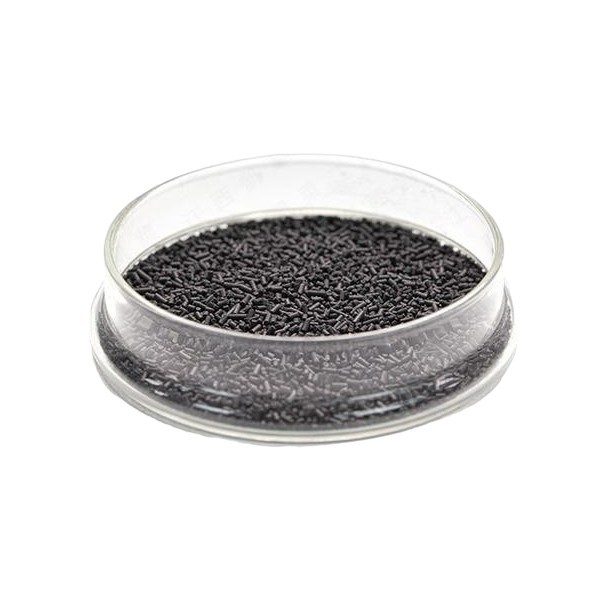

Understanding Pore Volume in Carbon Molecular Sieve
Pore volume refers to the total volume of pores within a given mass or volume of Carbon Molecular Sieve. These pores are essentially tiny cavities or channels that are distributed throughout the structure of the CMS. The pore volume can be classified into different categories based on the size of the pores: micropores (less than 2 nm in diameter), mesopores (2 - 50 nm in diameter), and macropores (greater than 50 nm in diameter).
The pore volume of Carbon Molecular Sieve is a key determinant of its adsorption capacity. Adsorption is the process by which molecules from a gas or liquid phase adhere to the surface of the CMS. The larger the pore volume, the more space there is for molecules to be adsorbed, resulting in a higher adsorption capacity. This is particularly important in applications such as air separation, where CMS is used to separate nitrogen from oxygen by selectively adsorbing oxygen molecules.
Measuring Pore Volume
There are several methods available for measuring the pore volume of Carbon Molecular Sieve. One of the most commonly used techniques is gas adsorption analysis, specifically the Brunauer - Emmett - Teller (BET) method and the Barrett - Joyner - Halenda (BJH) method.
The BET method is used to determine the specific surface area and total pore volume of the CMS. It involves measuring the amount of gas (usually nitrogen) adsorbed on the surface of the sample at different relative pressures. By analyzing the adsorption isotherm obtained from these measurements, the BET equation can be used to calculate the specific surface area and total pore volume.
The BJH method, on the other hand, is used to determine the pore size distribution and mesopore volume of the CMS. It is based on the principle of capillary condensation, where gas molecules condense inside the pores at specific relative pressures depending on the pore size. By analyzing the desorption branch of the adsorption isotherm, the BJH equation can be used to calculate the pore size distribution and mesopore volume.
Significance of Pore Volume in Different Applications
Air Separation
In air separation applications, the pore volume of Carbon Molecular Sieve plays a crucial role in determining the efficiency of nitrogen production. A higher pore volume allows for greater adsorption of oxygen molecules, resulting in a higher purity of nitrogen gas. Our JXSEP®LG - 610 Carbon Molecular Sieve is specifically designed with an optimized pore volume to provide excellent air separation performance, delivering high - purity nitrogen gas with a low oxygen content.
Natural Gas Purification
Carbon Molecular Sieve is also used in natural gas purification to remove impurities such as carbon dioxide, water vapor, and sulfur compounds. The pore volume of the CMS affects its ability to adsorb these impurities. A larger pore volume can accommodate more impurity molecules, leading to a more efficient purification process. Our Carbon Molecular Sieve - JXSEP®HG - 110 has a well - controlled pore volume that enables it to effectively adsorb various impurities from natural gas, ensuring a high - quality natural gas product.
Hydrogen Recovery
In hydrogen recovery applications, the pore volume of Carbon Molecular Sieve is important for separating hydrogen from other gases such as carbon monoxide, methane, and nitrogen. The CMS selectively adsorbs the other gases, allowing hydrogen to pass through. A suitable pore volume is required to ensure high - efficiency hydrogen recovery. Our Carbon Molecular Sieve - JXSEP®LG - 560 has been engineered with an appropriate pore volume to achieve excellent hydrogen recovery performance, making it a popular choice in the industry.
Factors Affecting Pore Volume
The pore volume of Carbon Molecular Sieve can be influenced by several factors during the manufacturing process. These include the choice of raw materials, the carbonization and activation conditions, and the post - treatment processes.
The raw materials used in the production of CMS can have a significant impact on its pore volume. Different types of carbonaceous materials, such as coal, coconut shell, and phenolic resin, have different inherent pore structures. By selecting the appropriate raw materials, it is possible to control the initial pore volume of the CMS.
The carbonization and activation conditions also play a crucial role in determining the pore volume of the CMS. Carbonization is the process of heating the raw materials in an inert atmosphere to convert them into carbon. Activation is the process of creating or expanding the pores in the carbon structure by treating it with an activating agent, such as steam or carbon dioxide. By carefully controlling the temperature, time, and activating agent concentration during these processes, the pore volume of the CMS can be optimized.
Post - treatment processes, such as impregnation and surface modification, can also be used to adjust the pore volume of the CMS. Impregnation involves adding certain chemicals to the CMS to modify its surface properties and pore structure. Surface modification can be used to enhance the adsorption selectivity and capacity of the CMS by changing the surface chemistry of the pores.
Conclusion
In conclusion, the pore volume of Carbon Molecular Sieve is a critical parameter that significantly affects its adsorption capacity and performance in various applications. By understanding the concept of pore volume, measuring it accurately, and optimizing it through the manufacturing process, we can produce high - quality Carbon Molecular Sieve products that meet the specific requirements of different industries.
If you are in need of high - performance Carbon Molecular Sieve for your application, we invite you to contact us for more information and to discuss your specific needs. Our team of experts is ready to provide you with the best solutions and support to ensure the success of your project.
References
- Rouquerol, F., Rouquerol, J., & Singh, K. (1999). Adsorption by powders and porous solids: principles, methodology and applications. Academic Press.
- Yang, R. T. (1987). Gas separation by adsorption processes. Butterworth Publishers.
- Sircar, S., & Golden, T. C. (2005). Adsorption and ion exchange. Kirk - Othmer Encyclopedia of Chemical Technology.