

Hey there! As a supplier of Carbon Molecular Sieve - JXH, I'm super excited to dive into the topic of its structure. Carbon molecular sieves (CMS) have been a game - changer in various industries, and our JXH series is no exception.
First off, let's understand what a carbon molecular sieve is in general. A CMS is a porous carbon material with a unique pore structure that allows it to separate different gases based on their molecular size and diffusion rate. This property makes it incredibly useful in gas separation processes, like nitrogen generation from air.
Now, let's zoom in on the structure of Carbon Molecular Sieve - JXH. The JXH series has a well - defined and carefully engineered structure that gives it its outstanding performance. At a microscopic level, it consists of a network of micropores and mesopores.
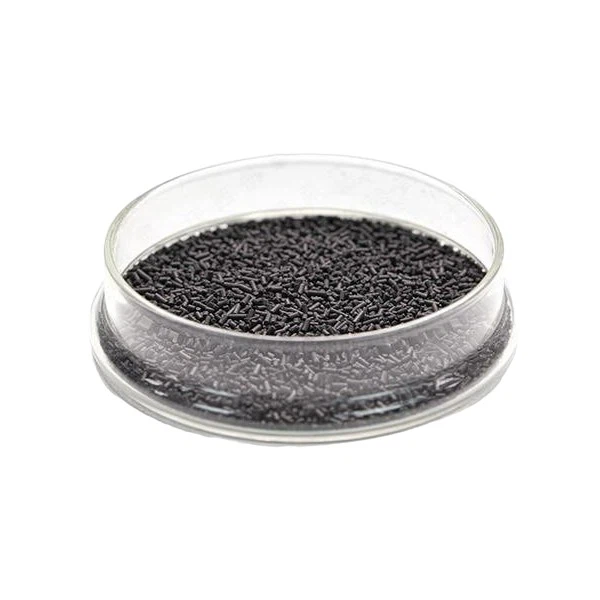

The micropores in the JXH carbon molecular sieve are typically less than 2 nanometers in diameter. These tiny pores are the key to the selective adsorption of gases. For example, when it comes to separating nitrogen from oxygen in air, the smaller oxygen molecules can diffuse more easily into the micropores compared to the larger nitrogen molecules. This difference in diffusion rates allows for the efficient separation of the two gases.
The mesopores, on the other hand, have diameters ranging from 2 to 50 nanometers. They play an important role in facilitating the transport of gases within the sieve. The mesopores act as channels that help the gas molecules move towards the micropores where the actual separation takes place. This hierarchical pore structure, with both micropores and mesopores working in tandem, is what gives the JXH carbon molecular sieve its high separation efficiency.
One of the things that sets our JXH series apart is the uniformity of its pore structure. We've spent a lot of time and effort in the manufacturing process to ensure that the pores are evenly distributed throughout the sieve. This uniformity leads to consistent performance over time. When you're using a carbon molecular sieve in an industrial gas separation process, you need reliability. You don't want the separation efficiency to vary widely from batch to batch. With our JXH carbon molecular sieve, you can count on stable and predictable results.
Another aspect of the structure is the surface area. The JXH carbon molecular sieve has a very high surface area, which is crucial for gas adsorption. A larger surface area means more sites for gas molecules to attach to, increasing the overall capacity of the sieve to adsorb gases. This high surface area is achieved through a special activation process during manufacturing.
Let's talk about some of the specific products in our JXH series. We have the JXSEP HG - 90 Carbon Molecular Sieve. This particular sieve is designed for applications where high - purity nitrogen is required. Its structure is optimized to maximize the separation of nitrogen from other gases in the air. The pore size distribution is carefully controlled to ensure that only the desired gas molecules are adsorbed, leaving behind a high - purity nitrogen stream.
Then there's the JXSEP®LG - 610 Carbon Molecular Sieve. This sieve is known for its excellent adsorption kinetics. The structure of the JXSEP®LG - 610 allows for rapid diffusion of gas molecules into the pores, which means faster separation times. This is a great advantage in industries where time is of the essence, like in some chemical manufacturing processes.
And we also offer the Carbon Molecular Sieve - JXSEP®LG - 560. This product is designed for applications that require a balance between high - capacity adsorption and good separation efficiency. Its structure is a result of years of research and development, aiming to meet the diverse needs of our customers.
The manufacturing process of our JXH carbon molecular sieve is also worth mentioning. We start with high - quality carbon precursors, which are then subjected to a series of heat treatments and activation steps. These processes are carefully controlled to create the desired pore structure. We use advanced techniques to monitor and adjust the pore size, distribution, and surface area during manufacturing. This ensures that each batch of our JXH carbon molecular sieve meets our strict quality standards.
In addition to the physical structure, the chemical composition of the JXH carbon molecular sieve also plays a role in its performance. The carbon atoms in the sieve are arranged in a specific way that affects the interaction between the sieve and the gas molecules. The surface chemistry of the sieve can be modified to enhance its selectivity towards certain gases.
Now, you might be wondering how all of this structure and performance translate into real - world applications. Our JXH carbon molecular sieve is used in a wide range of industries. In the food and beverage industry, it's used for nitrogen blanketing to preserve the freshness of products. In the electronics industry, high - purity nitrogen produced using our sieve is used in semiconductor manufacturing to prevent oxidation. In the chemical industry, it's used for gas separation processes in various chemical reactions.
If you're in need of a reliable carbon molecular sieve for your gas separation needs, our JXH series is definitely worth considering. Our team of experts has worked hard to develop a product with a structure that offers high performance, reliability, and consistency. Whether you're looking for a sieve for a small - scale laboratory application or a large - scale industrial process, we have the right solution for you.
If you're interested in learning more about our Carbon Molecular Sieve - JXH products or want to discuss your specific requirements, don't hesitate to reach out. We're always happy to have a chat and see how we can help you with your gas separation challenges.
References
- "Carbon Molecular Sieves: Structure, Properties, and Applications" - A comprehensive review article on carbon molecular sieves.
- "Advanced Gas Separation Technologies Using Carbon Molecular Sieves" - A research paper that delves into the latest developments in gas separation using carbon molecular sieves.