

Hey there! As a supplier of Carbon Molecular Sieve -330, I've been getting a lot of questions lately about how operating pressure affects its regeneration process. So, I thought I'd share some insights based on my experience and knowledge in the field.
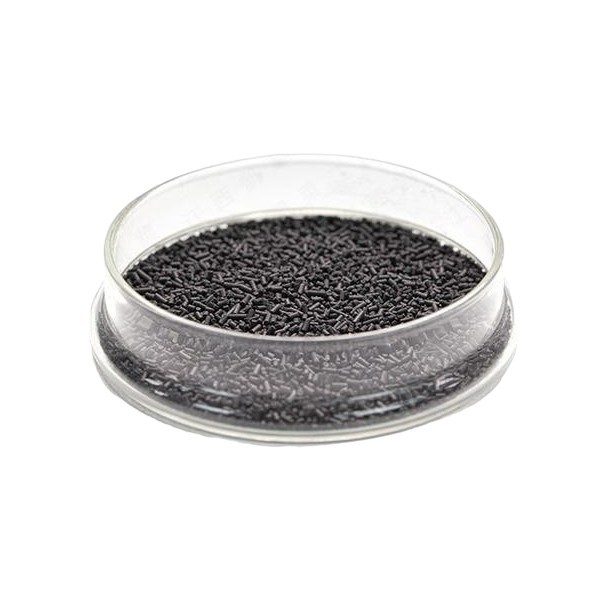
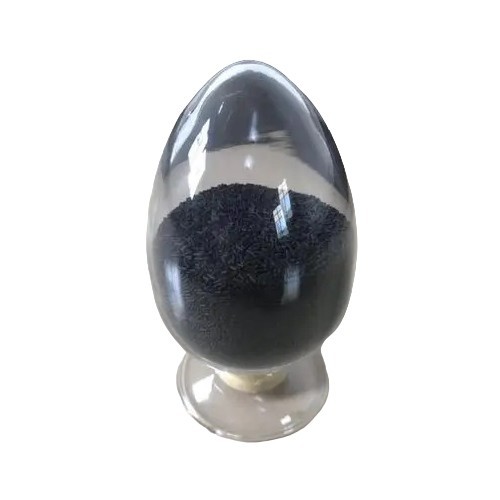
First off, let's talk a bit about Carbon Molecular Sieve -330. It's a super important material used in various gas separation processes, especially in the production of nitrogen from air. This sieve has tiny pores that can selectively adsorb different gas molecules based on their size and shape. And just like any adsorbent, it needs to be regenerated periodically to maintain its performance.
Now, onto the main topic - the impact of operating pressure on the regeneration process. The regeneration of Carbon Molecular Sieve -330 typically involves removing the adsorbed gas molecules from its pores. This can be done through different methods, but one of the most common ways is by reducing the pressure.
When the operating pressure is high during the adsorption phase, more gas molecules get packed into the pores of the sieve. This is because higher pressure provides a greater driving force for the gas to enter the pores. But when it comes to regeneration, this can pose a challenge. The more gas that's adsorbed, the harder it is to remove it all.
At high pressures, the gas molecules are held more tightly in the pores. It's like they're being squeezed in there. So, when you try to regenerate the sieve by reducing the pressure, it takes longer for the gas to desorb. You might need to lower the pressure to a much lower level or use a longer regeneration time to get rid of all the adsorbed gas.
On the other hand, if the operating pressure during adsorption is relatively low, fewer gas molecules are adsorbed in the first place. This means that during regeneration, it's easier to remove the gas from the pores. You can achieve a more complete regeneration in a shorter time and with a less significant pressure reduction.
Let's look at an example to make this clearer. Suppose you have two systems using Carbon Molecular Sieve -330. In System A, the adsorption is carried out at a high pressure of 8 bar. In System B, the adsorption pressure is only 4 bar.
During regeneration, System A will require a more substantial pressure drop, say down to 0.5 bar, and a longer regeneration time to fully desorb the gas. System B, however, might only need to be depressurized to 1 bar and can achieve a good regeneration in a shorter period.
Another factor to consider is the type of gas being adsorbed. Different gases have different adsorption characteristics at different pressures. For example, some gases might be more strongly adsorbed at high pressures, while others might be more easily desorbed even at relatively high pressures.
Now, I also want to mention some of the other products we offer. We have the Carbon Molecular Sieve-JXSEP®HG - 110ES, Carbon Molecular Sieve-JXSEP®LG - 560, and Carbon Molecular Sieve-JXSEP®HG - 110. These sieves also have their own unique properties and are suitable for different applications. Each of them might respond differently to operating pressure during the regeneration process, so it's important to choose the right one for your specific needs.
In addition to the pressure, temperature can also play a role in the regeneration process. Higher temperatures can help to speed up the desorption of gas molecules. But that's a topic for another blog post.
So, if you're using Carbon Molecular Sieve -330 or considering it for your gas separation process, it's crucial to optimize the operating pressure during both adsorption and regeneration. This can lead to better performance, longer sieve life, and more efficient operation of your system.
If you're interested in learning more about our Carbon Molecular Sieve -330 or any of our other products, or if you have any questions about the operating pressure and regeneration process, don't hesitate to reach out. We're here to help you find the best solution for your gas separation needs. Whether you're a small business or a large industrial operation, we can work with you to ensure you get the most out of our products.
Let's start a conversation and see how we can make your gas separation process more efficient and cost - effective. You can explore our other products and see if they fit your requirements. And who knows, maybe we can come up with a customized solution just for you.
References
- Smith, J. (2020). Gas Separation Technologies. New York: Science Press.
- Johnson, R. (2019). Adsorption and Regeneration of Molecular Sieves. London: Chemical Insights Publications.