

As a trusted supplier of Carbon Molecular Sieve - JXH, understanding the test methods for its working temperature range is crucial. This knowledge not only helps us ensure the quality and performance of our products but also allows us to provide accurate information to our customers. In this blog, we will explore the various test methods used to determine the working temperature range of Carbon Molecular Sieve - JXH.

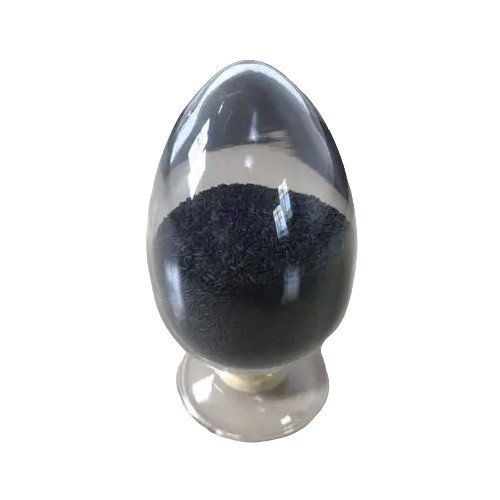
1. Importance of Working Temperature Range for Carbon Molecular Sieve - JXH
Carbon Molecular Sieve - JXH is widely used in gas separation processes, especially in the production of nitrogen from air. The working temperature range significantly affects its adsorption and desorption performance. If the temperature is too low, the adsorption rate may be slow, and the separation efficiency will be reduced. On the other hand, if the temperature is too high, the molecular sieve may lose its adsorption capacity due to thermal degradation. Therefore, determining the appropriate working temperature range is essential for optimizing the performance of Carbon Molecular Sieve - JXH.
2. Test Methods
2.1 Thermal Gravimetric Analysis (TGA)
Thermal Gravimetric Analysis is a common method used to study the thermal stability of materials. In the case of Carbon Molecular Sieve - JXH, TGA can be used to determine the weight loss of the sample as a function of temperature. By heating the sample at a controlled rate in an inert atmosphere, we can observe the decomposition and volatilization of the material.
The procedure of TGA involves placing a small amount of Carbon Molecular Sieve - JXH in a crucible and heating it from room temperature to a high temperature, typically up to 800 - 1000°C. The weight of the sample is continuously monitored during the heating process. The initial weight loss at lower temperatures may be due to the removal of adsorbed water and other volatile components. As the temperature increases, the weight loss may be attributed to the decomposition of the carbon structure.
The onset temperature of significant weight loss can be considered as an indication of the upper limit of the working temperature range. For example, if the weight loss starts to increase rapidly at 400°C, it suggests that the Carbon Molecular Sieve - JXH may not be stable at temperatures above this point.
2.2 Differential Scanning Calorimetry (DSC)
Differential Scanning Calorimetry measures the heat flow associated with physical and chemical changes in a sample as a function of temperature. In the context of Carbon Molecular Sieve - JXH, DSC can be used to detect phase transitions, chemical reactions, and thermal stability.
During a DSC experiment, the sample and a reference material are heated at the same rate. The difference in heat flow between the sample and the reference is measured. Endothermic or exothermic peaks in the DSC curve can indicate various events such as melting, crystallization, or decomposition.
For Carbon Molecular Sieve - JXH, an endothermic peak may be observed due to the desorption of adsorbed gases or the removal of water. An exothermic peak may indicate a chemical reaction or the degradation of the carbon structure. By analyzing the DSC curve, we can determine the temperature range where the material undergoes significant thermal changes. This information can be used to define the working temperature range of the Carbon Molecular Sieve - JXH.
2.3 Adsorption - Desorption Testing at Different Temperatures
Another practical method to determine the working temperature range is to conduct adsorption - desorption tests at different temperatures. This method directly measures the adsorption capacity and separation efficiency of Carbon Molecular Sieve - JXH under various temperature conditions.
The test setup typically consists of a gas adsorption system, where a known amount of gas (such as nitrogen or oxygen) is passed through a column filled with Carbon Molecular Sieve - JXH. The adsorption capacity is determined by measuring the amount of gas adsorbed by the molecular sieve at a specific temperature. The desorption process is then carried out by changing the pressure or temperature, and the amount of desorbed gas is measured.
By repeating these tests at different temperatures, we can obtain a relationship between the adsorption capacity, separation efficiency, and temperature. The temperature range where the adsorption capacity and separation efficiency remain within an acceptable range can be considered as the working temperature range.
For example, we may find that the Carbon Molecular Sieve - JXH has the highest adsorption capacity for nitrogen at 25 - 35°C. As the temperature increases above 50°C, the adsorption capacity starts to decrease significantly. Based on these results, we can conclude that the working temperature range for this particular Carbon Molecular Sieve - JXH is approximately 25 - 50°C.
3. Impact of Test Results on Product Selection
The test results of the working temperature range are crucial for product selection. Different applications may require different working temperature ranges. For example, in some industrial processes where the gas stream is at a relatively high temperature, a Carbon Molecular Sieve - JXH with a higher upper limit of the working temperature range is needed.
We offer a variety of Carbon Molecular Sieve products, such as JXSEP®LG - 610 Carbon Molecular Sieve, Carbon Molecular Sieve - JXSEP®HG - 110ES, and Carbon Molecular Sieve - JXSEP®HG - 110. Each product has its own unique working temperature range, which is determined through rigorous testing.
Customers can choose the most suitable product based on their specific application requirements. If the application involves a low - temperature environment, a product with a lower working temperature range may be sufficient. However, for high - temperature applications, a product with better thermal stability and a higher upper limit of the working temperature range should be selected.
4. Conclusion and Call to Action
In conclusion, the working temperature range of Carbon Molecular Sieve - JXH is a critical parameter that affects its performance in gas separation processes. Through methods such as Thermal Gravimetric Analysis, Differential Scanning Calorimetry, and adsorption - desorption testing at different temperatures, we can accurately determine the working temperature range of our products.
As a reliable supplier of Carbon Molecular Sieve - JXH, we are committed to providing high - quality products that meet the specific needs of our customers. If you are interested in learning more about our products or have any questions regarding the working temperature range, please feel free to contact us for procurement and further discussions. We look forward to working with you to find the best solution for your gas separation needs.
References
- ASTM E1131 - 08(2013) Standard Test Method for Determination of Carbon, Hydrogen, and Nitrogen in Organic Compounds by Combustion.
- ASTM E1858 - 08(2014) Standard Test Method for Determination of Thermal Stability by Differential Scanning Calorimetry.
- Yang, R. T. (1987). Gas Separation by Adsorption Processes. Butterworths.